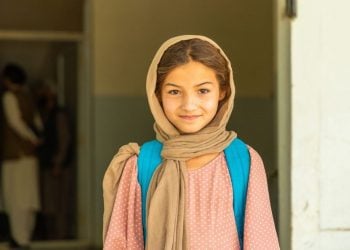
For nearly two years, the Taliban have deprived female students in Afghanistan of their right to education. In addition to closing schools and later universities to girls, they have actively sought excuses to exclude women from various social sectors. Recently, the group shut down educational centers in the capital city of Kabul and ordered authorities to prohibit girls from entering classrooms. Many view these actions as misogynistic, believing that the Taliban intend to permanently silence women’s voices. They gradually strip away women’s happiness and confine them within the confines of their homes. It is worth noting that the Taliban’s decisions to close schools, universities, and now educational institutions for girls are widely regarded as troubling.
Fatima, a second-year student majoring in Graphic Design at Kabul University, is actively seeking alternative options to continue her studies abroad following the closure of universities for girls. She has applied for a scholarship at a university in Kazakhstan, where proficiency in English is a prerequisite for success. Consequently, Fatima enrolls in a language institute in Kabul to learn the English language. Reflecting on her experience, she shares, “I had completed the first three months of the course and was about to begin the fourth month when I received the news of the Taliban closing the course for girls.”
Fatima comes across this news on a class group chat on the messaging app WhatsApp: “The Taliban have issued an order stating that starting tomorrow, girls will be prohibited from entering the courses.” This news once again obstructs her and all the girls from pursuing knowledge. Doubtful of its accuracy, she visits the institute the next day to verify the situation. She recounts, “I approached the language training center and observed several girls standing by the gate. While the guard granted entry to boys, girls were denied access. He informed us that the Taliban had instructed them not to permit girls into the classes.”
According to this student, the Taliban are actively seeking pretexts to eradicate girls from society. The student explains that prior to this, officials of schools and training centers had segregated girls and boys in compliance with Taliban directives, with girls adhering to the prescribed Islamic hijab. She further remarks, “They had segregated classes for girls and boys, and under the manager’s instructions, the guard would deny entry to girls without hijab, but now the Taliban have completely shut down the schools.” Fatima attributes the primary cause of the Taliban’s ban on girls’ education to gender discrimination against women, rather than solely focusing on the hijab.
Maryam, a tenth-grade student, has been denied her right to education for two years, much like numerous other female students. Her confinement at home has motivated her to seek enrollment in an educational center in Kabul and pursue studies in science subjects. She expresses, “Despite the absence of hope for continuing education in Afghanistan, I decided to attend the training center to escape the confines of my house and engage in the study of math, physics, and chemistry.”
Maryam, upon learning about the closure of the educational training centers, refuses to accept it and decides to verify the accuracy of this information firsthand. However, she faces rejection at the gate of the training center. Maryam recounts, “As I approached the gate, the guard permitted girls below the age of fifteen to enter the educational training center, while those over fifteen were denied entry.” According to her, the Taliban impose their own arbitrary rule within the classes, restricting education solely to girls under fifteen and depriving those above that age of their right to learn.
Maryam shares that the principal of the educational training center and teachers have offered reassurance to the students, claiming that the Taliban’s directive is temporary and urging them not to lose hope. In the event that the Taliban do not rescind the directive, they plan to conduct online classes for the students. However, Maryam expresses skepticism, saying, “The Taliban have repeatedly made false promises to reopen schools for us, and this time they won’t open the classes either. The teachers are falsely trying to uplift our spirits.”
As educational institutions for girls closed down, several educational training centers attempted to organize online classes to ensure continued education. However, these classes did not yield positive results due to slow internet speed and students’ financial constraints, leading to the discontinuation of this initiative. Hawa, a university student in Kabul, explains, “While some professors were willing to conduct online classes for girls, most of them faced difficulties in accessing the lessons due to poor internet connectivity and their financial limitations for internet usage.” Hawa herself is unable to participate in online classes due to her family’s economic challenges following the Taliban’s takeover.
The recent actions of the Taliban have sparked concerns among female teachers in schools. Laila (pseudonym), a teacher in an educational institution in Kabul, expresses her worries about the Taliban’s actions. She explains that she and other female teachers in the center are anxiously awaiting additional orders from the Taliban, which may prohibit them from teaching boys as well. Laila says, “I find it challenging to concentrate on teaching while constantly monitoring the entrance, anticipating the moment when Taliban members may raid the center and deny us the opportunity to teach.”
When it comes to conveying the Taliban’s orders to her students, she expresses the challenges she faced. She states, “It was extremely difficult to compose a message in the WhatsApp group stating that girls were no longer permitted to attend classes, but I had to deliver that message. I carefully crafted the sentence to emphasize the temporary nature of the Taliban’s directive, aiming to prevent them from losing hope.” Following this news, numerous female students reached out to their teachers, requesting private lessons at their homes.
Laila, who has been actively teaching in schools and educational training centers for years, shares her observations about the impact of the Taliban’s arrival and the subsequent restrictions on education. According to her, not only have girls’ motivations to acquire knowledge diminished, but boys have also lost their enthusiasm to continue studying in such an environment. As a result, the number of applicants seeking education in these centers has significantly declined compared to the past. Laila expresses her concerns, stating, “The once vibrant motivation and enthusiasm for education among both female and male students has dwindled to a mere one percent, and the classrooms, once bustling with students, are now gradually emptying with each passing day.”
It is important to note that before the recent events, numerous schools and educational centers in Kabul had already closed due to Taliban-imposed restrictions and economic hardships, resulting in a decline in student enrollment. However, following their resurgence in Afghanistan, the Taliban have resumed enforcing its oppressive policies, systematically shutting down educational opportunities for women and girls using various excuses. Despite the international community’s strong condemnation and two years of girls being deprived of education in Afghanistan, the Taliban authorities have shown no willingness to reopen schools and universities for them.