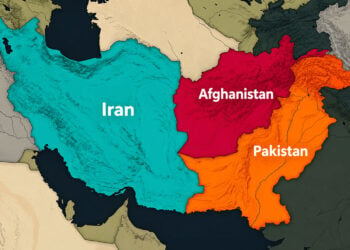

Some residents of Nimruz province say that the human trafficking market in the province remains active following the decree of the Taliban Supreme Leader. They emphasize that the majority of trafficking caravans move from the city of Zaranj, the capital of Nimruz, toward the Iranian border. According to them, instead of preventing human trafficking, the Taliban have tasked mosque clerics with preaching in mosques while they have only focused on putting up banners in the city.
Mohammad Qasim Khalid, the Taliban governor in Nimruz, stated about two weeks ago that the “Duk” border was closed to human traffickers. However, sources say that this border remains open, and human trafficking continues daily through this border toward Iran.
At the same time, some human traffickers in Nimruz say that Hibatullah Akhundzada, the Taliban Supreme Leader, issued a decree banning human trafficking, but local Taliban officials continue to take money from traffickers. According to them, some Taliban commanders are involved in human trafficking and make huge sums of money through this business.
Fazl Ahmad (pseudonym), one of the traffickers in Nimruz, says that they pay money to local Taliban officials. He adds that when the caravans of passengers move from Zaranj toward Duk, the traffickers are given “receipts” or permits by the Taliban in exchange for money. According to him, human trafficking is done in coordination with the Taliban.
This trafficker says: “We heard that the Taliban Supreme Leader is stopping the traffickers’ work and no longer allowing trafficking, but no one has told us that we should stop taking passengers. As before, our work continues.
He adds: “It is true that our work is trafficking, but we work freely. The cars are loaded inside Zaranj city, and we transport passengers. These papers are issued by the Taliban. For each car we send, the Taliban give two receipts or permits, and they take 530 Afghani for each paper. The Taliban benefit from this.
Gul Ahmad (pseudonym), another human trafficker in Nimruz, says that some Taliban commanders manage the trafficking process in the province, and some of them are directly involved in human trafficking. He says: “We heard that the Taliban are stopping human trafficking, but these very people are the key players and the main ones involved in human trafficking. They make the most profit from this. At a minimum, the Taliban collect 10,000 Afghani or more from traffickers’ vehicles daily.
This trafficker says: “The Taliban themselves are engaged in human trafficking. If they are not directly involved, their brothers, nephews, and other relatives support them to carry out the trafficking business. This is a border province, and very few Taliban members are not involved in drug or human trafficking.
While the human trafficking market in Nimruz is thriving, the Taliban’s Ministry of Information and Culture in the province has installed advertising banners saying that “human trafficking is a crime against humanity” and that “preserving human dignity, social security, and fighting human trafficking is a priority of the regime.
Previously, the Taliban Supreme Leader issued a decree banning human trafficking and declaring it unlawful. This decree includes six points, in which local commanders are instructed to combat human trafficking. The decree also imposes punishments on human traffickers.
This decree was issued while most human traffickers are unaware of it and say they engage in human trafficking in exchange for money and partnership with Taliban officials in border areas. They add that the group makes huge profits through trafficking.