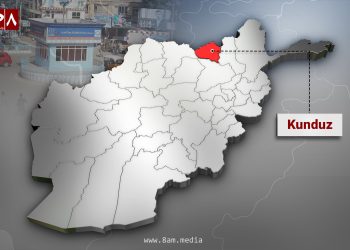
One day after the UN Security Council meeting on the ISIS threat from Afghanistan, a suicide attack at the Kabul Bank branch in Kunduz province killed around seven Taliban fighters and seven civilians. Although the exact number of casualties is still unknown, the Taliban have confirmed and described the attack as a suicide bombing. Previously, the group referred to its suicide attacks as “martyrdom operations.” Security analysts believe the Taliban are unable to control suicide attacks within their ranks. They note the presence of over 20 terrorist groups within the Taliban regime, each with its tactics and ideologies, which will continue their attacks on the group. Analysts also highlight the existence of training centers in Kunduz that provide instruction to foreign fighters and terrorists. According to security experts, there are numerous facilitators within the Taliban apparatus who prepare suicide attacks against this group, enabling them to carry out attacks in sensitive locations.
On February 11, a suicide bomber detonated inside the Kabul Bank branch in Kunduz as Taliban fighters and some civilians were receiving their salary payments. Approximately 15 people were killed, and several others injured. Sources say the attacker targeted Taliban fighters waiting for their salaries at the bank’s entrance. Jummauddin Khaksar, the Taliban police chief in Kunduz, confirmed the suicide bombing near the Kabul Bank.
A source from Kunduz shared a list of seven Taliban fighters who died in the attack. The list includes Abdul Khaliq Muhajir, son of Faizullah; Mohibullah Jihadmal, son of Abdul Raziq; Mawlawi Abdul Salaam Hamed, Taliban’s intelligence chief of the 11th Border Brigade; Gulbuddin Ahmadyar, son of Jummauddin; Gul Rahman, son of Ghulam Nabi from Farhar District, Takhar Province; Noorullah; and Zakaria Amir, the commander of the Taliban’s 4th Security Battalion. Dr. Muhammad Shahab Salarzai, a professor at Kunduz University’s medical faculty, who was at the bank for his salary card, also died in the attack.
An audio clip obtained by the Hasht-e Subh Daily reveals that a Taliban fighter reported to a local official about a suicide bombing carried out by ISIS using a motorcycle, which killed approximately eight Taliban fighters and six or seven civilians.
On the other hand, a source in Kunduz told the Hasht-e Subh Daily that it is likely that the explosion also caused damage to a microfinance bank funded by the Aga Khan Foundation. According to the source, this bank is located on the upper floor of the Kabul Bank, and it is reported that one of the security guards of the Aga Khan Bank was also injured in the explosion. However, it remains unclear whether this individual has died or is among the wounded.
Mirza Muhammad Yarmand, former Deputy Minister of Interior in the previous government, described the attack on the 217th Omari Corps and Kunduz police headquarters as significant. He stated that this attack caused heavy casualties among both Taliban fighters and civilians. Yarmand added that despite Taliban propaganda claiming to have weakened their enemies, the group remains highly vulnerable.
The security official from the former government stated that more than 22 terrorist groups are operating within the Taliban, employing various methods and tactics, all of which have undergone advanced training. He added that this type of training is currently taking place in Kunduz, but members of terrorist groups are not allowed to publicly display these training activities. According to him, the Taliban themselves do not have access to this type of training, and similar programs are also being conducted in the Zaghar and Khoghaz Darwaz areas of Badakhshan province. He further explained that these trainings are primarily provided to Shia Ismaili and Twelver Shiite youth. He emphasized that the Taliban take underage youth to these training sessions, brainwash them, and, as they claim, convert them to “Sunnis,” before sending them back to their families, where the first thing they do is destroy the televisions in their homes.
The deputy minister of the interior in the former government states that terrorist groups do not have a unified policy and do not follow the same methods. According to him, numerous facilitators within the Taliban regime make it difficult for the group to prevent such incidents, just as, during the “Republic” era, Taliban facilitators were present in sensitive locations and able to carry out suicide attacks. He emphasizes that the Taliban must wake up and allow Afghanistan to belong to the people of this country. He also mentions that foreign individuals present in the military hierarchy in Syria, such as Uzbeks and Tajiks in high-ranking military positions, are also found within the Taliban hierarchy. These individuals, who are often not Afghan citizens, adhere to methods and cultures that are completely different from the values of the people of Afghanistan.
The attack came one day after the UN Security Council held a meeting to discuss the ISIS threat and the UN Secretary-General’s report on the group. In the meeting, the Deputy Secretary-General stated that ISIS-Khorasan (ISKP) remains a serious threat to Afghanistan, the region, and the world. The U.S. representative expressed concerns about ISIS’s ability to recruit and execute terrorist plots in Afghanistan and Pakistan, while the Pakistani representative denied ISIS recruitment in Pakistan, attributing it to Afghanistan. China’s UN ambassador mentioned ISIS and other terrorist groups operating in Afghanistan, posing regional and global threats. Russia’s ambassador to the UN claimed that increased ISIS activity in Afghanistan was linked to the leftover American weapons.
This attack follows previous Taliban warnings to their fighters to avoid Kabul Bank branches due to security threats. However, it is unclear why these measures failed to prevent the casualties.
Hamid Karzai, former President of Afghanistan, and Abdullah Abdullah, former Chairman of the High Council for National Reconciliation, condemned the attack. Qatar’s Ministry of Foreign Affairs also condemned the incident.
You can read the Persian version of this daily report here:
درگیریهای پنهان طالبان؛ از حملات داخلی تا تهدیدات خارجی | روزنامه ۸صبح