By Celeste del Bianco, elDiario (Argentina)
On October 5, 2017, the story broke: Famous millionaire Hollywood producer Harvey Weinstein had abused and harassed women for years. Journalists Jodi Kantor and Megan Twohey wrote about it in the New York Times, American actress Alyssa Milano shared it on Twitter, and the hashtag #MeToo went viral, trending in 85 countries. Different regions, different languages: “Me too,” the words that unified it all.
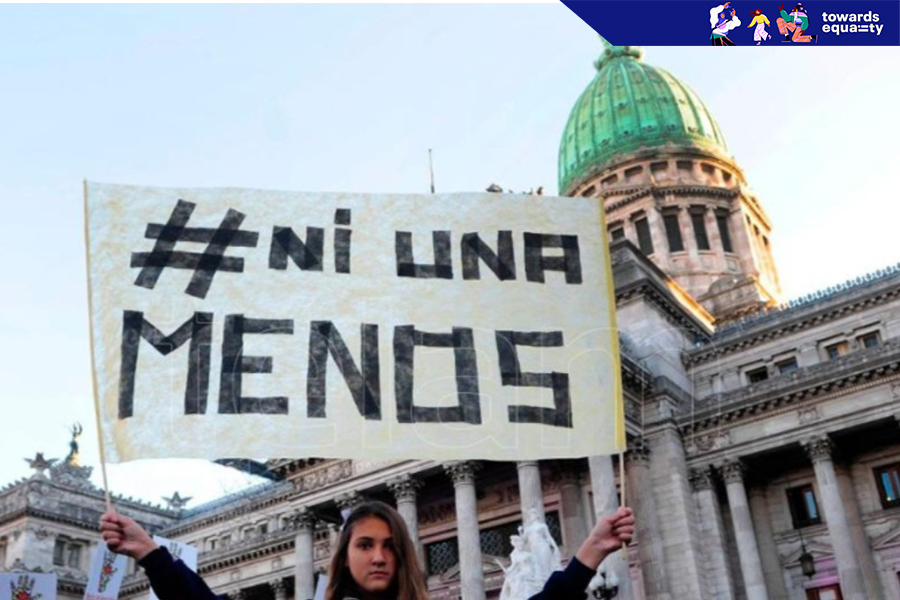
More than two years earlier, in the southern hemisphere, women had taken to the streets shouting “Ni Una Menos” (“Not One Woman Less”). That was on June 3, 2015; there were dense crowds around Argentina’s National Congress but also in the provinces. In towns and cities, women were denouncing femicides, the most extreme expression of male violence. A violence that is present in the interstices of daily life, camouflaged or not, and that has a matrix: inequality.
“We want us alive.” The cry quickly spread throughout Latin America, and demonstrations took place in Mexico, Peru, Colombia, and Nicaragua. In Chile, a group of women called “Las Tesis” popularized the song Un violador en tu camino (A Rapist on Your Path), inspired by the feminist anthropologist Rita Segato. It was also sung in the capitals of Europe, even inside the Turkish Parliament. In Poland, women dressed in black and went on a general strike to uphold the right to abortion.
In 2016, the first national strike against femicides was held in Argentina; it was echoed in Mexico, Chile, Bolivia, Honduras, France and Spain. A year later, the First International Women’s Strike took place.
“The spirit of the times” is how writer and journalist Hinde Pomeraniec, one of the promoters of Ni Una Menos in Argentina, defines it. What was the origin of the massive feminist protests around the world? Is the United States’s Me Too a consequence of Argentina’s Ni Una Menos? Maybe. What we do know is that for the first time, thousands of women and gender diverse people in every corner of the planet took to the streets to protest against an oppressive system that has direct consequences on their lives.
“Many authors mentioned that Me Too triggered everything on a global scale because the allegations came from such well-known personalities, which gave them a huge platform. We are not famous people; in Argentina, the trigger was a tweet that we all related to, and there was no famous perpetrator as there was in the United States. Many small events were taking place at once.”
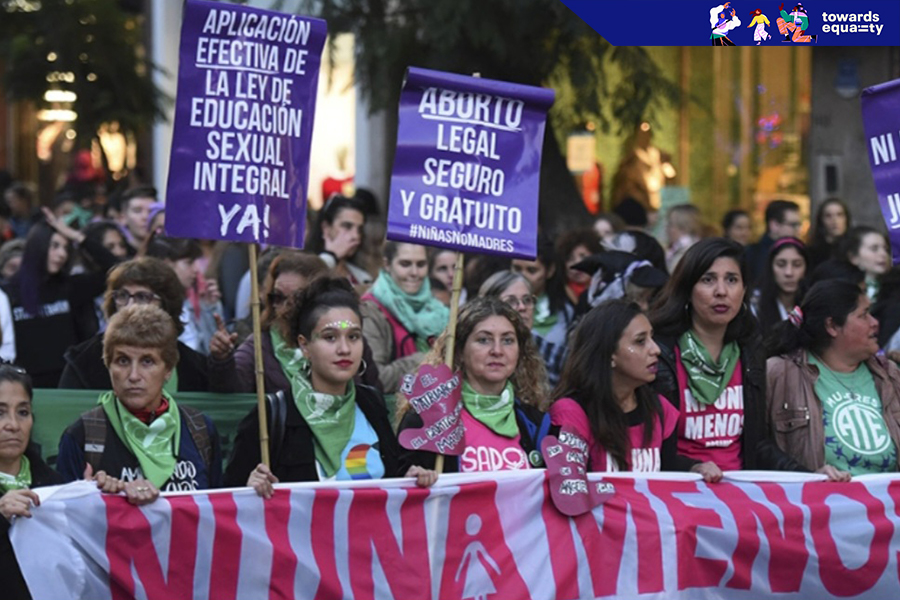
The tweet in question was written by journalist Marcela Ojeda: “Actresses, politicians, artists, businesswomen, influencers…women, all of you… aren’t we going to raise our voices? THEY ARE KILLING US.” She wrote it after learning about the murder of Chiara Páez, a 14-year-old teenager who was pregnant and buried in a pit by her 17-year-old boyfriend. Other communicators asked the same question and organized the first march. Three weeks later, 250,000 people gathered in the City of Buenos Aires; many others protested in some 120 different locations in Argentina. As detailed by Paula Rodríguez in her book Ni Una Menos (Editorial Planeta), the day after the demonstration, there were 13,700 calls to the hotline to report gender violence—up from the usual 1,400.
But Ni Una Menos was more than a denunciation of femicides; it revealed an entire system that protects and normalizes violence. There had always been demands for change during the many decades of continuous struggle, but in 2015, they became widespread. Ingrid Beck, journalist and promoter of the march, explains that one of her main achievements was to socially instill the idea that femicides are the product of structural inequality. “Besides being the first massive march for women’s rights in Argentina, Latin America and the Caribbean, one that turned the women’s movement into a political subject, it also changed the way gender violence was handled by linking femicides to structural inequality. In addition to putting pressure on public authorities, the demands were also directed towards society.”
Beck sees a huge contrast with the Me Too movement. “With Me Too, the idea was that violence is absolutely transversal with regard to socioeconomic origins, education or where you live. It happens to all of us, everywhere, no matter if we are privileged or not. Me Too became huge in the rest of the world, but it especially condemned the sexual abuse committed by powerful people who used their position against women. Me Too abusers are Harvey Weinstein or managers of multinational corporations—not an anonymous husband who is systematically violent at home. His wife has neither the money nor the networks that actresses have to be able to call out the violence.”
By focusing on the powerful abusers, she says, we leave out the structural matrix of violence. “Me Too doesn’t associate sexist violence with the lack of economic autonomy of women. There is no link there. Ni Una Menos introduces the idea that in order to get out of the cycle of violence, you need to have networks and economic autonomy.”
As regards chronology, Ni Una Menos was born and conquered the streets earlier. The Me Too movement had global visibility because it started in the center of the entertainment industry. But both are products of their time. “The times are different, but they have waves that have the same frequency,” says Pomeraniec. “Ni Una Menos was an influence, even if people don’t know about it in the United States. This is the spirit of the times, a climate of an era. Everything that came after that is not accidental.”
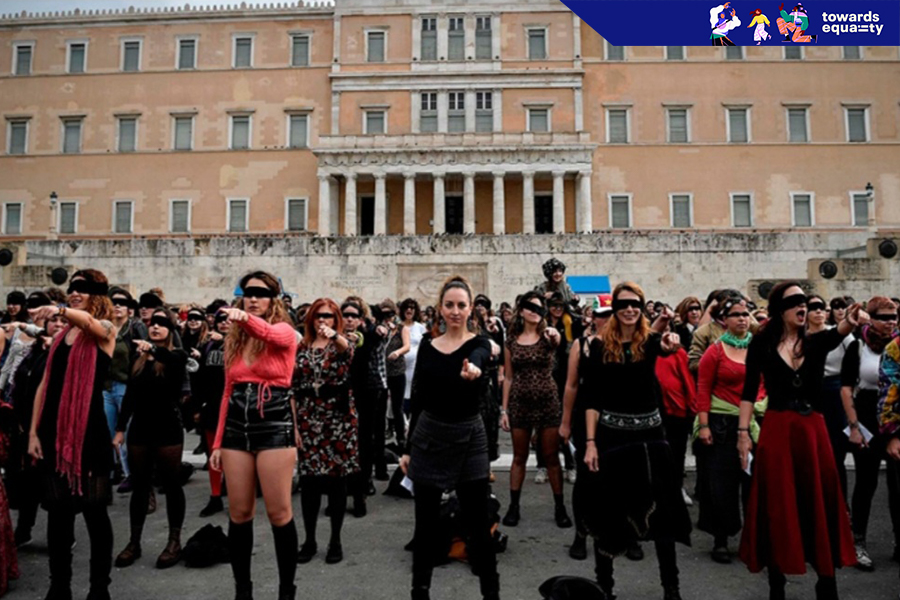
Today, almost eight years after that initial mobilization, there is a strong conservative reaction against the rights of women and LGBTQIA+ people. Conservative leaders openly express their disdain for their achievements and promote their suppression. The sociologist and feminist communicator Danila Saiegh considers that this is related to the fact that the movement stopped being marginal, increased its demands and, in several countries, even reached the State level. In Argentina, for example, the Ministry of Women, Gender and Diversity of the Nation was created in 2020.
“In the beginning, we were simply talking about not being killed, and it was very difficult for public figures to object to demands to repair that injustice, because it was so basic,” says Saiegh. “Later, they began to see that feminism is much more and that it concerns many issues, such as the abortion debate. That goes deeper and bothers a lot of people. Many powerful individuals and institutions began to get very annoyed, and ideologies that seemed dormant started to awaken. More Catholics, conservatives and extreme-right people became popular in certain sectors of society.”
Some of the best-known examples are former President Jair Bolsonaro in Brazil, former President Donald Trump in the United States and Prime Minister Giorgia Meloni in Italy. “For many, feminism now belongs to the State, and there is nothing to discuss or to fight for. This is a phenomenon to think about, too. Undoubtedly, we are going through a moment of conservative reaction and openly anti-feminist speeches. If the scope of feminism were not questioned, there wouldn’t be such a strong and specific conservative reaction. There wouldn’t be such anti-feminism,” she adds.