• 8AM.MEDIA
  • ویب‌سایت فارسی
  • پښتو ویب‌پاڼه
  • اۉزبېکچه ویب‌سایت
  • Podcast
Monday, September 14, 2026
Hasht-e Subh
  • Home
  • News
    • Afghanistan News
    • World News
  • Opinion
    • Editorial
    • Analysis
  • Reports
    • Daily Reports
    • Investigative Reports
  • Society
    • The story of people
  • Women’s Word
  • Columns
    • Three Years After Afghanistan’s Fall: The Taliban’s Resurgence
    • Towards Equality
    • The Resurgence of the Taliban: Two Years Since Afghanistan’s Fall
    • Hebatullah Report Special Edition
    • Resistance for Education Special Edition
    • Special Column on Taliban’s Education Curriculum
    • Nawroz
  • Interviews
  • Contact Us
    • About Us
    • 8AM MEDIA Annual Awards
    • Submit an Article to Hasht-e-Subh
  • 8am.mediaBack
Subscribe
No Result
View All Result
  • Home
  • News
    • Afghanistan News
    • World News
  • Opinion
    • Editorial
    • Analysis
  • Reports
    • Daily Reports
    • Investigative Reports
  • Society
    • The story of people
  • Women’s Word
  • Columns
    • Three Years After Afghanistan’s Fall: The Taliban’s Resurgence
    • Towards Equality
    • The Resurgence of the Taliban: Two Years Since Afghanistan’s Fall
    • Hebatullah Report Special Edition
    • Resistance for Education Special Edition
    • Special Column on Taliban’s Education Curriculum
    • Nawroz
  • Interviews
  • Contact Us
    • About Us
    • 8AM MEDIA Annual Awards
    • Submit an Article to Hasht-e-Subh
  • 8am.mediaBack
No Result
View All Result
Hasht-e Subh
No Result
View All Result

India’s solar power push delivers an unexpected bonus – empowering rural women

8AM Media 8AM Media
12 March 2024 - Solar Hijri Date: 1402/12/23 [t_time:1710278475]
India’s solar power push delivers an unexpected bonus – empowering rural women

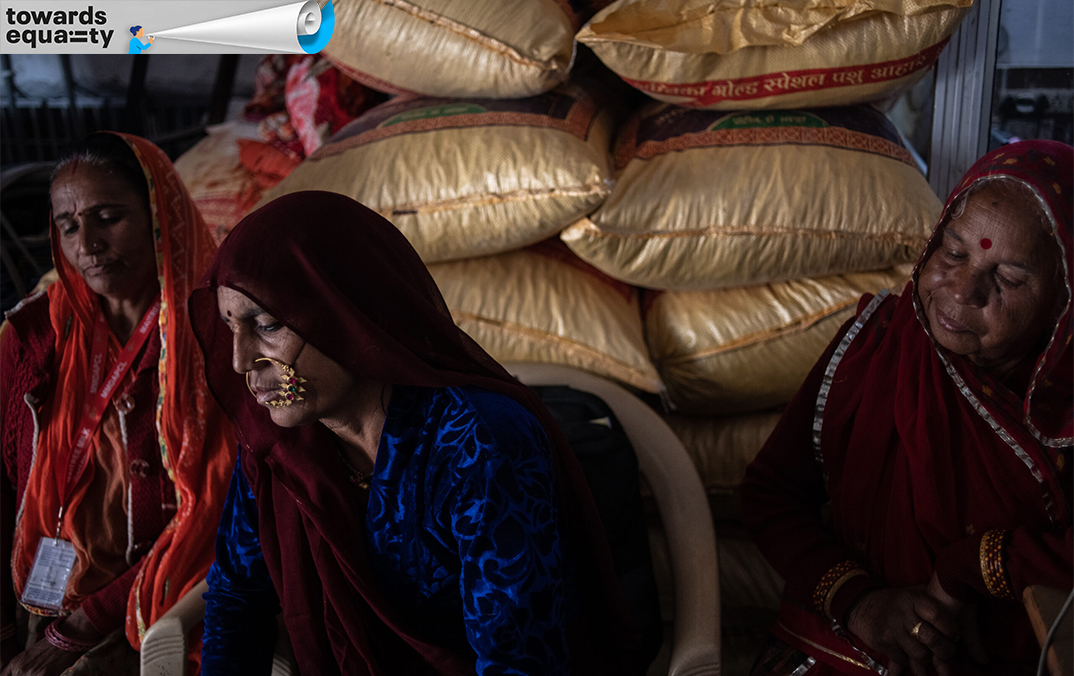
India’s solar power push delivers an unexpected bonus - empowering rural women. Credit: Rebecca Conway for The Fuller Project.

By Disha Shetty for The Fuller Project*

This publication is part of the “Towards Equality” Sparknews-led program, a collaborative alliance of 16 international news outlets highlighting the challenges and solutions to reach gender equality.

It is only 9 a.m., but already the sun is high in the sky and Lad Devi and her co-workers at the Dooni dairy cooperative are hard at it. As milk arrives from the surrounding farms, they work quickly to get it weighed and into the refrigerators without which it would spoil within hours in the intense heat of India’s desert state Rajasthan, where temperatures reach highs of 45 degrees Celsius (113 F).

Just a few years ago, these women rarely ventured outside their homes. When they did, they covered their heads and faces in line with the local culture in one of India’s most socially conservative states. Now, they chat loudly as they work, their bare faces showing confident expressions.

The women say their lives have been transformed since 2014, when they came together to form a dairy cooperative. Each kept cows and buffaloes, which they had received as a dowry when they married, according to tradition, and any milk their families did not consume was theirs to sell. But electricity from the grid was both expensive and unreliable. Frequent power outages meant the milk that didn’t sell quickly often had to be thrown away.

When they got solar-powered refrigerators in 2021 everything changed. The dairy’s monthly electricity bill fell to 5,000 rupees (about 60 dollars), a fraction of what it had been before. Reliable power meant the women could double their income by sending in more milk, knowing it could be stored if it didn’t sell that day. They each make around 400 rupees a day – income that has helped change lives in this poor rural community.

“Before, if I had to go out, I would have to wait for my husband to give me money for the journey. Now I have my own,” says Devi, a 45-year-old mother of three.

“I am illiterate, but today I have so much confidence that I can speak to any man without hesitation and I can speak to people who come to my village from outside.”

Female literacy rates still lag those of men in India, despite decades of progress. In Rajasthan, the gap is particularly wide, with just 65 percent of women able to read and write, according to government data. More than one in four girls in the state marries before the legal age of 18, another indicator of gender inequality.

Experts believe India, which overtook China as the world’s most populous nation last year, will have to address those inequalities if it is to reap the economic rewards of a rapidly-growing youth population. In rural areas, where job opportunities are more limited, improving energy access could be key, according to research published in 2023.

India remains a predominantly rural society – more than two-thirds of the population lives in the countryside, according to World Bank data. The government says every village now has electricity, but it is expensive and unreliable. Instead, rural communities are increasingly adopting solar power, and there is growing evidence that women are among the biggest beneficiaries.

In recent years, India has installed over 700,000 solar powered water pumps, meaning women no longer have to walk long distances to fetch water and expose themselves to sexual harassment and abuse. Solar lighting has replaced kerosene lanterns, whose toxic fumes disproportionately impact women and children because they spend more time in the home. And labor-saving devices from electric breadmakers to solar-powered refrigerators have made housework easier while opening up new possibilities for paid work.

Many, like the women in Dooni, start with self-help groups – collectives formed under the aegis of a government programme to empower rural women and reduce poverty.

The Indian company that made the solar fridges used in Dooni, Devidayal Solar Solutions, didn’t set out to target women. But founder Tushar Devidayal says it soon became clear that women were behind much of the demand for their fridges. The company also operates in Uganda, Tanzania and Somalia and says more than half its global users are women.

Selco India, another manufacturer of solar appliances, estimates that around 60-70% of users of its products are women. Chief project manager CR Parthasarathy says women’s self-help groups like the one in Dooni drove the demand for solar-powered home lighting over the past two decades, and are now doing the same for solar appliances that can support small businesses.

The women behind the Dooni dairy cooperative are clear that it has changed their lives. Inspired by them, other villagers have begun buying solar lamps at a cost of around 1,500 rupees (about 18 dollars) and setting up solar panels strong enough to power a fan, charge mobile phones and run a few lights.

It may also change the lives of the next generation. Several of the women say they are using the proceeds of the dairy business to send their children to school – an opportunity they were never given in a culture that has historically prioritized boys’ education.

“Before, everything was a big struggle,” says Geeta Devi Gujjar, a 48-year-old mother of three. “I had to depend on my husband for everything, but now I know I can handle things myself. I have more courage now.”

*This is an edited version of a longer article available here on The Fuller Project’s website

ShareTweetSendSendShare

Related Posts

Gender bias in AI: “We underestimate the human component of these tools”
No category

Gender bias in AI: “We underestimate the human component of these tools”

12 March 2024 [t_time:1710279389]
Mother’s Tree
No category

Mother’s Tree

12 March 2024 [t_time:1710277932]
Lebanon: Women-led peacebuilding creates bridges across rival Tripoli neighborhoods
No category

Lebanon: Women-led peacebuilding creates bridges across rival Tripoli neighborhoods

12 March 2024 [t_time:1710276940]

Latest

Loading latest news...

Popular stories

  • Hamza bin Laden - the son of Osama bin Laden (Photo: Social Media)

    Al-Qaeda Releases Hamza bin Laden Message on 9/11 Anniversary

    Share
    Share Tweet
  • Sajjad Haider Khan: Those with Valid Visas Will Continue Their Studies in Pakistan

    Share
    Share Tweet
  • UN Women: Ban on Women’s Entry to UN Offices in Afghanistan Enters Second Year

    Share
    Share Tweet
  • Taliban Shoot Young Man from Herat After Torturing Him with Hands Tied

    Share
    Share Tweet
  • Scholarship to Deportation: Pakistan Orders Mass Expulsion of Afghanistan Citizen Medical Students

    Share
    Share Tweet

Podcast

Insights
Insights

Join Lynne O’Donnell for 8AM’s podcast series, Insights.
Lynne talks with generals, diplomats, soldiers, journalists, politicians, activists, people who have front row seats for conflicts around the world, and citizens with a story to tell, happy or sad. For this first series, Afghanistan is the focus. Lynne and her guests talk about the collapse of the republic in August, 2021, and the impact since — for the people of Afghanistan, for the security of the region, for the safety of the world. It’s important, interesting and insightful.

Insights/22: Controlling the Narrative with Mina Sharif
byinsights8am

Controlling the Narrative

Lynne O’Donnell talks with Mina Sharif, author, activist, women’s rights campaigner, educator and mentor. They discuss who controls the narrative and who speaks for Afghanistan’s people when the Taliban appear to have seized control not only of the country but of the message, too.

Have a listen

Insights/22: Controlling the Narrative with Mina Sharif
Episode play icon
Insights/22: Controlling the Narrative with Mina Sharif
Episode Description
Episode play icon
Insights/21: Media Meltdown with Zahra Joya
Episode Description
Episode play icon
Insights/20: Terror Inc with Scott Richards
Episode Description
Episode play icon
Insights/19: Busting Stereotypes with Bushra Gohar
Episode Description
Episode play icon
Insights/18: Media Matters with Waliullah Rahmani
Episode Description
Episode play icon
Insights/17: What Goes Around Comes Around with Sima Samar
Episode Description
Search Results placeholder
Hasht-e Subh

8AM Media, also known as Hasht-e-Subh Daily, stands as Afghanistan's premier independent and non-profit newspaper, resonating as a beacon of journalistic integrity since its establishment in June 2007 by esteemed Afghan journalists and human rights advocates. With a steadfast commitment to citizen journalism and civic education, Hasht-e-Subh Daily has earned its place as the most esteemed publication in the nation.

Publisher: Sanjar Sohail
Email: [email protected]
Executive Director: Parwiz Kawa
Email: [email protected]

Read More

America and the Impasse of Collapsing Trust in the Middle East

Twenty-Five Years After 9/11: America’s Dilemma of Victory and Defeat in Afghanistan

What Drives the European Union’s Engagement with the Taliban?

The Kashk-Tirpul Project: Khalilzad’s Gift to the Taliban

Drug Treatment Centers in Kandahar: Narcotics Being Sold to Patients

Editor’s Choice

Every Saturday morning, 8AM MEDIA English Services Department will guide you through the week’s biggest stories from Afghanistan and the international community.

Subscribe

© 2026 - ©Hasht-e Subh Daily

No Result
View All Result
8am.Media
پښتو ویب‌پاڼه
ویب‌سایت فارسی
اۉزبېکچه ویب‌سایت
  • Home
  • News
    • Afghanistan News
    • World News
  • Opinion
    • Editorial
    • Analysis
  • Reports
    • Daily Reports
    • Investigative Reports
  • Society
    • The story of people
  • Women’s Word
  • Columns
    • Three Years After Afghanistan’s Fall: The Taliban’s Resurgence
    • Towards Equality
    • The Resurgence of the Taliban: Two Years Since Afghanistan’s Fall
    • Hebatullah Report Special Edition
    • Resistance for Education Special Edition
    • Special Column on Taliban’s Education Curriculum
    • Nawroz
  • Interviews
  • Contact Us
    • About Us
    • 8AM MEDIA Annual Awards
    • Submit an Article to Hasht-e-Subh
  • 8am.media

© 2026 - ©Hasht-e Subh Daily