The claim of a “Greater Pashtunistan” has consumed a segment of Pashtun chauvinist thinking for more than a century. This blind, one-sided obsession bears no relation to today’s political and social realities and has been a significant driver of instability and the persistence of ethnic divisions in Afghanistan. Every day this illusion is kept alive, seeds of separatist tendencies and fragmentation are planted among other ethnic groups.
A few days ago, I came across a video of Mohammad Ismael Yoon walking alongside the Berlin Wall and declaring, “One day the Durand Line will fall, just as the Berlin Wall did.” You made these remarks as the Durand Line debate intensifies on social media, with a growing number of voices claiming they do not recognize the Durand Line as a legitimate border and insisting these territories must be reunited with Afghanistan.
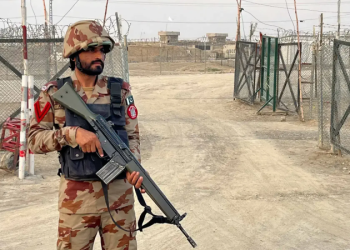
The Durand Line question has, unfortunately, hardened into one of Afghanistan’s most enduring political illusions, with a determined segment of voices working to keep it alive. The stated ambition is the creation of a “Greater Pashtunistan” or “Loy Afghanistan.” This annexationist ambition, which has been thrust upon Afghan politics time and again, has consistently obstructed the formation of a modern national state rather than advancing unity and development. It has also handed Pakistan a standing pretext to interfere in Afghan affairs ever since that country’s creation in 1947.
The border dispute between Afghanistan and Pakistan is deeply rooted in history. The Treaty of Gandamak in 1879, the Durand Line Agreement in 1893, and the Treaty of Rawalpindi in 1919 were all signed at a time when Pakistan did not yet exist. When India gained independence and Pakistan was created in 1947, this colonial inheritance passed to Islamabad and became the primary source of today’s tensions. That same year, when the fate of the North-West Frontier Province, now Khyber Pakhtunkhwa, was being decided, a referendum was held offering only two options: joining India or joining Pakistan. The possibility of joining Afghanistan, or establishing an independent “Pashtunistan,” was effectively erased. Pashtun leaders, including Abdul Ghaffar Khan, boycotted the vote, and Afghanistan, in protest, became the only country to initially vote against Pakistan’s admission to the United Nations (UN). This history makes clear that from the very beginning, the Durand Line dispute was driven not by rational legal argument but by political calculation and identity mobilization.
Since the era of Abdur Rahman Khan, Afghanistan’s pursuit of modernity and development has repeatedly reached a dead end. Neither absolute monarchs, nor republicans, nor the post-2001 administrations, nor the Taliban have managed to establish a central national government that is both legitimate and broadly supported by society. The latest manifestation of this failure is Taliban rule, which has reduced Afghanistan to one of the poorest and most isolated countries in the world. Against this backdrop, a pressing question arises: if Afghanistan has been unable to build a stable national state within its existing borders, how could it possibly sustain unity, security, and stability by absorbing an even larger population?
The political and social realities of Pakistan tell a starkly different story. Pakistan’s Pashtuns have not only been integrated into the country’s state and military structures but have repeatedly reached the highest political and military offices, including the presidency, the prime ministership, and the leadership of the army and intelligence services. Afghanistan, by contrast, remains trapped in the same ethnic chauvinism that, even during the period widely described as “American democracy,” blocked meaningful non-Pashtun participation in power. Pakistan’s Pashtuns have, in practical terms, defined their political identity as Pakistani, while a segment of the Afghan elite remains lost in the nostalgic fantasy of Ahmad Shah Durrani and Ashraf Hotaki.
Contrary to what proponents of this idea believe, the majority of Pashtuns living beyond the Durand Line today identify as Pakistani and prefer life in a nuclear-armed country with relative stability over a war-ravaged Afghanistan. Pressing the “Pashtunistan” cause in Kabul offers no viable path forward. Instead, every repetition of that claim fuels counterclaims within Afghanistan itself. The calls for Khorasan, Hazaristan, and Turkestan, as well as the debate over renaming “Afghanistan,” are, in large part, reactions to this very ethnic intransigence. With each day, the Pashtunistan fantasy is kept alive, separatist and centrifugal voices among non-Pashtun communities grow louder.
History has demonstrated that ethnic chauvinism, whether channeled through the Durand Line claim or expressed through uncritical support for the Taliban, has consistently been one of the primary obstacles to peace and stability in Afghanistan. Imposing the cultural and linguistic norms of one ethnic group on others, rejecting social pluralism, and defending ethnic dominance without justification have steered Afghanistan into a dead end. Rather than building a nation, these forces have advanced a project of national disintegration.
Mawlana Jalaluddin Balkhi, the 13th-century Sufi poet known in the West as Rumi, offered a warning centuries ago about precisely this kind of destructive attachment:
Loves that arise for the sake of color and form were never love at all; they end only in shame. (1)
This blind devotion to “Pashtunistan” has nothing to do with justice or equality, and it will lead nowhere except toward shame and collapse. Afghanistan can reach peace and stability only by moving past ethnic illusions and embracing rationality, realism, and democracy. The way forward lies in building a democratic and inclusive nation-state, one where all ethnic communities share equally in power and no single group claims an exclusive right to govern.
Original Poem:
(1)
عشقهایی کز پی رنگی بود
عشق نبود، عاقبت ننگی بود
You can read the Persian version of this analysis here: