Year 2021 — The republic was gasping its final breaths. The rapid collapse of districts and provinces had plunged the country into shock and fear. I was a university student, fully engaged in hands-on journalism with passion and dedication—producing reports, recording interviews, and pushing myself to work harder out of love for the profession. Just seven days before the fall of Kabul, my classmates and I had prepared a twenty-minute news package that our professors called one of the best examples of student fieldwork. I was also about to start working at a media outlet.
But the future I had counted down to never came. Kabul fell, and everything changed overnight. Not only was I unable to enter the media field, but I was also forced to abandon my studies. My dreams crumbled one by one. The Taliban’s return marked the end of a bright chapter and the beginning of the darkest days for women journalists. Voices went silent, dreams faded, and the work I had begun with passion was now pursued under the shadow of censorship, fear, and marginalization.
A Campaign to Suppress — and the Beginning of Quiet Resistance
With the Taliban in control, journalism lost its meaning. Widespread censorship, constant threats, and gender-based restrictions defined the daily lives of women journalists. Not only aspirations but also freedom of expression, job security, and even women’s physical presence in the media sphere faced serious challenges. Journalism—a profession once used to promote awareness and demand justice—became a dangerous battleground. My colleagues disappeared from the scene one by one; some chose exile over staying, others were confined to their homes, and a few remained at the frontlines of information-sharing under harsh conditions and for minimal pay, striving to keep the people’s voice alive.
Over the past four years, I have worked with several media outlets both in person and remotely, but I have never again found the journalism I had learned. Despite threats, insecurity, and social pressures, I tried to be the people’s voice. Yet for women journalists, the danger is not only physical—our very existence in the field is questioned and denied.
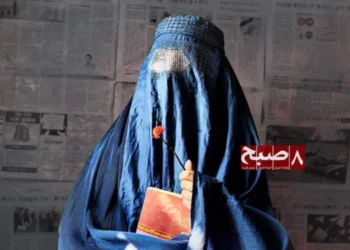
Women have been largely and practically pushed out of journalism. They are barred from entering media centers, silenced at official press conferences, and prohibited from entering Taliban government offices or covering many events. At the end of many press releases, institutions now write: “Due to lack of space and suitable facilities, we apologize for not accommodating our sister journalists.”
Even at the rare conferences where women are allowed—whether intentionally or unintentionally—they face humiliation and unprofessional treatment. In 2024, when I attended one such event on behalf of a media outlet I worked with, organizers told me and other women journalists to sit at the back so we would not appear in camera frames, and warned us not to remove our masks even briefly; otherwise, we would be ordered to leave.
Another major barrier to women’s access to information is the belief among many senior Taliban officials that a woman’s voice is “awrah” (forbidden to be heard). They refuse to answer calls or messages from women journalists, openly stating: “We speak to your male colleagues, not to you.”
When I needed statistics from the Taliban Ministry of Defense for a report, I introduced myself over the phone, only to be told: “Have one of your male colleagues call us.”
Beyond this, women journalists are insulted and harassed for their attire or for what the Taliban call “improper hijab.” This makes access to official sources even more difficult.
A few months ago, while filming video shots with my phone for a report, two Taliban members stopped me. They addressed me with derogatory and threatening language, saying: “You spies for infidels and the West are everywhere; you will never live in peace.”
I was taken to the nearest security station, detained for about two hours, and released only after my father signed a written guarantee. This incident left a deep psychological scar, and the fear and pressure it caused made me unable to continue field reporting. Journalism, once filled with freedom and passion, has now turned into a nightmare intertwined with threats and suppression.
The Stories of Other Women Journalists
Women journalists, who for years amplified the voices of the people—especially women—have faced a harsh and grim reality since the Taliban’s takeover. Work that was once a tool of freedom, justice-seeking, and public awareness has now, under the shadow of fear, threats, and censorship, become a means of enforced silence. Here I share the untold accounts of several women who once stood on the frontlines of reporting, but now are either trapped in silent grief, forced into exile, or confined within their homes, separated from the profession and identity they fought for.
Fatima (pseudonym), a journalist in Kabul, says: “After the Taliban’s return, I lost my job, was unable to continue my studies, and saw my dreams destroyed. Later, I began working as a reporter at a media outlet, but journalism under these conditions is beyond challenging; I face threats, censorship, and discrimination daily. I have been taken to security stations multiple times and threatened by senior Taliban officials.”
She adds, “Once they told me that if I returned to the media center, my name would be removed from the list of journalists. They warned me never to speak to the media about a certain issue—which I will not mention here—or neither I nor my family would be safe. This was the biggest threat I had ever faced, and it made me decide never again to give interviews to any domestic or foreign media outlet. Every time I was humiliated or taken to a station, I considered leaving this profession, but economic hardship stopped me. My mental peace is gone; I often suffer from severe headaches and depression. My greatest fear is that one day the media will be completely closed to girls, and I will lose my last chance to work.”
Maryam (pseudonym), a journalist in the western region, says: “I start each day with threats and end it in fear. Journalism has become humiliating and unsafe. I have experienced censorship many times. The topics I wish to cover are not only banned from publication—they are even banned from being written. I have repeatedly been denied access to basic information. Taliban officials often refuse to speak to women journalists, and women are barred from entering official offices. Accessing news sources has become nearly impossible for women.”
She continues: “Once, I called a Taliban official to verify statistics. Later, he called me back and suggested friendship, with a noticeable change in his tone. I was frightened and never told my editor because I feared it would cause trouble or cost me my job, as has happened to so many other women. I just cut off contact with him. Alongside severe censorship and the erasure of women’s voices from media, we face daily fear and pressure—not only from the Taliban but also from the wider social environment.”
Tamanna (pseudonym), a journalist in Kabul, says: “With the Taliban’s return to power, my career path completely changed. I lost my job, then joined a media outlet for a small salary, but now I am unemployed again. Throughout this time, threats and censorship have been a constant part of my work. Once, I spoke about women’s problems on a program and was threatened by the Taliban. We were warned never to address that topic again, or we would face violent consequences. Media censorship is widespread, and any content against Taliban policies—especially concerning women—is banned from publication.”
She adds, “Most of my reports were censored or deleted. I was told repeatedly that I had no right to be a journalist. Over time, the combined pressures—from both society and the Taliban—especially the humiliation and censorship, eroded my motivation. I no longer felt safe and eventually had to withdraw. This was not just the end of a job; it was the end of part of my identity and dreams.”
Samira (pseudonym), a journalist in exile, says: “After the Taliban’s return, I lost my voice and my dreams. I was unemployed for a time and unable to work in the media. When I returned to journalism, the landscape had changed completely. My reports were censored, sometimes completely removed from broadcast. The Taliban imposed their demands on us and forbade us from telling the truth. They silenced our voices.”
She emphasizes: “It was like a lump in my throat. When I became a media manager, the pressures increased; I had to answer for the work of all my colleagues. Sometimes, over minor issues, the Taliban’s intelligence or the Ministry of Information and Culture would call to warn us not to repeat them. Then the threats became personal—Taliban members entered my office several times and directly threatened me. Eventually, I had to leave the profession I loved and for which I had fought. I left my country and now have no hope of returning to a land under Taliban rule.”
These women journalists, though marginalized, have not surrendered. Some teach in secret; others write for foreign-based outlets remotely. Some still search for glimmers of light in the darkness.
Meanwhile, the Afghanistan Journalists Center (AFJC) has reported that in the first six months of 2025, violations of media freedom increased by 56 percent, with 140 incidents recorded—including the arrest of journalists, closure of media outlets, and restrictions on women journalists. It also reported that 80 percent of women journalists have been forced to leave the profession. According to the Media Support Organization, women journalists now number just over 350 out of a total of 4,500 media workers nationwide.
The past four years have been difficult, marked by a quiet struggle for me and my peers. Yet amid all this darkness, one thing has not been extinguished: hope. We are still here, writing and resisting—for the day when freedom of expression will flourish again in the country, and we can reclaim our rights as half of society’s body.
For women in Afghanistan, journalism is not just a job—it is a cry for presence, a way to give meaning to the world around them.
Today, women journalists live under multi-layered pressures: Taliban threats, lack of opportunities, and global silence. I hope the world will truly hear the voices of Afghanistan’s women—not merely through dry statements, fruitless conferences, or repetitive condemnations. We, the women of Afghanistan, need human rights and women’s rights organizations to listen to us with open ears and to take real, meaningful action.
You can read the Persian version of this report here:
صدایی در سایه: چهار سال خاموشی و ایستادهگی زنان خبرنگار زیر سلطه طالبان