
Several Afghanistan’s citizens express deep concern over the intensifying poverty and the growing spread of unemployment across the country. They state that they have reached a dead end and a crisis in meeting living expenses, no longer able to withstand hunger and joblessness. Concurrently, some economic experts confirm that the country’s economic situation is becoming increasingly critical, attributing it to population growth, lack of market-based knowledge, absence of human capital investment, and Taliban rule. These experts emphasize that Afghanistan needs an economic revival to address structural deficiencies and train a skilled, professional workforce based on market knowledge. They argue that heavy taxation compared to the low profitability of businesses has reduced disposable income, consequently diminishing people’s purchasing power. They also assert that elite migration, restrictions on women, and distrust in domestic investment are among the factors that, under Taliban governance, have exacerbated poverty and the economic crisis in the country. In the latest development, the United Nations Secretary-General has reported that Afghanistan’s economic outlook remains fragile, affected by political instability, financial isolation, trade fluctuations, and declining international aid.
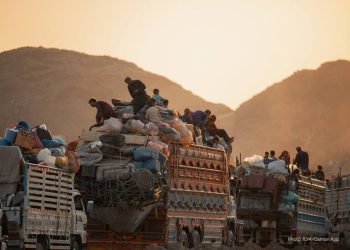
Following Israel’s attacks on Iran and the subsequent rise in food and fuel prices in Afghanistan, some citizens say that chronic unemployment and widespread poverty have left them unable to cope with economic pressures. According to them, over the past nearly four years, many have depleted all their savings and are now left empty-handed, while war and mass deportations of migrants have eliminated even the possibility of migrating to neighboring countries.
Meraaj Ahmad, a citizen of Afghanistan, says he has been unemployed for four years. He states that despite repeated efforts, he has failed to find a job in either government institutions or private companies. He says, “I’ve spent everything I had saved. I mortgaged my house to cover living expenses, and now I have nothing to eat. I couldn’t find work anywhere. Finding a job now depends on being a Taliban member or belonging to a specific ethnicity. Wherever I go, they don’t hire me because I don’t speak Pashto.”
Meraaj Ahmad continues, he has been unemployed for four years. He notes that despite repeated efforts, he has been unable to secure a job in private companies or government institutions, having spent all his savings and now facing severe economic hardship.
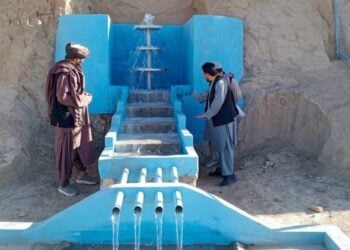
Fazl Ahmad, a resident of Ghor province, says he was previously engaged in agriculture and livestock farming, but this year’s severe drought has prevented any crops from growing, leaving all sown seeds buried in the soil. He adds, “This year, not a single wheat seed sprouted; everything stayed under the ground. All areas have dried up, springs have run dry, and our livestock have no water. Locusts have also invaded irrigated lands. We’re at a loss about what to eat this year.”
Meanwhile, Azarakhsh Hafizi, an economic expert and member of the Afghanistan Chamber of Commerce and Investment (ACCI), says the country’s economic situation is deteriorating daily, with one reason being a 2.9 percent population growth rate. He stresses that the forced deportation of migrants from Iran and Pakistan has added further pressure on Afghanistan’s fragile economy. Hafizi adds that Afghanistan requires an “economic revival” to address its chronic structural deficiencies.
This economic expert notes that even before this, many eligible workers were unemployed, and the level of professional skills in the country is insufficient to meet labor market demands. According to him, Afghanistan’s education system is not designed to enable university graduates to secure positions in regional or global labor markets. Thus, there is an urgent need for a fundamental and positive transformation in the country’s educational and skills structures.
Hafizi says that poverty is not only persisting but intensifying daily, with unemployment rates also rising. He notes that annually, between 450,000 and 500,000 people enter Afghanistan’s labor market, but there is neither the capacity to absorb these new workers nor job opportunities for existing unemployed individuals. He adds that many employed individuals are also losing jobs due to workforce reductions in government institutions or the bankruptcy of private companies, leading to a concerning decline in living standards.
This economic expert states that Afghanistan is rich in natural resources and has abundant potential, but has always relied on foreign aid. This aid is decreasing daily due to shifting global priorities. For instance, of the $2.4 billion in aid requested by the United Nations to meet the basic needs of people in Afghanistan, only 15 percent has been pledged. He warns that if this situation is not addressed, a crisis will emerge that will not only be a stain on the reputation of the current rulers [the Taliban] but also a major humanitarian disaster for the international community.
Mir Shekab Mir, former head of financial services development at the central bank of Afghanistan, told the Hasht-e Subh Daily that poverty and unemployment rates in Afghanistan are high, and people are facing broader economic challenges due to a significant reduction in global aid. He says heavy taxation compared to the low profitability of businesses has reduced disposable income, consequently lowering people’s purchasing power.
Mir adds that political isolation has prevented Afghanistan from leveraging its potential to boost economic growth. He notes that restrictions on women’s education and employment have increased unemployment and poverty among families, keeping the country’s economic growth prospects well below its potential for years to come.
These concerns arise as António Guterres, the United Nations Secretary-General, stated in a recent report that Afghanistan’s economy experienced moderate growth in the fiscal year from March 2024 to March 2025, but this growth was insufficient to improve social indicators. He added that the country’s economic outlook remains fragile, impacted by political instability, financial isolation, trade fluctuations, and declining international aid.
The UN Secretary-General’s report states that poverty, unemployment, and limited purchasing power in Afghanistan persist. According to a United Nations Development Programme (UNDP) report published on April 30, 2025, 75 percent of the population faces livelihood insecurity. The report also indicates that 90 percent of households have been affected by economic shocks, with this figure rising to 97 percent for female-headed households.
The report notes that only 7 percent of women in Afghanistan are employed outside the home, compared to 84 percent of men. It also highlights delays in salary payments and workforce reductions in institutions controlled by the Taliban, who have initiated personnel cuts and salary delays in most ministries.
Access to adequate housing, healthcare, and essential goods has decreased in Afghanistan. In rural areas, which house 71 percent of the population, livelihood insecurity is 15 percent higher than in urban areas. These regions also face severe shortages of healthcare services, primary medical care, and heating resources like fuel.
Revenue collection reached 241.3 billion Afghanis ($3.4 billion), a 14 percent increase from the previous year.
Afghanistan’s trade deficit rose by 48.2 percent to $9.4 billion during the fiscal year. Exports from February to March 2025 decreased by 21.3 percent, and on an annual basis by 12 percent, to $1.79 billion. In contrast, imports grew significantly to $11.16 billion, driven mainly by increased demand for capital goods, intermediate materials, and consumer goods.
The Taliban’s strict enforcement of restrictive policies and procedures, particularly the implementation of the Law for the Propagation of Virtue and Prevention of Vice, has had significant negative impacts on the economic, social, and personal lives of Afghanistan’s people. Young people have also expressed concerns about increasing social controls, rising unemployment, economic hardships, and psychological harm resulting from these restrictions.
You can read the Persian version of this report here:
اوج فقر و بیکاری؛ افغانستان در بنبست معیشت زیر حاکمیت طالبان