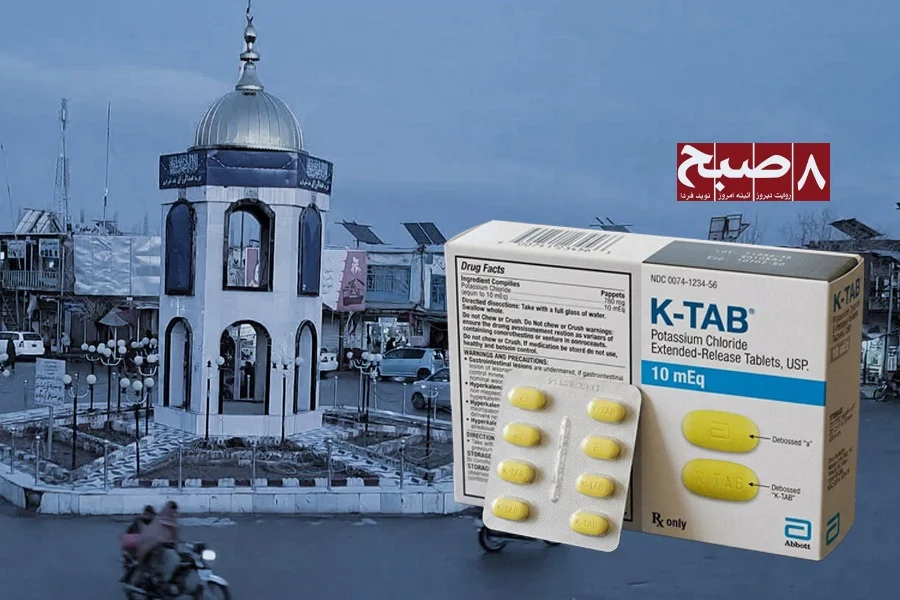
Several residents of Uruzgan Province are worried about rising drug use among young people, particularly Tablet K. They say growing unemployment, easy access to narcotics, and the pressure of hard labor are the main reasons young people turn to these substances. Criticizing the Taliban’s claim of fighting drugs, residents of Uruzgan say that despite the group’s declared ban, drug use among young people has increased.
Ahmad (pseudonym), a resident of Uruzgan, expressed concern about the growing use of drugs, particularly Tablet K, among the province’s youth. According to him, rising unemployment, easy access to narcotics, and the pressure of hard labor are the main factors pushing young people toward Tablet K.
The resident of Uruzgan said: “The use of drugs, especially Tablet K, has become more widespread among young people in Uruzgan. These substances are very easily available to young people. In my village, almost all the young men, except for a few, use it. It was used before as well, but in recent years it has risen significantly.”
Ahmad said: “Young people who are unemployed turn to drugs out of idleness, and those who work use these substances because of the hard labor and heavy fatigue, so that they feel less tired. Drugs are even bought and sold among some young people in schools.”
Nemat (pseudonym), another resident of Uruzgan, criticized the Taliban’s claim of combating the cultivation and production of narcotics. He said that despite the declared ban and the campaign against drugs, the use of these substances among young people has increased.
The resident of Uruzgan said: “Buying and selling drugs has become easier, and their production has also increased. Most young people in this province use hashish, Tablet K, and methamphetamine. Many people are not in a good economic situation, and some young people resort to theft to get money and buy drugs, a situation that could lead to a rise in crime in society.”
Hikmat (pseudonym), another resident of Uruzgan, called for an end to the cultivation, production, and trafficking of narcotics. He said that job opportunities should be created, awareness should be raised about the importance of education and study, and continuous awareness campaigns should be carried out about the harms of drug use.
The resident of Uruzgan added: “Young people are the asset of this country, yet instead of working, studying, and progressing, a large number of them in Uruzgan have become addicted. There is almost no study, progress, or innovation among young people. Either they have all become contaminated with drugs, or they are occupied with social media. We are worried about Afghanistan in the coming years.”
Meanwhile, Dr. Mohib (pseudonym), an internal medicine specialist, warns that the use of Tablet K can cause insomnia, anxiety, impaired concentration, dependence, and an increased heart rate and blood pressure. According to him, in severe cases, use of this substance can lead to seizures, loss of consciousness, respiratory failure, and even death.
The doctor added: “Continuous use can also cause psychological, physical, and family problems, as well as the loss of work or education. The composition of a pill cannot be determined from its color and shape, and there is no specific safe dose for it.”
This comes as the Hasht-e Subh Daily, in a report some time ago, spoke with several teenagers, most of whom said they first turned to drug use at the encouragement of friends or people close to them and became dependent after a while.
According to them, economic problems, unemployment, and difficult living conditions have also set the stage for their turn to drugs. Some of these teenagers added that they used “Tablet K” to work more and reduce fatigue, but after a short time they became accustomed to it and eventually became addicted.
However, field findings by the Hasht-e Subh Daily show that after the Taliban announced a ban on the cultivation and trade of narcotics, the price of one kilogram of opium in Helmand rose from 3,000 afghanis to 50,000 afghanis. The markets of Sharafat, Sarwan Qala, Sangin, Musa Qala, Bahramcha, and Chanjir are among the main centers for buying and selling opium in this province. Several local sources confirm that Taliban commanders and officials also have investments in these markets, are partners in the drug trade, and profit from it.
You can read the Persian version of this report here:
تهدید خاموش؛ جوانان ارزگانی چگونه به دام «تابلیت کا» میافتند؟