Several women and girls in Herat have bitter and painful accounts of their treatment by the Taliban’s Morality Police. They say the conduct of the Taliban’s Morality Police was so ugly and humiliating that they wished for death during their encounters. These women and girls say that even when they observed the hijab the Taliban require and were accompanied by a mahram, they were not safe from the Morality Police. According to them, the Taliban’s treatment has at times pushed them to the point of wishing for death. They stress that the wound left by an encounter with the Taliban’s Morality Police does not end with that moment, but remains in their daily lives in the form of fear, anxiety, and restricted freedom of movement.
These women and girls say that, in addition to imposing restrictions on education, study, and work, the Taliban have turned life in all spheres into a hell on earth for women. According to them, the Taliban, particularly the group’s Morality Police, interfere in every aspect of women’s lives, and even women who observe the hijab the Taliban require and are accompanied by a mahram are not safe from their treatment, because the Morality Police insult, humiliate, and detain women on various pretexts.
One of the women who has experienced the bitter ordeal of being summoned and humiliated by the Taliban’s Morality Police told the Hasht-e Subh Daily: “When I was returning from work, I received a message saying I had been summoned to the Directorate for the Propagation of Virtue and Prevention of Vice. That day was very difficult. On one hand, I was worried about losing my job, and on the other, I was afraid of being detained and imprisoned. Without informing my family, I went to the Directorate for the Propagation of Virtue with a family member who accompanied me. There, they treated me so badly and insultingly that their behavior was in no way befitting of a human being. They warned me that if I worked again and went to work, they would imprison me. Since I was the only breadwinner of my family, I kept thinking about my family members and asking myself how I could lose my job.”
Another girl hopes that no girl ever has to face the Taliban’s Morality Police. According to her, in addition to the suffering caused by the closure of schools and universities and the denial of work, women and girls face further pain and hardship when they encounter the Taliban’s Morality Police. She says that until she herself encountered the Taliban’s Morality Police, she did not believe other people’s accounts. But when the group stopped her despite observing the hijab and being accompanied by a mahram, she finally understood what bitter and painful experiences girls have been through.
This girl adds: “It is impossible to be a girl and not have a bitter experience with the Taliban’s Morality Police. Not long ago, I was returning home with my brother when the Taliban’s Morality Police stopped our car. The car belonged to my maternal uncle. When they stopped the car, they asked my uncle, in a very harsh and insulting tone, who these people were. My uncle replied that they were his nieces and nephews, and that they were brothers and sisters. But they were not satisfied with this and continued to find fault. Then they picked on my brother for not having a beard. They kept us for four hours and contacted our family. My family members also came there, but the Morality Police had no valid reason for this treatment.”
This girl stresses: “That day I kept telling myself I wished I had not survived. They treated us so badly and humiliatingly that for two weeks afterward I did not even leave the house, because I was afraid of facing such an incident again.”
Another girl in Herat, who does not want her name mentioned in this report, recounts her own bitter and painful experience and likens life under the shadow of the Taliban’s Morality Police to hell. She says she has no choice but to continue living in such conditions and endure this difficult situation.
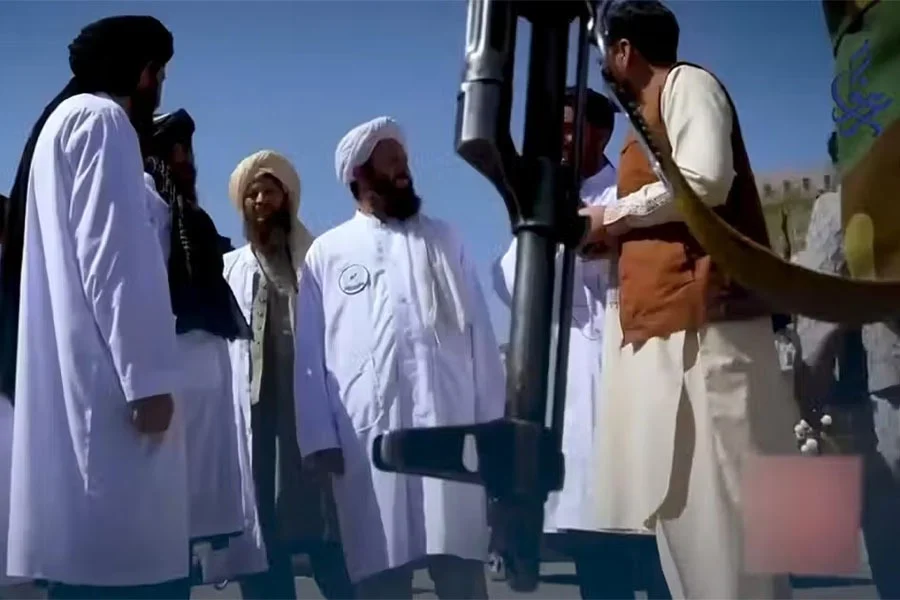
This young woman adds: “Life under the shadow of the Taliban’s Morality Police is agonizing and like hell, a situation we are forced to endure every moment. Even the sight of a white robe has become a symbol of fear and terror for us, because we are always worried that they will block our way, find fault with us, and detain us.”
This girl says: “I myself have encountered the Taliban’s Morality Police several times. Once, because the driver of the car was a woman, they stopped the car on the side of the road and warned her that women must not leave the house without a mahram and must not drive. They also stressed that if women drive, they must have a chador and their mahram must be beside them. They asked all of us girls inside the car to call our families. But in the end, through the talks and mediation of another member of the Morality Police who was a moderate person, we managed to resolve the matter.”
According to her, on several other occasions as well, despite her observing the hijab the Taliban require, they have created problems for her. These encounters have led her to no longer travel anywhere in cars driven by women. She says: “The restrictions and incidents that occur are one thing, but the trauma and the negative effects of the fear and terror that their treatment leaves in a person’s mind is something that stays with her forever.”
Previously, the United Nations Assistance Mission in Afghanistan (UNAMA) and the UN Special Rapporteur on the situation of human rights in Afghanistan expressed concern in their reports about the implementation of the Taliban’s Law for the Propagation of Virtue and Prevention of Vice, the expansion of restrictions on individual freedoms and the rights of women and girls, and the increase in the powers of the Morality Police.
You can read the Persian version of this report here:
کابوس چپنسفیدها؛ زخمهایی که بر جان و روان زنان هرات میماند