• 8AM.MEDIA
  • ویب‌سایت فارسی
  • پښتو ویب‌پاڼه
  • اۉزبېکچه ویب‌سایت
  • Podcast
Saturday, September 12, 2026
Hasht-e Subh
  • Home
  • News
    • Afghanistan News
    • World News
  • Opinion
    • Editorial
    • Analysis
  • Reports
    • Daily Reports
    • Investigative Reports
  • Society
    • The story of people
  • Women’s Word
  • Columns
    • Three Years After Afghanistan’s Fall: The Taliban’s Resurgence
    • Towards Equality
    • The Resurgence of the Taliban: Two Years Since Afghanistan’s Fall
    • Hebatullah Report Special Edition
    • Resistance for Education Special Edition
    • Special Column on Taliban’s Education Curriculum
    • Nawroz
  • Interviews
  • Contact Us
    • About Us
    • 8AM MEDIA Annual Awards
    • Submit an Article to Hasht-e-Subh
  • 8am.mediaBack
Subscribe
No Result
View All Result
  • Home
  • News
    • Afghanistan News
    • World News
  • Opinion
    • Editorial
    • Analysis
  • Reports
    • Daily Reports
    • Investigative Reports
  • Society
    • The story of people
  • Women’s Word
  • Columns
    • Three Years After Afghanistan’s Fall: The Taliban’s Resurgence
    • Towards Equality
    • The Resurgence of the Taliban: Two Years Since Afghanistan’s Fall
    • Hebatullah Report Special Edition
    • Resistance for Education Special Edition
    • Special Column on Taliban’s Education Curriculum
    • Nawroz
  • Interviews
  • Contact Us
    • About Us
    • 8AM MEDIA Annual Awards
    • Submit an Article to Hasht-e-Subh
  • 8am.mediaBack
No Result
View All Result
Hasht-e Subh
No Result
View All Result

The Taliban’s Relentless Restrictions: When Women Can No Longer Shop at the Market

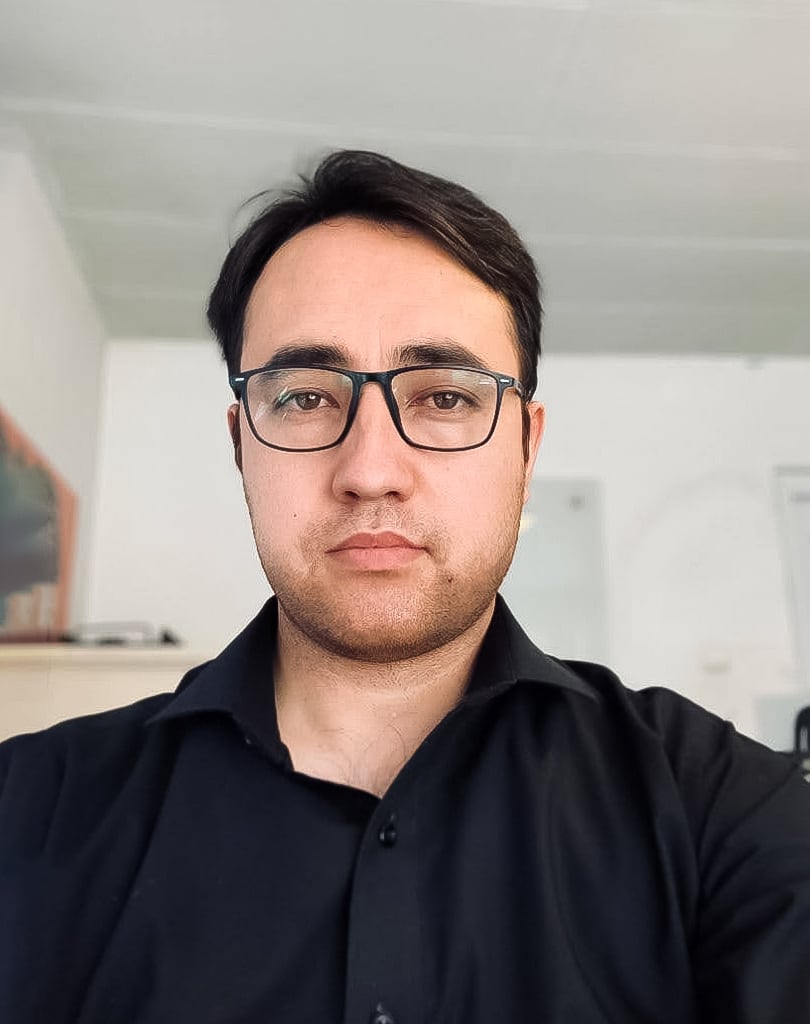
Translated by Farhad Farhaad | Originally reported in Persian by Kiomars Samadi

Mohammad Mohammad
20 June 2026 - Solar Hijri Date: 1405/03/30 [t_time:1781979218]
A Taliban fighter carrying a rifle stands among women in burqas at a market in Afghanistan. (Photo credit: AP)

AP

Yesterday, I read in one of the media outlets that the Taliban in the provinces of Laghman and Nangarhar have warned shopkeepers not to sell anything to women who are unaccompanied by a male guardian (mahram); otherwise, their shops will be shut down,n and they themselves will be imprisoned. The reality is that this chain of restrictions and prohibitions is no longer a temporary policy, nor a measure of moral discipline, but a “road map” with predetermined stations aimed at the complete erasure of women from the public sphere. Over the past five years, the Taliban have not taken a single step back in their suppression of women, not because of pressure from society, not because of international reactions, and not even because of the catastrophic human consequences of the policies of their apparatus for the propagation of virtue and prevention of vice.

The Taliban first launched the project of removing women and girls from schools and universities, not as a temporary or marginal decision, but as a step deemed essential to the survival of their regime. After that came the turn of work and the economy: dismissal from government offices and then from the private sector, meaning the complete removal of women from the cycle of production and livelihood. This means that a woman has neither the right to education, nor the right to work, nor the right to provide bread for herself and her family. Then came the turn of public spaces: parks, bathhouses, sports, travel, and so on. Each of these strips away a piece of women’s presence in society. As if this were not enough, the white-cloaked agents of the propagation of virtue took to the streets and began carrying out arbitrary detentions. This means that the home became a prison for women, and the streets a field of danger.

Then it was the turn of the health sector. Here, it is no longer merely a restriction, but a violation of the most basic right to life. The Taliban ordered that a female doctor must come to her workplace accompanied by a male guardian, meaning that even a woman who saves the lives of others must herself remain under the supervision of a man. They said something even worse: that a female patient must not go to a hospital without a male guardian, and even if she does, she must not be treated. In other words, if a woman is dying and has no male guardian with her, she must die, because the Taliban’s version of Sharia prefers death over treatment without a male guardian. This means that religion has become a pretext for the indirect killing of women. And now it is the turn of the shops. Under the Taliban’s new order, if a woman goes to the market without a male guardian, the shopkeeper has no right to sell her goods, meaning the woman is barred from securing food and clothing for herself and her family.

If we line up everything described above, the same truth becomes even clearer: the Taliban are incapable of reform. Talk of the Taliban’s capacity for reform is not only naive but dangerous. If one day a decree arrives that does not even allow women to leave their homes in cases of necessity, no one should be surprised, because this is precisely the top of the very ladder the Taliban have been climbing rung by rung for several years.

It must not be forgotten that the Taliban’s ideology is inherently misogynistic. For this reason, imposing restrictions on the lives of women and girls is not a temporary, tactical move meant to extort the world, but a central and key objective for consolidating the regime’s longevity. In the Taliban’s ideology, women must be restrained, hidden, erased from the view of society, and denied a presence in any arena. This misogyny is rooted in the Taliban’s particular interpretation of religion, which regards women as a source of corruption and disorder. Backing down on this matter would therefore, for the Taliban, amount to violating the very purpose of their regime.

Yes, the Taliban will not step back, but they can be pushed back. There is a difference between the two. The Taliban understand only the language of force, not the language of bargaining, accommodation, and tolerance. This force has two sources: the domestic and the foreign. The Taliban have indeed seized control of the country by force, but they also have vulnerabilities. The very fact that they lack legitimacy and popularity points to their vulnerability. If this lack of popular support turns into an organized and sustained protest, it would pose the greatest threat to the survival of the Taliban regime; a protest that is not confined to a single city or a single day, and does not quickly subside. If the people show that their fear of the continuation of the current miserable situation outweighs their fear of the Taliban’s bullets, this group will surely be brought to its senses.

In confronting protest, the Taliban know how to resort to only one tool: naked repression. So far, every protest that has taken place has been met with guns and tanks, mass arrests, torture, and numerous enforced disappearances. The key point here is that this very violent reaction by the Taliban, while terrifying, is also a weakness for the group, in the sense that, because they are an armed insurgent group not built to govern a society, they quickly fall into confusion and instability when faced with a wave of street protests, strikes, and civil disobedience. Historical experience in the region around Afghanistan and elsewhere has also shown that the resistance of the people against tyranny has been fruitful, even when the response to civil protest has been bullets. Authoritarian regimes gradually come to realize that the cost of imposing repression will be greater than the cost of tolerating dissent. For this reason, they seek a solution in retreat.

Yes, standing up to the Taliban is hard and carries heavy consequences, but enduring a lifetime of confinement at home, deprived of education, work, medical care, and even of buying bread from the market, carries far heavier consequences. If we remain silent today, tomorrow a new restriction will come, and the day after, still newer restrictions, until even the chance to breathe is taken away. We must also abandon the illusion that the Taliban can be reformed through foreign pressure. The bitter reality is that the international community, for all its statements of condemnation and symbolic sanctions, is not willing to take a hard line against the Taliban for the sake of women’s rights. Neighboring countries are seeking engagement with the Taliban. Western countries, too, are happy to negotiate with the Taliban over migration and certain other issues. In this equation, the place of the women of Afghanistan is on the margins. Popular protest is therefore the effective solution; a protest that begins in neighborhoods and alleys and back streets and spreads to district centers and cities. Likewise, a protest that is organized, has leadership, and carries clear democratic messages.


You can read the Persian version of this analysis here:

طالبان و محدودیت‌های پی‌درپی؛ وقتی زنان نمی‌توانند از بازار خرید کنند

ShareTweetSendSendShare

Related Posts

A shaded map highlights Badakhshan in Afghanistan's northeast against a backdrop of the region's rugged mountains. (Photo credit: Wikipedia)
Analysis

Badakhshan: From a Legacy of Resistance to a Role in Afghanistan’s Political Transition and the Building of an Inclusive National State

12 September 2026 [t_time:1789237315]
Amir Khan Muttaqi meets China’s ambassador to Kabul, Zhao Xing, to discuss bilateral relations and friendly ties. (Photo credit: @MoFA_Afg)
Afghanistan News

Amir Khan Muttaqi Meets Chinese Ambassador in Kabul

12 September 2026 [t_time:1789227477]
An Afghan girl reflects with worry as others study by lamplight, reflecting the anxiety many face after falling victim to fraudulent online education schemes. (Photo credit: AFP + Pexels)
Daily Reports

Educational Scams: How Out-of-School Girls in Afghanistan Fall Victim to Fake Programs

12 September 2026 [t_time:1789221505]

Latest

Loading latest news...

Popular stories

  • Hamza bin Laden - the son of Osama bin Laden (Photo: Social Media)

    Al-Qaeda Releases Hamza bin Laden Message on 9/11 Anniversary

    Share
    Share Tweet
  • Taliban Shoot Young Man from Herat After Torturing Him with Hands Tied

    Share
    Share Tweet
  • UN Women: Ban on Women’s Entry to UN Offices in Afghanistan Enters Second Year

    Share
    Share Tweet
  • Iran Foreign Ministry: US Attacks on Commercial Vessels Constitute Economic War Against Iran

    Share
    Share Tweet
  • Sajjad Haider Khan: Those with Valid Visas Will Continue Their Studies in Pakistan

    Share
    Share Tweet

Podcast

Insights
Insights

Join Lynne O’Donnell for 8AM’s podcast series, Insights.
Lynne talks with generals, diplomats, soldiers, journalists, politicians, activists, people who have front row seats for conflicts around the world, and citizens with a story to tell, happy or sad. For this first series, Afghanistan is the focus. Lynne and her guests talk about the collapse of the republic in August, 2021, and the impact since — for the people of Afghanistan, for the security of the region, for the safety of the world. It’s important, interesting and insightful.

Insights/22: Controlling the Narrative with Mina Sharif
byinsights8am

Controlling the Narrative

Lynne O’Donnell talks with Mina Sharif, author, activist, women’s rights campaigner, educator and mentor. They discuss who controls the narrative and who speaks for Afghanistan’s people when the Taliban appear to have seized control not only of the country but of the message, too.

Have a listen

Insights/22: Controlling the Narrative with Mina Sharif
Episode play icon
Insights/22: Controlling the Narrative with Mina Sharif
Episode Description
Episode play icon
Insights/21: Media Meltdown with Zahra Joya
Episode Description
Episode play icon
Insights/20: Terror Inc with Scott Richards
Episode Description
Episode play icon
Insights/19: Busting Stereotypes with Bushra Gohar
Episode Description
Episode play icon
Insights/18: Media Matters with Waliullah Rahmani
Episode Description
Episode play icon
Insights/17: What Goes Around Comes Around with Sima Samar
Episode Description
Search Results placeholder
Hasht-e Subh

8AM Media, also known as Hasht-e-Subh Daily, stands as Afghanistan's premier independent and non-profit newspaper, resonating as a beacon of journalistic integrity since its establishment in June 2007 by esteemed Afghan journalists and human rights advocates. With a steadfast commitment to citizen journalism and civic education, Hasht-e-Subh Daily has earned its place as the most esteemed publication in the nation.

Publisher: Sanjar Sohail
Email: [email protected]
Executive Director: Parwiz Kawa
Email: [email protected]

Read More

Badakhshan: From a Legacy of Resistance to a Role in Afghanistan’s Political Transition and the Building of an Inclusive National State

Woman Online University: Civil Resistance Redefines Education in Afghanistan’s Age of Closure

Taliban’s Propaganda Tactics: Sowing Discord Among Opposition Fronts and Stoking Fear of Civil War

Taliban Revenge: Critics Arrested Upon Return to Afghanistan from Abroad

Mullah Hafiz: How a Taxi Driver Became a Taliban Governor

Editor’s Choice

Every Saturday morning, 8AM MEDIA English Services Department will guide you through the week’s biggest stories from Afghanistan and the international community.

Subscribe

© 2026 - ©Hasht-e Subh Daily

No Result
View All Result
8am.Media
پښتو ویب‌پاڼه
ویب‌سایت فارسی
اۉزبېکچه ویب‌سایت
  • Home
  • News
    • Afghanistan News
    • World News
  • Opinion
    • Editorial
    • Analysis
  • Reports
    • Daily Reports
    • Investigative Reports
  • Society
    • The story of people
  • Women’s Word
  • Columns
    • Three Years After Afghanistan’s Fall: The Taliban’s Resurgence
    • Towards Equality
    • The Resurgence of the Taliban: Two Years Since Afghanistan’s Fall
    • Hebatullah Report Special Edition
    • Resistance for Education Special Edition
    • Special Column on Taliban’s Education Curriculum
    • Nawroz
  • Interviews
  • Contact Us
    • About Us
    • 8AM MEDIA Annual Awards
    • Submit an Article to Hasht-e-Subh
  • 8am.media

© 2026 - ©Hasht-e Subh Daily