• 8AM.MEDIA
  • ویب‌سایت فارسی
  • پښتو ویب‌پاڼه
  • اۉزبېکچه ویب‌سایت
  • Podcast
Wednesday, September 30, 2026
Hasht-e Subh
  • Home
  • News
    • Afghanistan News
    • World News
  • Opinion
    • Editorial
    • Analysis
  • Reports
    • Daily Reports
    • Investigative Reports
  • Society
    • The story of people
  • Women’s Word
  • Columns
    • Three Years After Afghanistan’s Fall: The Taliban’s Resurgence
    • Towards Equality
    • The Resurgence of the Taliban: Two Years Since Afghanistan’s Fall
    • Hebatullah Report Special Edition
    • Resistance for Education Special Edition
    • Special Column on Taliban’s Education Curriculum
    • Nawroz
  • Interviews
  • Contact Us
    • About Us
    • 8AM MEDIA Annual Awards
    • Submit an Article to Hasht-e-Subh
  • 8am.mediaBack
Subscribe
No Result
View All Result
  • Home
  • News
    • Afghanistan News
    • World News
  • Opinion
    • Editorial
    • Analysis
  • Reports
    • Daily Reports
    • Investigative Reports
  • Society
    • The story of people
  • Women’s Word
  • Columns
    • Three Years After Afghanistan’s Fall: The Taliban’s Resurgence
    • Towards Equality
    • The Resurgence of the Taliban: Two Years Since Afghanistan’s Fall
    • Hebatullah Report Special Edition
    • Resistance for Education Special Edition
    • Special Column on Taliban’s Education Curriculum
    • Nawroz
  • Interviews
  • Contact Us
    • About Us
    • 8AM MEDIA Annual Awards
    • Submit an Article to Hasht-e-Subh
  • 8am.mediaBack
No Result
View All Result
Hasht-e Subh
No Result
View All Result

The Silent Digital Prison: The Taliban’s Gift to the People of Afghanistan

Abdul Nasir Noorzad Abdul Nasir Noorzad
17 May 2026 - Solar Hijri Date: 1405/02/27 [t_time:1779036354]
Taliban figures stand before a wall of blocked social media platforms as citizens of Afghanistan sit trapped inside glass cells shaped like smartphones, illustrating the nationwide internet shutdown. (Photo credit: AI)

AI

Digital blackouts have now become part of the Taliban regime’s agenda. After ideological inquisition, street-level repression, and intimidation, all hallmarks of a totalitarian system, the regime has turned to restricting and severing fiber-optic internet. A regime that intrudes into the most private corners of people’s lives and imposes its preferred order on society is now pursuing a nationwide shutdown to tighten its grip of surveillance and control over citizens more than ever.

By erecting a vast digital wall, the Taliban are working to close off every avenue for dissent, rebellion, intelligence penetration, and the flow of information about the nature and conduct of their regime. This digital wall is, in effect, an attempt to let the group sustain itself with greater ease while choking off any free movement of information.

Published reports indicate that the Taliban’s Minister of Communications has instructed fiber-optic service providers to cut Kabul residents’ access to the internet. The decision is sudden and startling. It carries profound security implications and will bring sweeping economic and livelihood consequences for ordinary citizens. By convening an emergency meeting with internet company officials, the Taliban have taken another step toward shutting down the country’s digital space, a space whose restriction is aimed at establishing continuous surveillance, greater controllability, and the consolidation of Taliban dominance over society.

Kabul has become the starting point of a digital blackout project designed to manage the situation in line with intelligence advisories. By ordering an urban digital blackout, the Taliban seek to repel and neutralize threats that could shake the fragile and illegitimate foundations of their rule. Severing Kabul’s connectivity through the quarantine of fiber-optic infrastructure is not merely a preventive security measure. It also tightens the noose of siege and control around people’s daily lives.

In such conditions, more than thirty million people are not simply facing a technical restriction. They are confronting an imposed structure born of the regime’s fear and anxiety, one that narrows the space of life around them with each passing day. Beyond this, a sweeping security, intelligence, and control project is now taking shape, a project that may begin with seemingly soft measures but will ultimately produce a modern digital prison.

What appears most alarming is that the Taliban’s plan is not temporary. It marks the beginning of a chain of measures aimed at further restricting the space for free expression and opinion. These policies will undoubtedly come at a cost for the Taliban, yet the security imperatives of their survival have evidently pushed them to accept that cost. From monitoring their own ranks to policing public conversations, from depriving society of economic self-sufficiency to engineering a cycle of dependency on the regime, all form part of the broader objectives of this long-term security project.

This time, the Taliban have placed their hand directly on society’s most vital tool of communication and information. Restricting the internet is the fastest, most durable, and most formidable means of controlling the flow of information, a step that also lays bare the group’s weakness and fear. The decision has been made within a framework of preventive calculation laced with anxiety. The Taliban are seeking to reshape the digital sphere in a way that tightens the ring of surveillance and control over citizens, widens restrictions, and blocks the channels through which information, images, and reports of their managerial failures might leak out. The circulation of footage and accounts showing the violent and abusive conduct of Taliban members toward ordinary citizens has steadily increased pressure on the group’s decision-making circles.

The Taliban’s assault on fiber-optic infrastructure is not simply an act of plain censorship. It is a sign of deep fear and unease in the face of the public’s digital resistance, a resistance that has driven the group toward harsher censorship and broader restrictions. Cybersecurity analyses likewise suggest that the Taliban appear to see themselves as confronting multiple threats, from the emergence of digital protests and a digital uprising to opponents’ use of cyberspace and the formation of a cohesive Persian-speaking digital resistance front against them. These very concerns have pushed the Taliban toward controlling public opinion.

Beyond political and security threats, the economic self-sufficiency that the internet enables for citizens is also viewed as a danger by the Taliban. For this reason, building a domestic and tightly controlled internet is likely to be among the group’s top priorities for preserving power, granting them fuller oversight and control over cyberspace. In such a setting, the Taliban’s narrative, filling the vacuum left by the absence of an independent internet system, could become the dominant narrative and serve as an effort to manufacture legitimacy in the public mind. Alongside this, decisions by intelligence circles to contain threats inside Afghanistan before they spiral out of control stand as another principal driver behind the internet shutdown.

As noted earlier, this move is not merely a tactical security measure to manage a crisis. It is a political project aimed at the gradual collapse of the digital sphere within the framework of a wide-ranging psychological war, a measure that can disrupt the transmission of an accurate picture of Afghanistan under Taliban rule and push society into informational isolation. In such an atmosphere, censorship becomes institutionalized and unchallengeable, the Taliban’s narrative spreads further, truths remain buried beneath manipulated accounts, and a society trapped in perpetual fear and anxiety born of ignorance is steered along the path of Taliban policies.

On another front, restricting fiber-optic internet will lay the groundwork for the expansion of an underground economy fueled by the illegal sale of internet access, a market whose profits will once again flow into the pockets of Taliban-linked mafias. VPNs and privileged internet access will likewise be reserved exclusively for senior Taliban officials. Even so, what remains clear is that no government has ever succeeded in halting the free flow of information indefinitely. The digital sphere may face restrictions for a time, but the public’s thirst for access to information and their determination to stand against the Taliban’s imposed narrative cannot be contained by such tactical or even long-term measures.


You can read the Persian version of this analysis here:
زندان خاموش دیجیتال: هدیه طالبان به مردم

ShareTweetSendSendShare

Related Posts

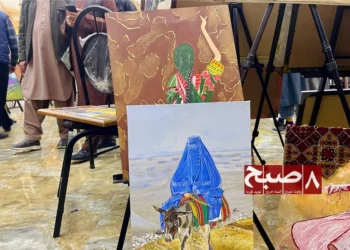
Paintings by young artists, including a woman in a blue burqa leading a donkey, are displayed on easels at an art exhibition in Afghanistan. (Photo credit: 8am.media)
Daily Reports

Painters and Calligraphers Squeezed by Restrictions and a Collapsing Market as Art Gasps for Air

30 September 2026 [t_time:1790772691]
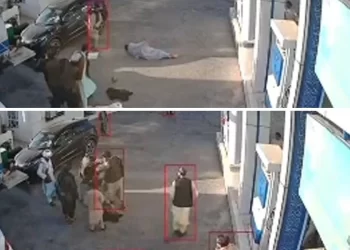
A split image from two videos shows a man beating a child held down inside a religious school, alongside another child being beaten outdoors as others sit nearby. (Photo credit: Social Media)
Daily Reports

From the Taliban’s Club to the Lash of the Madrasas: What Do the Videos of Child Beatings Reveal?

30 September 2026 [t_time:1790772458]
A doctor conducts a heart ultrasound examination as patients in Afghanistan struggle with high treatment costs and a shortage of specialist care. (Photo Credit: Exclusive)
Daily Reports

High Treatment Costs Leave Heart Patients Struggling as Medicine Prices Rise and Specialist Care Falls Short

30 September 2026 [t_time:1790769193]

Latest

Loading latest news...

Popular stories

  • Surveillance footage shows Taliban fighters surrounding and shooting a bound man in Herat. (Photo credit: Social Media)

    Taliban Shoot Young Man from Herat After Torturing Him with Hands Tied

    Share
    Share Tweet
  • UN Report Reveals Shifts in Family Attitudes and Rise in Domestic Violence in Afghanistan

    Share
    Share Tweet
  • Al-Qaeda Releases Hamza bin Laden Message on 9/11 Anniversary

    Share
    Share Tweet
  • Sources: Kandahar Bombing Leaves Seven Dead and Eight Injured at Mirwais Hospital

    Share
    Share Tweet
  • Afghanistan’s Empty Seat at the Annual UN General Assembly

    Share
    Share Tweet

Podcast

Insights
Insights

Join Lynne O’Donnell for 8AM’s podcast series, Insights.
Lynne talks with generals, diplomats, soldiers, journalists, politicians, activists, people who have front row seats for conflicts around the world, and citizens with a story to tell, happy or sad. For this first series, Afghanistan is the focus. Lynne and her guests talk about the collapse of the republic in August, 2021, and the impact since — for the people of Afghanistan, for the security of the region, for the safety of the world. It’s important, interesting and insightful.

Insights/22: Controlling the Narrative with Mina Sharif
byinsights8am

Controlling the Narrative

Lynne O’Donnell talks with Mina Sharif, author, activist, women’s rights campaigner, educator and mentor. They discuss who controls the narrative and who speaks for Afghanistan’s people when the Taliban appear to have seized control not only of the country but of the message, too.

Have a listen

Insights/22: Controlling the Narrative with Mina Sharif
Episode play icon
Insights/22: Controlling the Narrative with Mina Sharif
Episode Description
Episode play icon
Insights/21: Media Meltdown with Zahra Joya
Episode Description
Episode play icon
Insights/20: Terror Inc with Scott Richards
Episode Description
Episode play icon
Insights/19: Busting Stereotypes with Bushra Gohar
Episode Description
Episode play icon
Insights/18: Media Matters with Waliullah Rahmani
Episode Description
Episode play icon
Insights/17: What Goes Around Comes Around with Sima Samar
Episode Description
Search Results placeholder
Hasht-e Subh

8AM Media, also known as Hasht-e-Subh Daily, stands as Afghanistan's premier independent and non-profit newspaper, resonating as a beacon of journalistic integrity since its establishment in June 2007 by esteemed Afghan journalists and human rights advocates. With a steadfast commitment to citizen journalism and civic education, Hasht-e-Subh Daily has earned its place as the most esteemed publication in the nation.

Publisher: Sanjar Sohail
Email: [email protected]
Executive Director: Parwiz Kawa
Email: [email protected]

Read More

Morocco Appoints First Woman Prime Minister

Painters and Calligraphers Squeezed by Restrictions and a Collapsing Market as Art Gasps for Air

From the Taliban’s Club to the Lash of the Madrasas: What Do the Videos of Child Beatings Reveal?

Araghchi Receives US Response to Iran’s Seven-Day Proposal

Sindh Court Allows Afghan Medical Students to Continue Their Studies in Pakistan

Editor’s Choice

Every Saturday morning, 8AM MEDIA English Services Department will guide you through the week’s biggest stories from Afghanistan and the international community.

Subscribe

© 2026 - ©Hasht-e Subh Daily

No Result
View All Result
8am.Media
پښتو ویب‌پاڼه
ویب‌سایت فارسی
اۉزبېکچه ویب‌سایت
  • Home
  • News
    • Afghanistan News
    • World News
  • Opinion
    • Editorial
    • Analysis
  • Reports
    • Daily Reports
    • Investigative Reports
  • Society
    • The story of people
  • Women’s Word
  • Columns
    • Three Years After Afghanistan’s Fall: The Taliban’s Resurgence
    • Towards Equality
    • The Resurgence of the Taliban: Two Years Since Afghanistan’s Fall
    • Hebatullah Report Special Edition
    • Resistance for Education Special Edition
    • Special Column on Taliban’s Education Curriculum
    • Nawroz
  • Interviews
  • Contact Us
    • About Us
    • 8AM MEDIA Annual Awards
    • Submit an Article to Hasht-e-Subh
  • 8am.media

© 2026 - ©Hasht-e Subh Daily