Several Kabul residents have complained about the harassment of women by individuals affiliated with the Taliban’s intelligence service and the group’s Morality Police. They say the continuation of these confrontations and restrictions over the past five years has confined a large number of girls to their homes. In their view, it is part of a Taliban policy of gradually and deliberately removing women from society. These residents also say that the questioning and treatment of women by Taliban members in plain clothes has opened the way for personal abuse and the imposition of individual whims. According to them, such treatment has not only threatened the freedom and security of women, but also created widespread fear and anxiety among citizens, particularly women and girls.
Zainab (pseudonym), a Kabul resident, complains about the growing harassment by individuals affiliated with the Taliban’s intelligence service and the Morality Police. According to her, these individuals make life harder for people every day and interfere in many personal matters of citizens, especially women.
The Kabul resident says: “Our house is in Kotal and my workplace is in Kota-e Sangi. I go to the office every day, and since there are no other women in the taxi, I have to sit in the front seat of the car. The Morality Police or individuals affiliated with the Taliban’s intelligence service sometimes stop the car and question both the driver and me, especially if the driver is young.”
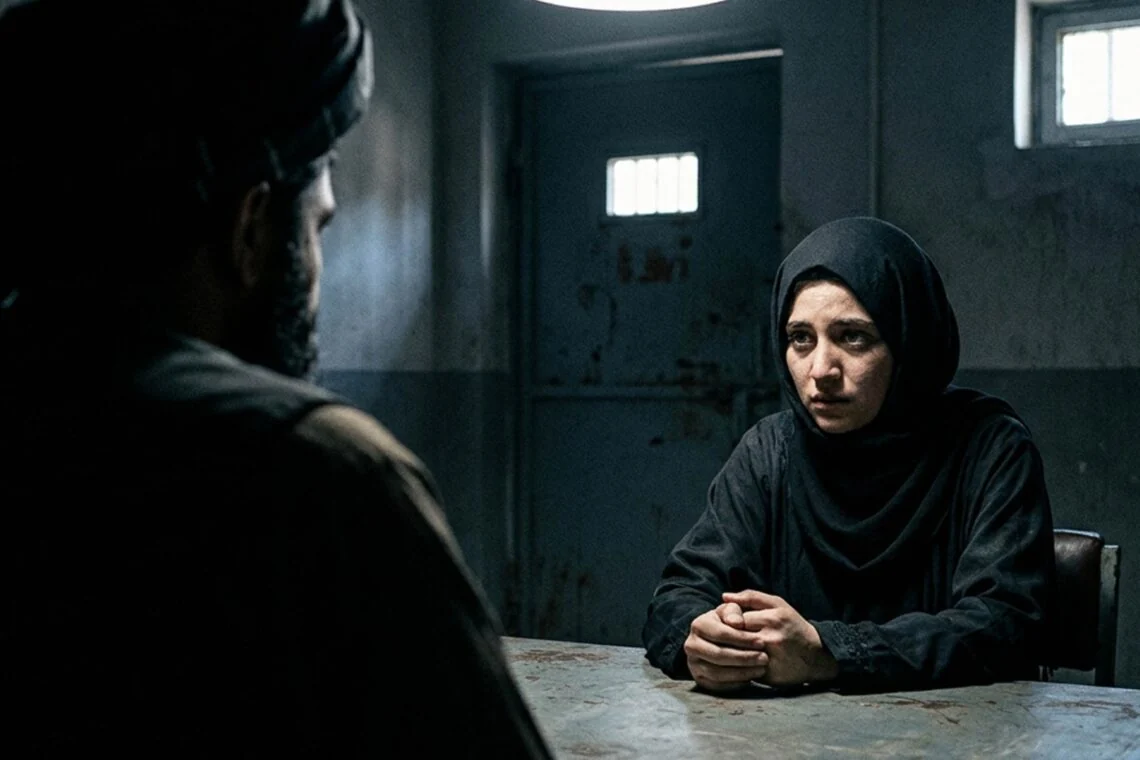
Zainab says: “It has happened many times that they have stopped the car carrying me, but the worst case occurred a while ago in the Dahn-e Bagh area. Taliban members stopped the car, made the driver get out, and ordered me not to get out of the car. There were two of them. They questioned the driver outside the car and, at the same time, asked me at least six times whether I had a relationship with the driver. Although I answered no each time, they kept repeating their questions and threatened to take us to the police precinct and possibly flog us. I was worried that if my family found out about this incident, my reputation among relatives might be damaged. In the end, they took my and the driver’s mobile phones and checked them. After they found nothing, they allowed us to continue on our way. Since that day, I go to work with dread and anxiety. From time to time, I face such questioning, and now I have decided not to go to work anymore.”
Roya (pseudonym), another Kabul resident, says she and her friend were also harassed by Taliban members. She expresses concern that the continuation of this situation over the past five years has confined a large number of girls to their homes and, in her view, is one of the Taliban’s tools for the targeted removal of women from society.
This Kabul resident says: “My friend and I were heading home to Khairkhana from our workplace in Shahr-e Naw. We were in a passenger car when two Talibs on a motorcycle stopped the car and asked the driver where he was going and who these girls were. The driver replied that he was the driver and that we were his passengers, but they did not accept this. One of them slapped the driver hard in the face and said: ‘Where are you taking the girls, and which one of them do you have a relationship with?’ The driver and we explained many times that we had no relationship with him and that he was only a driver taking us home. Then they told us to get out of the car and told the driver that they were taking him with them. They took the driver away, and we still have no information about his fate.”
Roya says: “With these restrictions, the Taliban want to remove women from society even more. A limited number of women are still present in society despite very difficult conditions and continue their activities and work. The Taliban want to prevent these women from continuing their activities too by intimidating and discouraging them.”
Ahmad (pseudonym), a Kabul resident, says that a while ago his brother was detained by the Taliban along with one of his colleagues while on his way to work. According to him, the Taliban insisted that there was an illicit relationship between his brother and the colleague, but in the end, after the payment of money and the provision of a guarantee and pledge, both were released.
This Kabul resident says: “My brother was heading to the office when he saw one of his colleagues standing on the side of the road. He let her into the car to take her to the office, but the Taliban stopped their car and took both of them to the police precinct. The girl was held at the precinct from morning until evening and was released after her father provided a guarantee and pledge, but my brother was in Taliban detention for three days and nights. The Taliban told him that he had a relationship with this girl and must marry her. My brother had explained to them that he was married, that this girl was only his colleague, and that he had intended to give her a ride to the office. In the end, we were able to secure my brother’s release after paying money.”
Khadija (pseudonym) says the continued stopping and questioning of women by Taliban members in plain clothes opens the way for personal abuse. According to her, this situation has created fear and anxiety among people.
This Kabul resident says: “The fact that Taliban members in plain clothes and in the name of intelligence stop and question girls may open the way for abuse by people who hold personal grudges against others. It is also possible that people who have been rejected by girls may use this situation to defame them. The continuation of such treatment has increased fear and anxiety among people.
Meanwhile, Tawab (pseudonym), a taxi driver in Kabul, says that because he transports women passengers, he is stopped and questioned by Taliban members several times a day.
He says: “This situation has become normal for me now, because almost every day it happens several times that Taliban members stop me when they see women in the car and question me. They pay no attention at all to people’s dignity and honor. On one hand, we are struggling with the hardships of life and economic problems, and on the other hand, these pressures and daily interrogations have exhausted us.”
This comes as Amnesty International Australia, by launching a campaign titled “Justice for Women and Girls in Afghanistan,” has described the situation of women in the country as one of the most severe women’s rights crises in the world. According to the organization, five years after the Taliban’s return to power, Afghanistan remains one of the most severe women’s rights crises in the world.
Amnesty International (AI) stressed yesterday that violations of women’s rights in Afghanistan are not isolated or incidental events, but deliberate and institutionalized policies designed to eliminate women and girls from all spheres of society.
You can read the Persian version of this report here:
زنان در اسارت ترس؛ روایت دختران از آزار و بازجویی طالبان در کابل