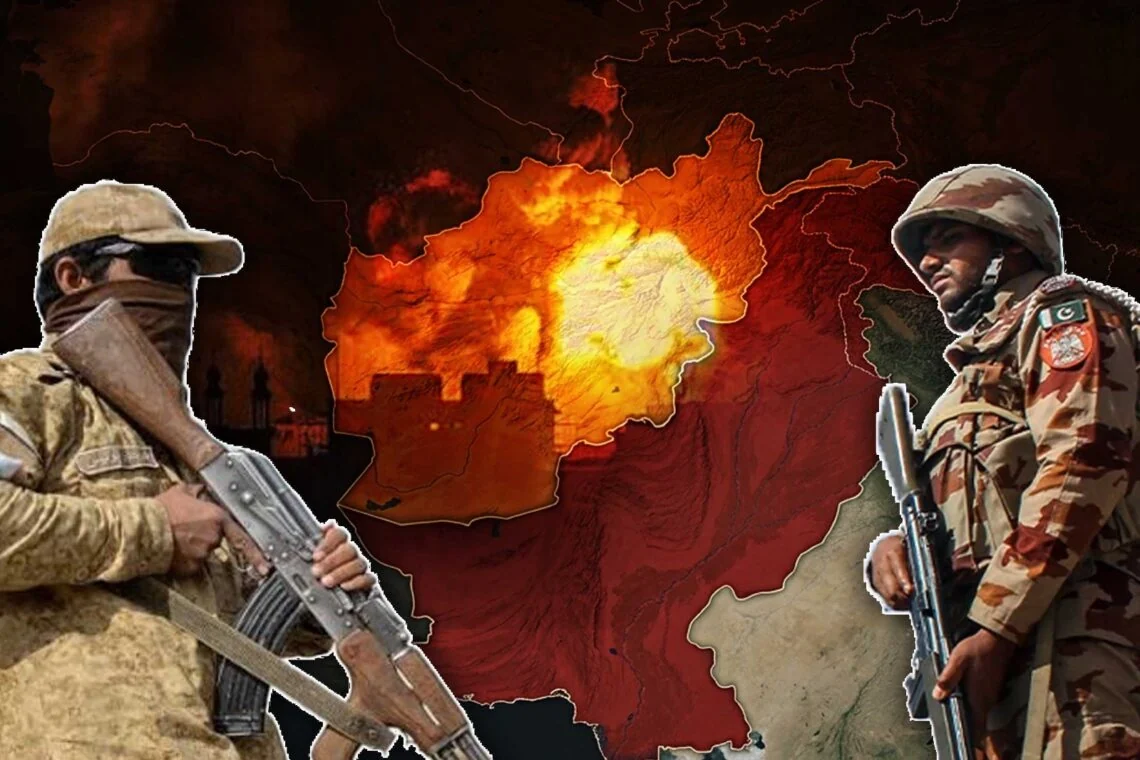
Experts believe the tensions between Pakistan and the Taliban can no longer be regarded merely as a temporary, tactical dispute. The continuation of an unprecedented crisis in Afghanistan, the Taliban’s lack of domestic legitimacy, their fundamental ties with al-Qaeda and with regional and global terrorists, their refusal to hold dialogue with opponents, the failure of mediation efforts, and deepening security disagreements all indicate that the existing rift has taken deeper roots and that the relationship will grow increasingly strained and tense.
Nevertheless, given Pakistan’s three-decade strategy toward Afghanistan, I view this analysis with caution. These developments and tensions carry an important message for the Taliban’s opponents: the differences between Pakistan and the Taliban, though they appear real, are not big. They are tactical, intelligence-driven, and open to question. The truth is that Pakistan invested in the Taliban leadership for 30 years, has been the group’s main admirer and patron, and, under its “strategic depth” policy, regards the group as a strategic asset.
For the second time in its history (a reference to the first and second Taliban regimes), Afghanistan is being run without a state and by the law of the jungle. The most mercenary, weakest, and most dependent group has come to power. Pakistan went from celebrating the Taliban’s seizure of Kabul to diplomacy, mediation, and even helping form the Taliban cabinet, and has now arrived at tension and the bombing of the group’s military installations in Kabul and several other provinces. Pakistan now regards the Taliban as a threat to its internal security. But Pakistan’s response, much like during the 20 years of the Republic of Afghanistan, has focused more on short-term military gains and foreign support than on a sustainable, long-term strategy with meaningful results.
Over the past five years, Pakistan has been unwilling to establish a strategic relationship with the democratic political forces of Afghanistan and the resistance fronts. There are two clear reasons for this decision. First, the Taliban, with their slogan of supremacy, which amounts to ethnic nationalism, a religious and takfiri ideology, structural violence, and the embrace of all terrorists, are the best option for achieving strategic depth and control over Afghanistan. As Mir Ghulam Muhammad Ghubar, the renowned historian and politician, wrote in the Watan journal in 1951: “… This is why we say that on the face of the earth, we are the last nation that, later and farther than all others, stumbles and tumbles along the path of human historical evolution and progress.”
Second, the political and military opponents of the Taliban lack a coherent national strategy. They are still scattered along ethnic and local lines. Therefore, any Pakistani support for the opposition is temporary and tactical, and serves as a tool for regaining lost, full influence over the Taliban and for bargaining with the United States and regional powers.
On the operational side, Pakistan’s main challenge is that members of Tehrik-i-Taliban Pakistan (TTP) and Baloch militants rely on scattered and hidden bases in the capital and in remote areas of Afghanistan, and they enjoy the support of the Taliban. Depending on the situation, these hideouts move quickly and change locations. They are located in civilian areas and use people as human shields, so targeting them causes civilian casualties. The Taliban used the same method in their war against the National Army of Afghanistan.
Eliminating the Taliban is not as difficult for Pakistan as creating the group was, because the true nature of the group, its methods of sedition, and its origins, along with its strengths and weaknesses, are clearer to Pakistan than the sun. In fact, Pakistan has been the formal and spiritual leader of the Taliban, and the United States has also been accused, for more than five years, of financially supporting the group’s regime. The Taliban remain under the influence of these two countries. Pakistan and the Taliban have not burned the bridges behind them, and each remains indebted to the other. For this reason, Taliban Supreme Leader Hibatullah Akhundzada, calm and unperturbed, has rested on his bed in Kandahar without any reaction following Pakistan’s bombing.
The Taliban’s Internal Crisis
Taliban leaders know that their main weakness cannot be reduced to disputes with one or several neighbors. It lies in the persistence of the same ideological pattern marked by structural ethnic and political violence. In the first and second periods of Taliban rule, through the monopolization of power, the elimination of opponents, the disregard of political, cultural, and ethnic diversity, and the repetition of costly decisions, this pattern has widened the scope of the crisis. As a result, even in the face of Pakistan’s attacks, the people of Afghanistan not only do not support the Taliban but consider them the primary culprit. Afghanistan under Taliban control is a dangerous reality that has been ignored. The United Nations (UN) has repeatedly reported on the presence and activities of terrorist groups in Afghanistan under Taliban protection, as well as on the security concerns of the countries in the region.
Internal Taliban sources confirm: “The number and strength of TTP fighters, Baloch militants, and other foreign terrorist groups have reached a level at which they operate independently. These groups have their own organization, financial resources, and hierarchy. These sources add that the situation on the ground is more complex than these claims suggest. In addition to deep tribal, linguistic, and Pashtunwali ties and the provision of haven to these groups, there are contradictory views among the Taliban about controlling and restraining them. However, because of mutual interests, continuous consultative meetings with them are held at the levels of consultation, dealmaking, oversight, and partnership.”
Instead of creating stability, this process has deepened internal and regional rifts. The “ghost war” on Afghanistan’s borders has effectively become a security nightmare for its neighbors, particularly for the countries of Central Asia, because they have neither the necessary readiness nor the experience, nor sufficient capability to counter terrorist threats. Russia understands this situation well. Therefore, it has maintained its relations with the Taliban with an eye on the new geopolitical game, along with intelligence oversight and intelligence influence. The Taliban, in turn, use these relations for the survival of Akhundzada’s regime.
The Ethnic Question and the Necessity of Opposition Unity
The ethnic question cannot be resolved through denial. UN reports have described the structure of the Taliban government as highly monopolistic, authoritarian, and Pashtun-centered. These reports also speak of the growing dominance of Pashtuns, the diminishing standing of Tajik and Uzbek commanders, and structural discrimination against Hazaras within the Taliban regime.
Tajiks, Uzbeks, Hazaras, and other forces present within the Taliban structure in reality feel excluded and sidelined in fundamental decision-making. They are dissatisfied with the absolute monopoly of Pashtun mullahs over political, military, judicial, economic, intelligence, and logistical power, as well as with the plundering of mines. In the future, these forces may make more independent and serious decisions about their place in Afghanistan’s politics. Opposing a violent, ideological, single-group, and single-gender political structure is not opposing an ethnic group, but the ethnic conduct of the Taliban could divide the society of Afghanistan even further.
A more important reality is that no society can be governed forever through the silencing of dissenting voices, imprisonment, the control and censorship of the media, extrajudicial trials, false narratives, and the creation of fear. The message of this situation to the people of Afghanistan is clear: a direct call for political and organizational mobilization and for granting legitimacy to armed action against the Taliban, with international support and regional consensus.
The Taliban’s opponents can manage the current situation with an orderly strategy for the future. The first step is the unity of the resistance fronts, the Freedom Front, and the Soldiers of the Homeland. This step would not only increase military pressure on the Taliban but would also fundamentally change the existing political equation. More importantly, it would make possible the formation of a broader political coalition inside and outside the country, a coalition with a clear plan for a post-Taliban Afghanistan. This is the decisive point.
The problem in Afghanistan today is not a shortage of opposition forces. The problem is a multiplicity of voices and the lack of a shared framework for the future. Unity among the fronts, through the formation of a single command and a single spokesperson, could seriously change the equation of pressure on the Taliban. I am confident that such cohesion, with effective organization, could strengthen the capacity to withstand prolonged pressure, improve logistics, intelligence gathering, and recruitment, build organizational discipline and operational effectiveness, and earn domestic credibility and legitimate, credible international support.
Responding to Afghanistan’s crisis requires the convergence of political and military forces, inclusive national dialogue, and the formation of a shared vision. This must be a discourse that moves beyond fragmentation, manages internal differences, presents the demands of the people of Afghanistan to society and the world in a clear, responsible, and inclusive form, and also creates the ground for drawing in part of the Taliban’s own ranks.
The deep crises of today’s Afghan society under Taliban control cannot be attributed solely to external pressure. Part of them is the result of the group’s own policies and choices. The continuation of this course has deepened the rift between the Taliban and the various segments of the society of Afghanistan.
For this reason, the resistance of the people of Afghanistan cannot be regarded merely as a passing reaction or as the product of political and ethnic disputes. When the paths to genuine political participation are closed, and the Taliban seek to hold power exclusively and permanently and to eliminate other ethnic groups, the people demand resistance, change, and the formation of an inclusive, accountable, and legitimate political system. Therefore, the legitimacy of resistance must be sought in a clear principle: no group or ethnicity owns Afghanistan, and no ruling power can permanently strip the people of their right to freedom, justice, and determining the country’s future. The future of Afghanistan belongs to all the people of this country, and any political process built on the will of the people and inclusive participation can form the basis for the country’s transition from the current crisis toward a shared future.
Today, the Taliban’s weakness has become more apparent to the people than at any other time. The group’s psychological and propaganda power in public opinion has been significantly weakened; its false narratives have less influence among the people, and the gap between the Taliban’s false claims and the lived reality of the people has become more visible.
Pakistan and the Heavy Price of a Failed Policy
Pakistan’s effort will not yield results in the short term. Pakistan and the Taliban created a crisis themselves and are now flailing in it. Although the Mecca defense pact has strengthened Pakistan’s security and competitive position, and its mediation mission between Iran and the United States has significantly raised Islamabad’s diplomatic standing, the country faces multi-front security challenges, including insurgencies and terrorist attacks in Khyber Pakhtunkhwa and Balochistan and a permanent enmity with India. For years, Islamabad has failed to address the domestic roots of the crisis and has relied solely on an ineffective policy toward Afghanistan and costly military operations, measures that have ultimately damaged the country itself.
Pakistan needs a strategic shift in its approach to the “strategic depth” policy in Afghanistan. This realistic and long-term strategy begins with comprehensive support for the political opposition and for the legitimate resistance of the people of Afghanistan against extremism, terrorism, and ethnic nationalism, within a framework of sincere efforts, and not with intelligence tricks and staged, false meetings.
Conclusion
The fall of the Taliban is not the end of the crisis but the beginning of a long road and a great responsibility. The heart of the matter is what kind of government should rule Afghanistan after the Taliban. Afghanistan needs a government that does not monopolize power; does not treat one ethnic group as the owner of the country and the others as strangers; does not regard political opponents as national enemies; does not treat the national interest as the property of any one group but defines it through inter-ethnic agreement and inclusive discourse; guarantees citizens’ rights; has rulers who are elected; recognizes the genuine participation of different ethnic groups and regions; and is accountable to the people and the international community.
The five-year opportunity that the world gave the Taliban has reached a dead end, and the expectation of positive change from the group has vanished. A shift in the approach of the world and the region is now visible. Pakistan, which once managed the Taliban’s domestic and foreign policy as a proxy group and worked to preserve their power by acting as their spokesperson in international forums, now faces the reality that the Taliban threat has become its main concern, and it is admitting its mistake.
This situation, combined with popular resistance, has created new hope among the people of Afghanistan. What will save Afghanistan is not merely the defeat of the illegitimate Taliban structure, but the ability to build an order that does not collapse afterward. The people’s real hope also begins from here. This is not the dream of one group, one ethnicity, or one generation, but a fundamental and vital issue for the future of Afghanistan.
You can read the Persian version of this analysis here:
طالبان و پاکستان در برابر یک آزمون تاریخی؛ از ایتلاف نیابتی تا شکاف عمیق