On the sidelines of the 81st session of the United Nations General Assembly, Afghanistan’s Permanent Mission and a number of institutions and former officials emphasized the launch of an inclusive political process led by the people of Afghanistan, respect for human rights, and public participation in determining the country’s future. Referring to the situation of women and girls, the human rights crisis, the presence of terrorist groups, and Afghanistan’s security challenges, the speakers called for Taliban accountability and increased international pressure. At the same time, the Special Rapporteur on human rights said that over the past five years, the Taliban have learned they can cross the international community’s red lines without facing practical consequences. Some of the speakers and country representatives also called for the recognition of “gender apartheid” and stressed that the international community’s position toward the Taliban must be unified, since, in their view, fragmentation in the international community’s collective decisions regarding the Taliban has proven ineffective.
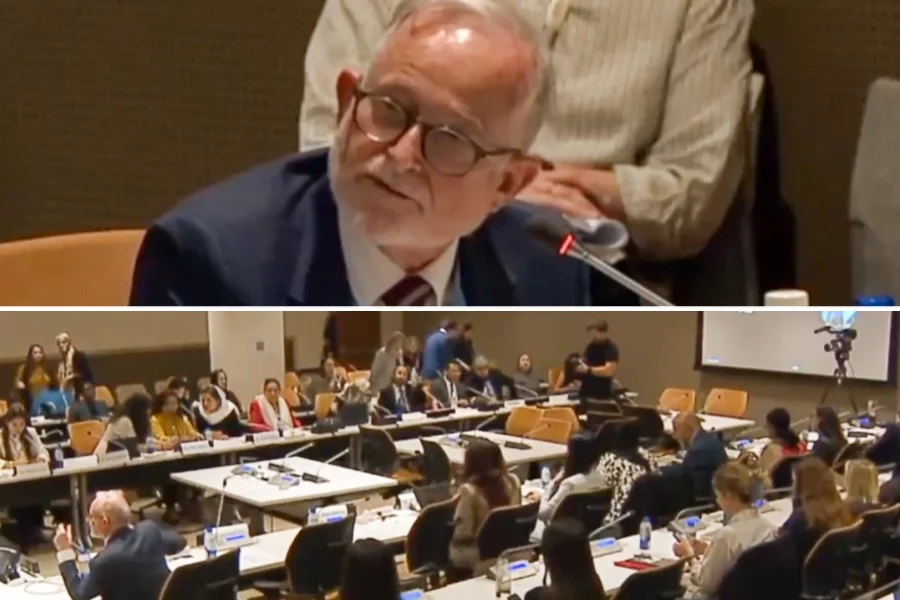
Afghanistan’s Permanent Mission to the United Nations, the Indiana Foundation, and Independent Diplomat held a session on the sidelines of the 81st session of the UN General Assembly titled “Afghanistan’s Path Forward: Toward an Afghan-Led Political Process for Inclusive Governance and Regional Security.”
Naseer Ahmad Faiq, Afghanistan’s Chargé d’Affaires at the United Nations, said at the session that five years after the Taliban takeover, the time has come to begin a political process centered on the people of Afghanistan to determine the country’s future. According to him, the people must play the leading role in deciding the country’s political future, and the goal of this process should be to establish a government that is legitimate, inclusive, representative, and accountable.
Faiq said at the session that the international community’s attention has largely focused on Afghanistan’s immediate crises, including the humanitarian situation, economic problems, terrorism, migration, narcotics, human rights violations, and sweeping restrictions on women and girls. According to him, despite these efforts, no significant progress has been made on Afghanistan’s fundamental issues.
Nilofar Sakhi, president and founder of the Indiana Foundation, said at the session that the presence of transnational terrorist groups in Afghanistan and rising tensions with neighboring countries show that the country’s security crisis is no longer confined within Afghanistan’s borders and is also affecting regional security. Citing a report by the UN Security Council’s monitoring team, she said al-Qaeda still maintains a presence in Afghanistan and enjoys the support of Taliban officials. According to her, this group provides training and advice to a number of other groups, particularly the Tehrik-i-Taliban Pakistan (TTP).
Sakhi also said that Taliban restrictions on women and girls have become more extensive and more institutionalized over the past five years. According to her, the exclusion of women from education, employment, and participation in public and political life poses a serious obstacle to Afghanistan’s stability and its return to the international community.
Zakia Adeli, deputy minister of justice in the former government, said that Afghanistan is facing a deep crisis of trust, a rapid loss of skilled professionals, and the closure of official diplomatic channels.
According to her, since 2021, roughly half of Afghanistan’s university professors and 58 percent of the country’s judges and prosecutors have left. She added that many professionals now living outside Afghanistan are working in fields unrelated to their expertise because their academic credentials are not recognized. According to her, there is also no clear mechanism for making use of these individuals’ knowledge and experience within Afghanistan.
Asila Wardak, a former diplomat, said the Taliban will return to dialogue only when continued isolation carries a high cost for the group. According to her, the Taliban now believe they can continue operating without accountability or gaining legitimacy. She stated that this calculation must be changed through coordinated international pressure and a unified diplomatic stance. According to her, the absence of a common position among countries regarding the Taliban has increased pressure on the population.
Narges Nehan, minister of mines and petroleum in the former government, said that women in Afghanistan have been suppressed and isolated by the Taliban over the past five years, while at the same time the international community has also abandoned them. According to her, the international community’s response to the situation of women has been marked by hesitation and fragmentation, and the approach of engagement with the Taliban has granted the group concessions while marginalizing Afghanistan’s women and democratic forces. She added that engagement without accountability with the Taliban over the past five years has yielded no significant results and has weakened the standing of the international community, Afghanistan’s women, civil society, and democratic forces.
At the same time, a girl from Afghanistan, speaking anonymously online due to security concerns, addressed the session and called on the countries of the world to keep educational pathways and student visas open for women and girls. She said girls have been deprived of education and many basic freedoms for five years, and the closure of schools and universities has taken away part of their future. She added: “If we cannot study inside Afghanistan, why should the doors outside Afghanistan also be closed to us?”
Several political activists, representatives of the people, and former officials also spoke at the session. Lotfullah Najafizada, head of Amu TV, said that before entering Kabul, the Taliban had been willing to discuss power-sharing and the formation of a government with the participation of various factions in Afghanistan, but after taking full control of power, the group’s position changed.
According to him, even in 2022, Taliban officials held two days of talks in Oslo with several non-Taliban citizens of Afghanistan, reaching agreement on a joint statement by the end, but they were not willing to continue such talks afterward.
Mahmoud Saikal, a former representative of Afghanistan to the United Nations, said that over the past three years the Taliban have taken advantage of the benefits of the Doha process without taking any steps toward political participation or a return to legitimate governance. He criticized the holding of regional meetings on Afghanistan without the participation of representatives of the Afghan people, saying that no decisions about Afghanistan should be made without the presence of genuine representatives of the population.
The view of the UN Special Rapporteur on human rights
Richard Bennett, the UN Special Rapporteur on the situation of human rights in Afghanistan, said that a series of legal and international measures show that international mechanisms for holding the Taliban accountable are taking shape, and that human rights violations in Afghanistan can no longer simply be overlooked in political negotiations. He said the situation of women and girls in Afghanistan can increasingly be described as “gender apartheid,” and the international community should formally recognize the situation under that term.
Bennett pointed to arrest warrants issued by the International Criminal Court (ICC) against Taliban officials, the creation of an independent investigative mechanism for Afghanistan, and legal action taken by several countries under the Convention on the Elimination of All Forms of Discrimination Against Women (CEDAW), saying these measures reflect the formation of an international framework for accountability.
The Special Rapporteur also noted that over the past five years, the Taliban have learned they can cross the international community’s red lines without facing practical consequences. Bennett added that the Taliban have gradually turned restrictions on the people of Afghanistan into laws and executive structures, even as some countries’ willingness to normalize relations with the group has increased.
The position of some countries and human rights activists
Laura Räsänen, deputy minister of social affairs and health of Finland, said the international community must not forget Afghanistan or abandon the country’s women and girls. She stressed that the Taliban must be held accountable for human rights violations. Räsänen described the Taliban’s restrictions on women’s and girls’ education, employment, freedom of movement, and freedom of expression, as well as gender-based violence, as “unacceptable.”
Welcoming the establishment of the investigative mechanism on Afghanistan, Räsänen said holding the Taliban accountable is not only about examining the past but must also make clear that systematic repression will not go without consequence. According to her, Finland continues to provide financial support for sexual and reproductive health services in Afghanistan, and the rights of women and girls remain a priority of the country’s foreign, security, and development policy.
Beth Delaney, ambassador and deputy permanent representative of Australia to the United Nations, said Australia was among the first countries to propose that “gender apartheid” be formally recognized as a crime against humanity. She added that this proposal has been raised within negotiations to draft an international treaty on crimes against humanity.
Delaney said Australia, along with Canada, the Netherlands, and Germany, is pursuing legal action against Afghanistan over violations of the Convention on the Elimination of All Forms of Discrimination Against Women (CEDAW). According to her, Australia does not accept that the current situation of Afghanistan’s women and girls should become a “new normal.”
Suela Janina, permanent representative of Albania to the United Nations, said the international community has failed over the past five years to support the women and girls of Afghanistan, and their situation must not become a forgotten crisis. She said that during this period, a girl could have completed an entire course of education and become better prepared to participate in society, but that opportunity has been taken away from the girls of Afghanistan and, ultimately, from Afghan society as a whole.
Alice Nelson, co-founder of the international women’s empowerment organization Vital Voices and a women’s rights activist, said the international community owes a debt to the women of Afghanistan and must respond to their courage and resistance with concrete action. She added that the world does not owe Afghanistan’s women merely by acknowledging their situation; it must act to support them and answer their courage and determination with similar determination and action.
Gyanit Prasad, a former Indian ambassador to Afghanistan, said that achieving inclusive and accountable governance in Afghanistan is difficult under current conditions, since, in his view, the Taliban have no incentive to move in that direction. He added that one of India’s main concerns is the transfer of weapons from Afghanistan to terrorist groups in the region.
Prasad also described the situation of women in Afghanistan as an example of “gender apartheid,” saying that women and minorities have been deprived of a large share of their basic rights and freedoms. The former Indian ambassador said Afghanistan is the only country among 57 Muslim-majority countries that has barred girls and women from secondary school and university education.
The positions of Pakistan and other countries at the UN General Assembly
Shehbaz Sharif, prime minister of Pakistan, warned once again on the fourth day of the 81st session of the UN General Assembly that Afghan soil continues to be used by the Tehrik-i-Taliban Pakistan (TTP) and Baloch militants for activity against Pakistan. He said these groups operate from sanctuaries inside Afghanistan to destabilize Pakistan.
Sharif called on the Taliban to fulfill their international commitments and take decisive, verifiable action to prevent Afghan territory from being used against Pakistan or any other country. He also said that the rights of the people of Afghanistan, particularly women and girls, must be respected under all circumstances.
Also at the UN General Assembly, Thórdís Kolbrún Reykfjörð Gylfadóttir, foreign minister of Iceland, said the most severe example of the rollback of women’s rights can be seen in Afghanistan, where, in her words, women and girls have been systematically erased from public life. She described the current situation in Afghanistan as “gender apartheid.”
You can read the Persian version of this report here:
نشست حاشیهای سازمان ملل؛ بنت: طالبان دریافتهاند عبور از خطوط سرخ جهان هزینهای ندارد