After the Taliban took control of Afghanistan, anxiety spread across the region over the growing presence of terrorist groups inside the country. In response, Iran, Pakistan, Uzbekistan, Tajikistan, and Kyrgyzstan moved quickly to contain security threats. They strengthened their borders, built walls and barbed-wire fences, established new security outposts, and conducted joint military exercises. Experts note that the Taliban’s presence sharply raised security costs for these countries and pushed them to upgrade their national defenses and military readiness. At the same time, international institutions, including the United Nations Security Council, warned that ISIS, al-Qaeda, and other extremist fighters were increasingly concentrating on the soil of Afghanistan.
The construction of border walls and fences by neighboring and regional states reflects how deeply the Taliban takeover intensified security fears. These measures show that governments felt compelled to reinforce their defenses and tighten border control. Central Asian countries and other neighbors of Afghanistan, even while maintaining close contact with the Taliban, voiced serious concern about terrorist groups and armed opponents of their governments operating from inside Afghanistan. Pakistan, which supported the Taliban for more than two decades, now finds itself in serious conflict with the group. The presence of Tehreek-e-Taliban Pakistan (TTP) in Afghanistan, along with repeated border clashes and failed negotiations, has fueled rising tensions and led both sides to issue continued warnings.
Iran’s Wall Construction Along the Border With Afghanistan
Senior Iranian security officials announced earlier that Iran would build a wall along its border with Afghanistan in stages over three years. They explained that the project aims to strengthen border security, counter terrorism, limit smuggling and illegal migration, and respond to geopolitical and security challenges caused by instability along the eastern frontier with Afghanistan.
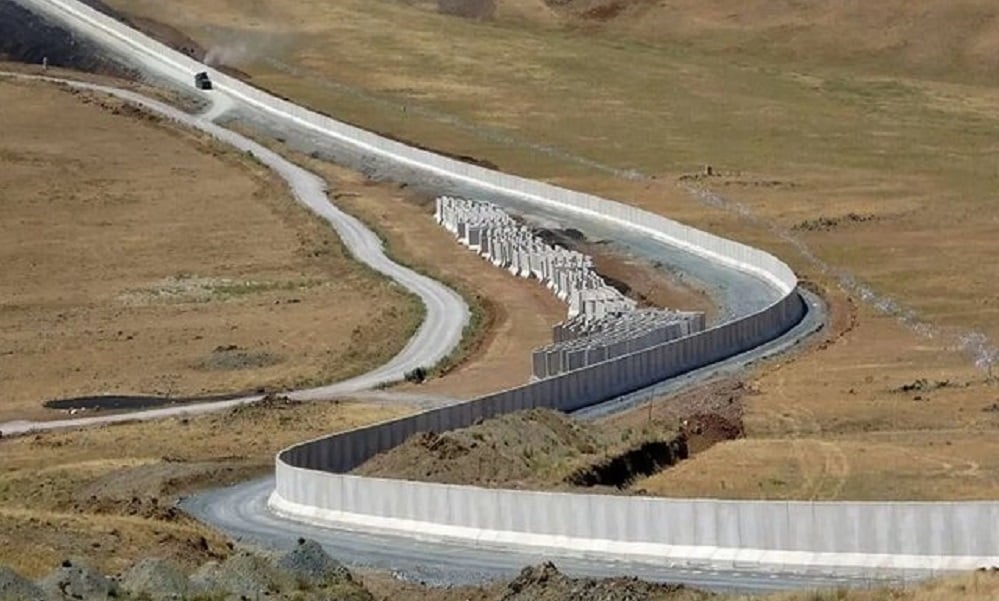
Iran’s interior minister, Seyyed Eskandar Momeni, said that border control extends beyond physical barriers. He explained that parts of the wall include barbed wire, while its advanced sections rely on radar systems. According to him, combining physical walls with smart technology allows the border closure system to function as a complete and effective defense.
Iranian media reported that authorities have completed more than 100 kilometers of the wall along the Razavi Khorasan border with Afghanistan, while construction continues in other areas. At the same time, some residents of Iran’s border regions oppose the project. Over the past more than four years, Iran and the Taliban have repeatedly clashed along the border, deepening tensions and uncertainty in these areas.
Pakistan’s Fencing Along The Border with Afghanistan
Pakistan began its border fencing project with Afghanistan before the Taliban takeover, but it accelerated the installation of barbed wire after the group returned to power. The Pakistani army announced that it has completed 98 percent of the fencing along the Durand Line. Officials described the project as an effort to prevent terrorist movement, fight smuggling, improve security, and regulate trade more effectively. According to the army, security fencing now covers a total of 3,217 kilometers along Pakistan’s borders with Afghanistan and Iran.
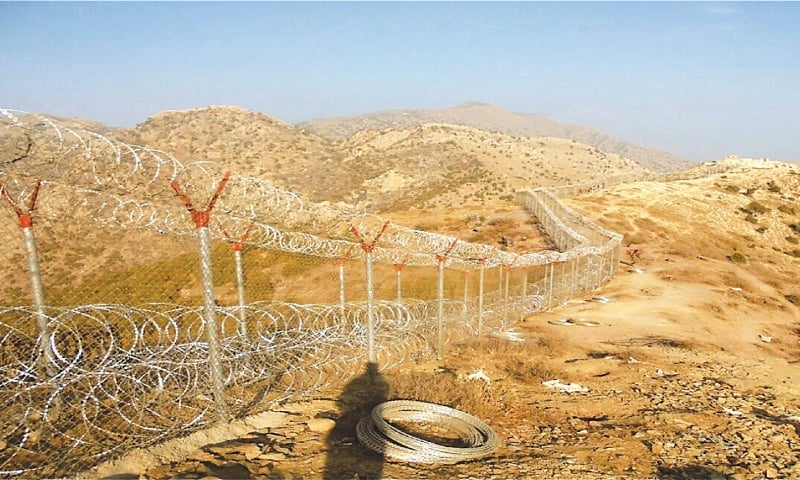
Pakistani media, citing the army, reported that Islamabad is pursuing several additional plans along its western borders. Military officials said that completing the fencing along the Afghan border will strengthen Pakistan’s national security to a significant degree.
The former government of Afghanistan strongly objected to Pakistan’s fencing project, arguing that it violated the Durand Line Agreement. Senior officials from the previous administration also maintained that the most effective way to confront insurgents was to strike their hideouts inside Pakistan and improve coordination among countries in the region.
Strengthening and Deployment of Tajikistan’s Forces at Border Points with Afghanistan
After the Taliban takeover, the armed forces of member states of the Collective Security Treaty Organization (CSTO), led by Russia, held a major military exercise near the Afghan border. This marked the first such large-scale drill since the collapse of the Soviet Union. Security forces from Russia, Belarus, Armenia, Kazakhstan, Kyrgyzstan, and Tajikistan took part in the joint exercises.
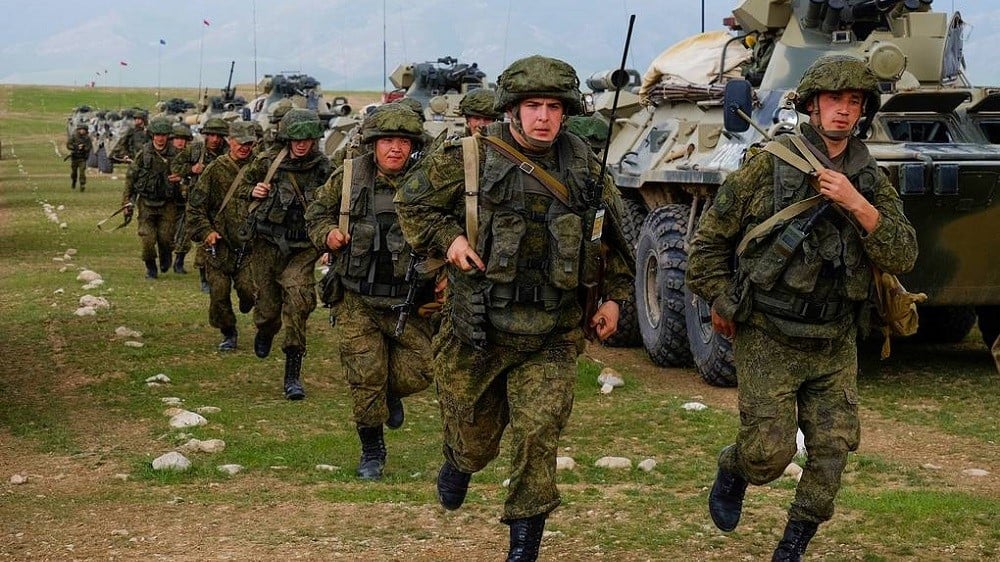
At the time, Tajikistan’s Ministry of Defense told the media that three major drills took place simultaneously at Harb Maidan and Hamiyan, along with two separate military training grounds in the southern part of the country.
Following these CSTO exercises, Russian and Tajik forces continued to hold joint bilateral drills along the Tajikistan-Afghanistan border. Reports indicate that troops from Russia’s 201st Central Base stationed in Tajikistan regularly participated in these exercises alongside Tajik forces, reinforcing their coordination and readiness.
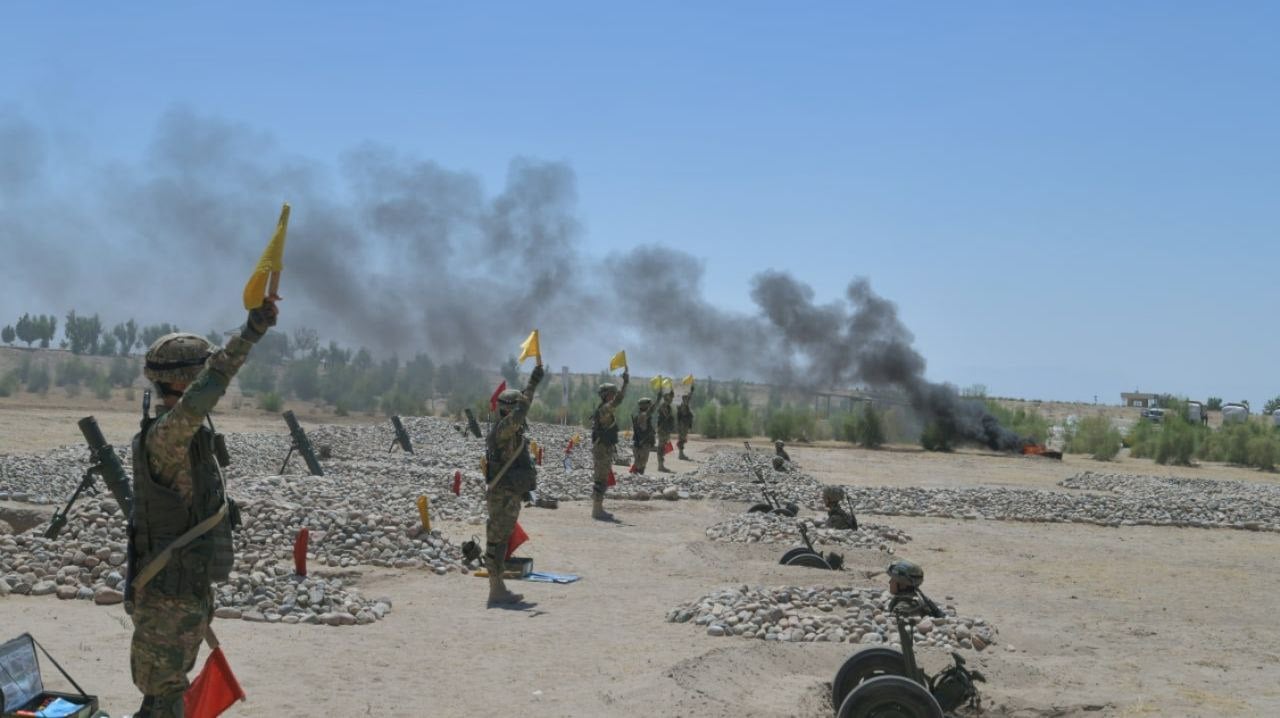
Uzbek and Tajik forces gathered in Termez, near the Afghan border, to carry out a joint military exercise designed to confront potential threats coming from across the frontier. According to Uzbekistan’s Ministry of Defense, troops from both countries trained in close combat, practiced evacuating wounded soldiers, and rehearsed responses to a simulated enemy attack. The drills reflected a growing sense of urgency along the border, where security concerns no longer feel distant or abstract.
These exercises took place against a backdrop of violence that had already claimed lives. Five Chinese nationals were recently killed in Tajikistan in attacks linked to the Taliban and traced back to Afghan territory. Two of the victims died in Nusay District, while three others were killed in a coordinated Taliban drone strike in Shahr-e Bozorg district of Badakhshan province. The news sent a clear message that the conflict spilling out of Afghanistan carries real and deadly consequences.
Tajikistan’s Ministry of Foreign Affairs later said that the attack, which occurred on Thursday, November 6, 2025, of that same week, involved light and heavy weapons as well as a grenade-carrying drone launched from Afghan soil. Earlier incidents had already set a troubling pattern. In May 2022, Islamic State – Khorasan Province (ISKP) claimed responsibility for a rocket attack fired from Afghanistan into Tajik border areas, saying the rockets were launched from Khwaja Ghar district in Takhar province.
Attacks on Uzbek Territory From Afghanistan
For more than four years, Uzbekistan has steadily expanded its military cooperation with regional partners. Alongside multilateral exercises with Russia, Tajikistan, and other Central Asian states, it has held focused joint drills with Tajikistan to prepare for terrorist threats linked to Afghanistan. At the same time, Uzbekistan has continued building security bases and reinforcing its border, treating the frontier as a line that demands constant vigilance.
On August 4, 2022, Uzbekistan’s Ministry of Defense announced the start of joint exercises with Tajikistan known as Commonwealth Partnership 2022. The drills took place at the Termez training base, close to the Tajik border, underscoring how closely military planning had become tied to geography and proximity to Afghanistan.
Soon after the Taliban took power, the threat turned real. On the morning of April 18, 2022, rockets were fired from Afghan territory into Uzbekistan for the first time. Reports said that ten Katyusha rockets were launched from the Sarchah area near the Hairatan commercial port and landed in Uzbek territory. The Taliban denied responsibility at first, but later that evening, ISIS released a video of the launch site and claimed the attack, saying Uzbek border forces were the target.
Another attack followed on July 5, 2022, when five rockets were fired toward the Majnun Tal area in Uzbekistan’s Surkhandarya region. Fear spread quickly. Many residents stayed inside their homes, uncertain if more strikes would follow. Uzbekistan’s Ministry of Foreign Affairs confirmed the attack and said no casualties had occurred, while sources from the Hasht-e Subh Daily reported that five people were injured.
In a later tweet, Uzbekistan’s Foreign Ministry stated that four mortar shells struck the country at 4:20 p.m. from Afghan territory, without naming those responsible.

As rockets hit residential areas, Uzbek border officials traveled to Balkh to meet Taliban representatives face to face. They urged the Taliban to prevent further attacks. The Taliban Ministry of Defense said its delegation discussed border security, the prevention of extremism, and efforts to combat drug trafficking during those talks.
On July 17, 2022, media outlets reported what they described as a third missile attack from Afghanistan into Uzbekistan. Shortly afterward, Uzbekistan’s Ministry of Defense rejected the claim and labeled it a media rumor, leaving the situation clouded by uncertainty and mistrust.
Kyrgyzstan’s Wall Construction Along Its Southern Border with Tajikistan and Uzbekistan
Further east, Kyrgyzstan moved quickly to tighten control of its southern borders with Tajikistan and Uzbekistan. The country accelerated efforts to seal these frontiers, turning border security into a visible construction project. According to Kyrgyzstan’s State Committee for National Security, walls now block about 80 percent of the border in the southern Batken region, with full completion expected by 2026. Under the plan, all southern border areas except official land crossings will be closed by the end of next year.

General Kamchybek Tashiev, Kyrgyzstan’s deputy prime minister and head of the State Committee for National Security, recently visited Batken province and the border with Tajikistan. During his meeting with troops stationed there, he said the process of defining the borders had finished and that authorities had already installed barriers in several sections.
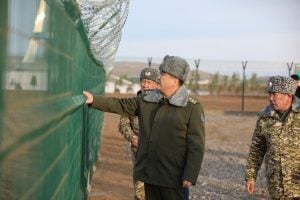
He later ordered border officials to strengthen infrastructure, raise security levels, and speed up the construction of additional barriers. He emphasized that all measures must follow border regulations and include preventive steps against security threats. He also announced that authorities would install security cameras once barbed-wire fencing along the Kyrgyzstan-Tajikistan border is complete.
At the same time, security analyst Besmillah Taban told the Hasht-e Subh Daily that the Taliban rely on allied terrorist groups, many made up of citizens from neighboring countries, as tools of pressure. According to him, the Taliban use these groups to extract concessions and intimidate states. As a result, neighboring countries do not trust the Taliban’s promises of long-term cooperation and have adopted precautionary measures even while maintaining relations out of necessity.
Taban added that closing borders alone cannot solve the deeper problem. He said the extremism and religious terrorism promoted by the Taliban continue to spread through ideology and radical messaging. Physical barriers may limit movement, but they cannot stop ideas from crossing borders. He pointed to Pakistan as an example, noting that similar policies there failed to bring results and only increased security costs.
Border Clashes Between the Taliban and Neighboring Border Forces
In its latest report to the United Nations Security Council, the United Nations Assistance Mission in Afghanistan described a tense and unstable border landscape unfolding between August 1 and October 17, 2025. During this period, repeated incidents erupted along Afghanistan’s borders with Iran, Pakistan, and Tajikistan. On August 3, 2025, in Nangarhar province, Pakistani security forces and the Taliban confronted one another over newly built security posts, each side determined to assert control.
Just days later, on August 6, Taliban fighters in Badakhshan again faced Pakistani forces, this time over the construction of a border checkpoint. UNAMA reported that the violence did not stop there. On August 25 and October 24, clashes broke out between Taliban fighters and Tajik border police. On August 29, Taliban fighters also exchanged fire with Pakistani military personnel, deepening regional tensions.
According to UNAMA, events escalated further on August 30 when Taliban fighters clashed with Iranian border guards. Reports had surfaced that Iranian authorities had beaten migrants attempting to cross the border, sparking outrage and confrontation. The clash forced officials to temporarily close the border. In another troubling development, small-arms fire from Pakistani territory struck a private home in Kunar province on September 5, 14, and 16, damaging property and unsettling nearby communities.
Presence of Terrorist Groups in Afghanistan and Concerns of International Bodies
As violence continued, countries across the region pushed forward with building border walls and fences, hoping to shield themselves from growing threats. In its thirty-fifth report, the United Nations Security Council’s Analytical Support and Sanctions Monitoring Team warned that the Taliban have allowed al-Qaeda and other aligned groups to deepen their footprint in Afghanistan. These groups have expanded their bases, safe houses, and training camps across the country.
The report revealed that al-Qaeda now maintains military and training shelters in 14 provinces. Lower-ranking members live quietly with their families in Kabul, while senior leaders operate from rural areas, away from public view. It also noted that Tehreek-e-Taliban Pakistan, with Taliban backing, has opened new training centers in four provinces. The East Turkestan Islamic Movement operates from Taliban-protected camps equipped with anti-tank missiles, while Jamaat Ansarullah trains Central Asian and Arab fighters in camps in Khost and Takhar.
The report described ISIS as the most serious threat facing Afghanistan, the wider region, and even the world. By temporarily reducing attacks, ISIS creates a false sense of safety, only to regroup and strike again. Newly recruited fighters continue to enter Afghanistan through Turkey and Iran, keeping the organization active and dangerous.
Estimates of ISKPs’ strength vary. Some United Nations Security Council members place the number of fighters between 4,000 and 6,000, while others estimate between 2,000 and 3,500. Despite these differences, the council agreed that ISIS Khorasan acts with calculated strategy and opportunism, directing operations from Afghanistan and neighboring countries.
The report also stated that Tehreek-e-Taliban Pakistan maintains between 6,000 and 6,500 fighters inside Afghanistan, alongside nearly 14,000 family members. These fighters have gained access to NATO-caliber weapons and other arms left behind by the United States, increasing their capacity for violence.
Meanwhile, al-Qaeda continues to quietly reorganize and train its members. Observers have tracked the arrival of recruits from the Middle East through border crossings such as Zaranj in Nimroz province and Islam Qala and Torghundi in Herat province.
Anatoly Sidorov, Chief of the Joint Staff of the Collective Security Treaty Organization, previously warned that the number of ISIS fighters had reached 6,500, with about 4,000 concentrated near the Tajikistan border. Earlier, Olarbek Sharshiyev, head of the Executive Committee of the Regional Anti-Terrorist Structure of the Shanghai Cooperation Organization, echoed these concerns. He cautioned that international terrorist groups have grown more active in Afghanistan and Syria and are seeking to plant sleeper cells across Central Asia. He said their leaders continue to move militants using forged documents through third countries to carry out attacks, build networks, raise funds, and recruit new fighters.
Tajikistan’s Interior Minister, Ramazon Rahimzoda, also sounded the alarm. He said the Taliban had issued passports to 3,000 members of terrorist groups and claimed that more than 20 such groups now operate in Afghanistan, many stationed in the north near the Tajik border.
You can read the Persian version of this report here:
سلطه طالبان و دیوارسازی همسایهگان؛ هزینههای امنیتی کشورها منطقه افزایش یافته است