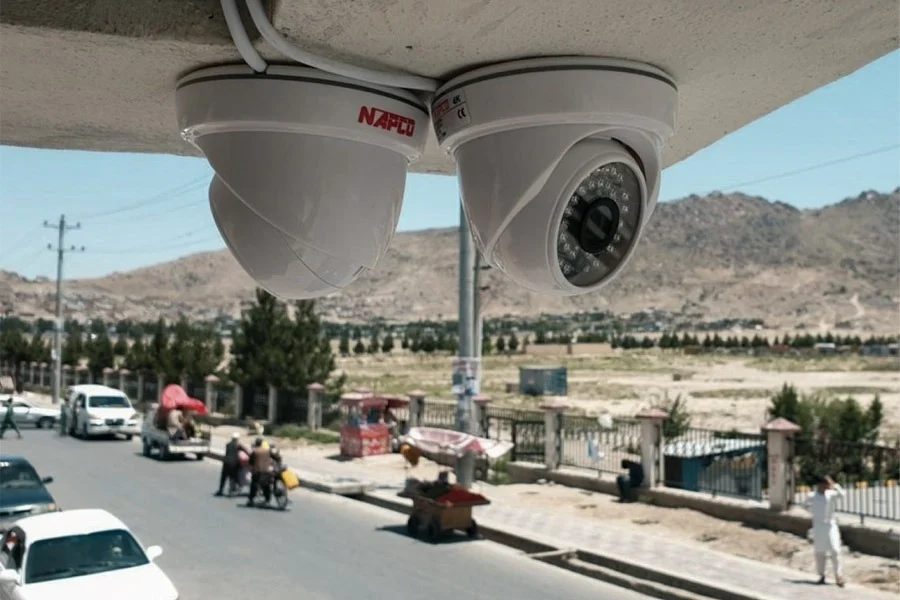
Some Kabul residents say the security cameras installed by the Taliban in Kabul have played little role in reducing crime and criminal incidents. According to them, frequent power outages, cameras going out of service, and poor image quality mean that thieves have no fear of the Taliban’s security cameras. The collusion and involvement of the Taliban in theft cases is also considered another factor behind the rise in robberies in Kabul. According to Kabul residents, thieves cut the power lines to the security cameras and then carry out their thefts at ease.
Eqlima, a Kabul resident, says: “Four security cameras have been installed in our alley alone, and there are several cameras in the neighboring block as well, but most of the time there is no electricity and the cameras do not work. The cameras’ field of view is also limited, and they cannot cover the entire area. Thieves also come with their faces covered during robberies, and the cameras cannot record them properly. More effective methods must be adopted to ensure people’s security.”
Shafiqa, another Kabul resident, says: “My house was robbed, and they took everything I owned. There is a security camera installed in our alley, but when we looked at the footage, the thief’s face was not identifiable at all. Because their faces cannot be recognized on camera, thieves rob homes without worry, and people no longer turn to the Taliban, because they know there will be no proper follow-up.”
Sediq Omar, another Kabul resident, says: “Security cameras are a modern system for ensuring security and preventing crime and theft, and installing them in Kabul has produced results to some extent. In some cases, footage from the cameras has been used as evidence and criminals have been arrested. However, weak infrastructure, especially frequent power outages, cameras being switched off, and the lack of specialized personnel to monitor and maintain the system, has meant that in many cases the cameras have not been effective. If this infrastructure is strengthened and a dedicated unit is established to oversee the cameras, the system can be used more effectively.”
Over the past several years, under the pretext of ensuring security, the Taliban have in many cases forced the installation of security cameras at the expense of residents. At that time, residents of areas where the Taliban had installed security cameras complained about the lack of safety and the violation of their privacy. The Taliban, however, citing the need to address crime, made the process mandatory. It now appears that the installation of these security cameras has not had a significant impact on reducing crime either.
Amnesty International (AI) had previously warned about the widespread installation of security cameras by the Taliban, describing it as an example of the expansion of surveillance over citizens.
Human Rights Watch (HRW) has also warned about the consequences of mass surveillance and the potential for misuse of citizens’ information, pointing to the absence of clear data protection laws in Afghanistan.
According to published reports, these concerns include the possibility of tracking individuals, monitoring gatherings, and using facial recognition to categorize people by characteristics such as age, gender, having a beard, and wearing a mask.
The Taliban’s Ministry of Interior (MoI) had said that about 90,000 security cameras have been installed in Kabul city, mainly covering the city’s crowded and important areas.
You can read the Persian version of this report here:
کمرههای امنیتی طالبان؛ باشندهگان کابل از افزایش دزدیها و ناکارآمدی این سیستم نگرانند