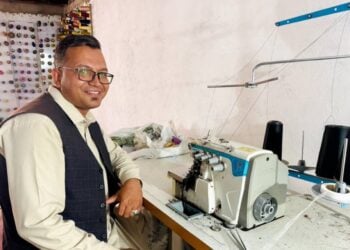
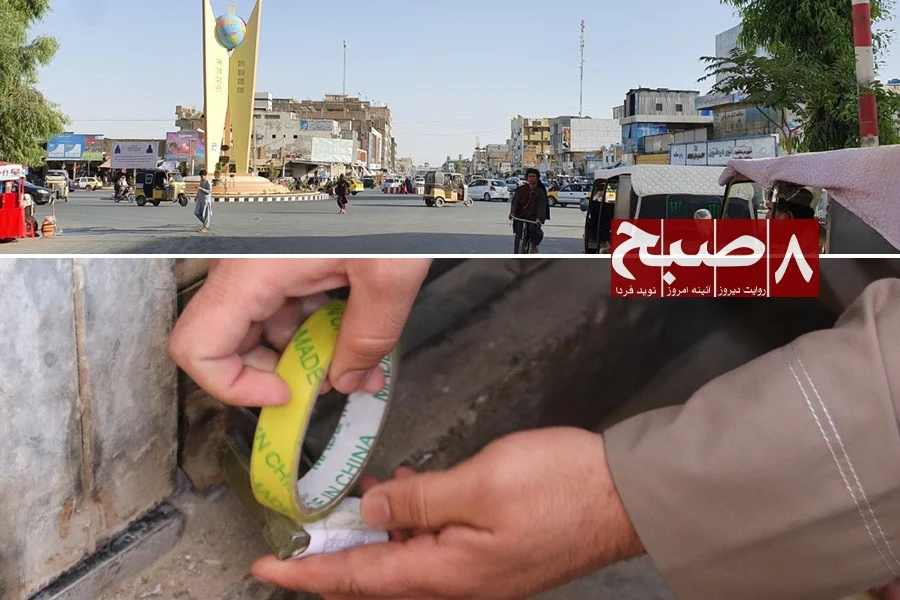
Several entrepreneurs and small business owners in Kandahar say the Taliban have increased the financial pressure on their businesses through higher taxes, licence costs, various fees and administrative procedures, and that some people have been forced to scale back their commercial activities or halt them entirely. According to them, in addition to income tax and taxes on guilds and tradespeople, the cost of licences, municipality fees, signboard fees, sanitation fees and other charges is also high for shopkeepers. Small business owners say that with all of these costs combined, they can no longer earn a reasonable income from their work.
The head of a service company in Kandahar says commercial activity has declined to an unprecedented level, and he calls on the Taliban-controlled municipality to create conditions for businesses to operate instead of creating more problems.
The head of the service company says: “On one hand, people have become poor, and on the other hand, businesses have come to a standstill. It is plainly unjust that, in such a stagnant market, the municipality seals a shop or an office because the owner did not pay the high licence fee or the sanitation tax.” According to him, there is also no single, uniform method for setting licences and fees.
He adds: “For one shopkeeper, 200 afghanis is written down, and for another, 5,000 afghanis. For one dairy seller, 200 afghanis is set, and for another, 8,000 afghanis. We do not know on what basis these amounts are determined.”
Sayedullah, another shopkeeper in Kandahar, says people are tired of the numerous licences and high fees, and many of them have lost the will to continue their businesses. He says: “Shopkeepers pay the relevant departments, and on top of that they also pay the municipality’s very high fees for licences, signboards and sanitation. But the municipality still demands high fees under various names, and if payment is delayed, it closes the shop or office. This is not fair.”
This shopkeeper says that under the former republic, about 500 afghanis was collected annually for a shop signboard, but that amount has now reached about 5,000 afghanis, which, according to him, places heavy pressure on shopkeepers.
Mohammad Akram, the head of a dairy production workshop in Kandahar, says the conditions related to licences and guarantees have also created an obstacle to new investment.
He says: “Some time ago, a friend of mine wanted to obtain a licence for his business with an investment of 500,000 afghanis, but at the very start he was told that 500,000 afghanis must be deposited as a licence guarantee. This is a serious problem and restriction. With such conditions, how can people be encouraged to invest?”
Abdul Sattar, the head of a travel company in Kandahar, says their company holds an operating licence from the relevant central departments, but the municipality demands another licence from them. He adds: “The municipality issues operating licences to guilds, such as butchers, bakers and others. Each section of the relevant ministry issues its own operating licence. So why should the municipality’s licence be mandatory, and why should offices be sealed if it is not obtained?”
A food seller in Kandahar city says that last week, Taliban municipality personnel came and locked his shop without explanation, and took 20,000 afghanis under the name of sanitation fees and 4,500 afghanis under the name of a licence. He adds: “The Taliban entered the shop and, without asking questions or conducting any review, took thousands of afghanis from us. I have not had this much in sales in the entire month. They collect all this money by force and coercion, and we have lost the will to continue our businesses.”
This food seller says the Taliban carry out extensive propaganda every day about security and investment, but under conditions where such pressures exist in the investment sector, even existing commercial activities will stop instead of businesses growing. According to him, the responsibility for all of these problems lies with the Taliban.
Shopkeepers say there is no institution to which they can complain about what they call the Taliban’s injustices, and that even if they write about their legitimate rights on social media, they face the threat of imprisonment.
They ask: “What kind of municipality is this, when the entire city is full of garbage, and there are no orderly parks, public toilets or facilities essential for the development of businesses, yet they collect taxes from us under various names?”
A fruit seller also criticises the Taliban governor of Kandahar, saying that he rides around the city on a motorcycle for show and self-promotion but does not attend to people’s problems.
Nazar Mohammad, an economic analyst, says: “A business owner or entrepreneur does not pay only taxes; they also have rent, employee salaries, electricity, transport, licences, municipality fees and other expenses. When all of these costs increase in conditions of a weak market and low sales, the result is that, instead of economic prosperity, commercial activity and the number of employees decline, or the business owner decides to close the business.”
Traders and entrepreneurs are demanding that the tax and licensing system be simplified and unified, that the criteria for setting fees be transparent, and that people be able to continue their economic activities.
You can read the Persian version of this report here:
فشار مالیاتی طالبان بر کسبهکاران قندهار؛ «از ادامه کار خسته شدهایم»