
In Ghazni, some women, and girls strongly criticize the Taliban for their dual standards towards local women, and foreign women visiting the province. They assert that the Taliban consistently tightened their strict restrictions on women in Ghazni province, while foreign women freely move around different parts of the province without any prohibitions, enjoying full freedom. According to them, the Taliban employ a double standard policy to whitewash and gain global legitimacy, while, in their view, all women within the “Islamic system territory” should have equal rights.
Numerous women, girls, and residents of Ghazni, speaking to the Hasht-e Subh Daily, state that women and girls visiting the province from abroad roam freely day and night without considering issues such as hijab, religious restrictions, or dress code. However, all Taliban restrictions are exclusively imposed on women of Afghanistan, depriving them of the most basic human rights.
These women and girls assert that, under Taliban orders, they have been deprived of fundamental human rights such as education, employment, travel, recreation, and dining out for over two years. They have endured difficult circumstances, living in poverty and confinement at home.
In Ghazni province, the Taliban’s Directorate of Propagation of Virtue and Prevention of Vice, over the past two and a half years, has severely restricted women, stripping them of their most basic human rights. However, no stringent directives have been imposed on foreign women visiting this province.
Residents of Ghazni also state that the Taliban have exempted foreign women tourists from their strict regulations to portray to the world that their restrictions on women are a “lie” and that the exclusion of women from Afghan social life is part of the country’s culture.
According to Ghazni residents, the Taliban, in their pursuit of foreign aid and to present a positive image and whitewash their dark image, have not imposed any restrictions or prohibitions on foreign women tourists.
Nahid, 23 years old, resides in the Jaghatu district of Ghazni province. She was a second-year university student in Ghazni at the onset of the Taliban’s control over Afghanistan. Nahid states that due to the restrictions imposed by this group, universities were closed to her and her peers, leading to an uncertain fate.
This female student adds that she has become disillusioned about her future, facing numerous challenges in this uncertainty. Carrying the heavy burden of the Taliban’s imposed prohibitions, she criticizes the group’s dual treatment of women.
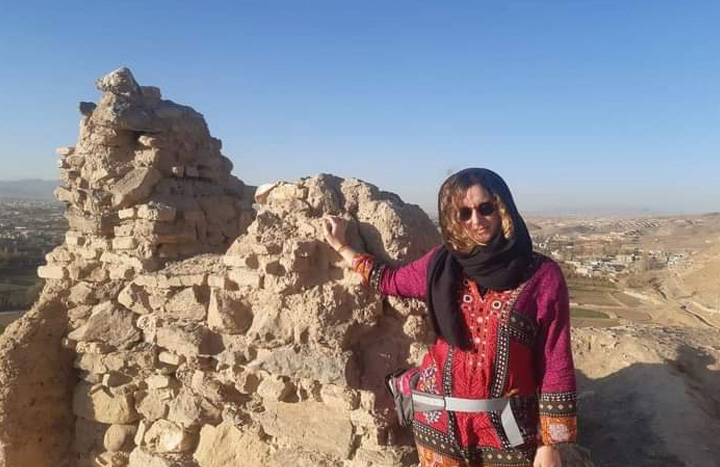
While despair and melancholy dominate her expression, Nahid says, “Everything here is questionable for us, as a resident of this city and country, I lack the right to attend university, am prohibited from going to the park, and must have a male mahram when shopping. When outside, wearing a black veil or burqa is mandatory, or I’m considered to be sinning. It’s perplexing to witness a foreign woman freely exploring ancient sites in the same Western attire and arriving alone in this country without anyone raising questions. There’s something suspicious going on.”
In the midst of this, a hotel owner in the province reveals that they have received a warning from the Taliban’s Directorate of Propagation of Virtue and Prevention of Vice in the province, stating that no woman without a male guardian should be allowed entry to the hotel for dining.
The Ghazni hotel owner adds, “Our hotel and the surrounding areas are closely monitored by the Moral Police of the Taliban, especially during lunch times. If someone allows a woman to enter the hotel without a male guardian, it leads to significant problems and controversy. Several of our neighbors have faced severe physical consequences, and I, too, have been reprimanded once.”
He also criticizes the Taliban’s policies towards both local and foreign women in the province, stating, “We have not received explicit communication concerning foreign women thus far. When we host foreign guests, regardless of gender, the Taliban only verify their documents, such as passports and visas, without inquiring about their male guardian or initiating such discussions.”
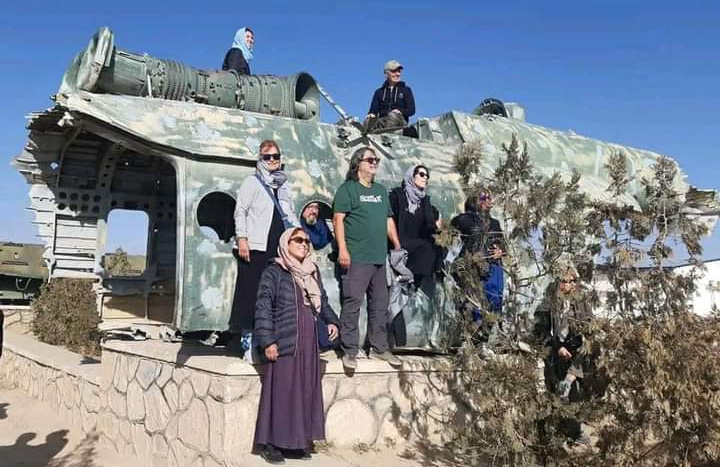
It is noteworthy that women and girls in Ghazni province criticize the Taliban’s dual standards towards women, while some Afghan women outside the country lobby for the benefit of this group.
Some of these women come to Afghanistan on various trips and enjoy complete freedom. Taliban-affiliated women in their cars listen to music, drive, and travel to various provinces without a male guardian.
The Taliban not only refrain from questioning these women but have also assigned their fighters the responsibility of ensuring their security.
Women and girls in Ghazni province accuse the Taliban of instrumentally using women’s rights and emphasize that this group does not adhere to the values of human and cultural rights of the people of Afghanistan. They argue that the Taliban impose their fundamentalist desires and interpretations on the women of Afghanistan.
Nevertheless, sources indicate that in this year (2023), nearly 300 foreign tourists have visited the province of Ghazni, with at least half of them being women and girls.