
The United Nations has published the twenty-first biennial strategic report by the Secretary-General on threats posed by ISIS. The report warns that fighters who participated in the 2024 operations against the former Syrian government may have relocated to Afghanistan and could pose regional threats from there. The Secretary-General’s report also refers to the threat posed by Islamic State – Khorasan Province (ISKP), which continues to be considered one of the most serious challenges for Afghanistan and Central Asia, with approximately two thousand fighters at its disposal. According to the report, Islamic State – Khorasan Province (ISKP), under the leadership of Sanaullah Ghafari, has prioritized attacks against Shias, Taliban, and foreign nationals and is attempting to recruit forces from Central Asia and the North Caucasus.
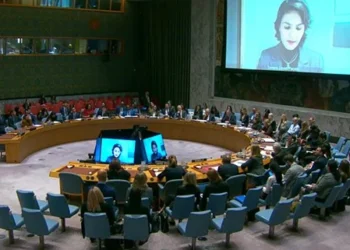
The UN Security Council held a briefing session last Thursday on the twenty-first biennial strategic report by the UN Secretary-General regarding the threat posed by ISIS. At this meeting, Vladimir Voronkov, Under-Secretary-General and Head of the UN Office of Counter-Terrorism (UNOCT), Natalia Gherman, Executive Director of the Counter-Terrorism Committee Executive Directorate (CTED), and Elisa de Anda Madrazo, President of the Financial Action Task Force (FATF), along with representatives of participating member countries, delivered speeches and expressed their concerns.
The report states that ISIS is not only considered a serious and ongoing threat in Africa, the Middle East, and Afghanistan, but is also regarded as a significant threat to Europe and Central Asia. According to the report, the group is attempting to recruit forces and gather financial resources in these regions. According to the UN, Islamic State – Khorasan Province (ISKP) has approximately two thousand fighters at its disposal and is considered one of the most serious challenges for Afghanistan and the South and Central Asian region.
Based on the report, the threat posed by ISIS and its branches has remained high throughout the reporting period, and despite continuous counter-terrorism pressures, the group has maintained its ability to adapt and remain flexible.
The Secretary-General’s report also refers to ISIS and its branches’ continued exploitation of new technologies. To enhance its propaganda level, the group has turned to experimenting with the use of artificial intelligence and has guided its supporters on how to safely use generative artificial intelligence tools without being detected. Additionally, ISIS has attempted to recruit cyber specialists to strengthen its capabilities and has tailored and targeted its propaganda content, particularly in the African continent, to suit local contexts and backgrounds.
On the other hand, at the meeting held to review this report in the UN Security Council, country representatives also expressed concerns about the presence of ISIS and other terrorist groups, including al-Qaeda, in Afghanistan.
Vladimir Voronkov, UN Under-Secretary-General for Counter-Terrorism, stated that the ISIS group is considered one of the most dangerous threats to the region and uses new technologies such as digital currencies and encrypted networks for its activities.
Natalia Gherman, Head of the UN Counter-Terrorism Committee Executive Directorate, stated that Islamic State – Khorasan Province (ISKP) is active in Afghanistan and simultaneously attempts to recruit forces in Central Asian countries and Europe.
Asim Iftikhar, Pakistan’s representative to the UN, once again emphasized at the UN Security Council meeting that Tehrik-e-Taliban Pakistan fighters threaten Pakistan from Afghan soil. According to him, TTP currently has nearly six thousand fighters in Afghanistan, making it the largest “terrorist” group against this country.
Pakistan’s representative emphasized that Tehrik-e-Taliban Pakistan, with safe havens near Pakistan’s borders, threatens this country’s national security. He also claimed that there is credible evidence of cooperation between Tehrik-e-Taliban Pakistan, the Balochistan Liberation Army, and other groups, including the sharing of terrorist training camps. Asim Iftikhar stated that these groups have jointly targeted strategic infrastructure, economic projects in Pakistan, and most tragically, the people of this country.
Amir Saeid Iravani, Iran’s Permanent Representative to the UN, also expressed concern about the transfer of some ISIS fighters from Syria to Afghanistan. He stated: “ISIS, al-Qaeda, and foreign fighters continue to fuel instability in Syria and the region. Reliable reports about the transfer of some terrorist elements and foreign fighters from Syria to Afghanistan, which poses a direct threat to Afghanistan’s neighbors and regional stability, are a cause of serious and deep concern for us.”
These UN concerns about the presence of terrorist groups, particularly al-Qaeda and ISIS, in Afghanistan and their transfer from Syria to Afghanistan, are raised while Pakistan has asked the United States to repurchase its weapons left behind in Afghanistan from the black market to prevent this equipment from falling into the hands of terrorist groups.
The Economist magazine, in its latest report, stated that this request was made to prevent military equipment from falling into the hands of insurgents in Afghanistan and Pakistan. The Economist, quoting Ahmad Sharif Chaudhry, Pakistan Army spokesperson, wrote: “Everything in Afghanistan is available to the highest bidder.” He asked the United States to purchase these weapons from the black market and provide more military intelligence to Pakistan so that this country’s forces can be prepared to confront insurgents.
Previously, the UN Security Council Sanctions Monitoring Team, in its thirty-fifth report, stated that the Taliban has allowed al-Qaeda and other terrorist groups aligned with them to establish more bases in Afghanistan and expand their safe houses and training camps.
According to the report, al-Qaeda has military and training sanctuaries in 14 provinces, with low-ranking members of this network stationed with their families in Kabul city and senior al-Qaeda leaders based in rural areas. According to the report, TTP, with Taliban support, has established new training centers in four provinces. The East Turkestan Islamic Movement is present in Afghanistan, equipped with anti-tank missiles in Taliban-protected camps, and Jamaat Ansarullah trains Central Asian and Arab fighters in training camps in Khost and Takhar.
You can read the Persian version of this report here: