
The United Nations Security Council, in its latest report on the activities of ISIS, al-Qaeda, and their affiliated groups, said that several al-Shabaab fighters have traveled from Somalia to Afghanistan. The report warned at the same time that the presence and potential activity of numerous terrorist groups in Afghanistan continues to pose a lasting threat to neighboring countries and Central Asia.
The report, the 38th report of the Security Council’s Analytical Support and Sanctions Monitoring Team, was published on August 10, 2026, and covers information gathered up to June 9 of this year, 2026. The report was prepared based on information and assessments provided by UN member states.
One of the report’s key findings is the transfer of several al-Shabaab fighters from Somalia to Afghanistan. The Security Council’s Monitoring Team said that measures taken by the Somali government have restricted the movement of foreign fighters seeking to join ISIS in that country, but have not completely halted the process.
The report states that some foreign fighters have been transferred to other conflict zones, and there are reports that a small number of al-Shabaab fighters have traveled from Somalia to Afghanistan. The document does not provide further details on the exact number of these individuals, the timing of their arrival, their travel route, or their place of residence in Afghanistan.
Al-Shabaab is one of the most significant al-Qaeda affiliated groups in East Africa. The reference to members of this group traveling to Afghanistan comes as the Security Council’s report also notes the movement of individuals linked to other groups from Syria to Afghanistan.
According to the report, Saifuddin Tajibayev and Gulmurod Khalimov traveled to Afghanistan in late 2025. Khalimov met with ISIS-Khorasan commanders in Kunar province in November of that year and called for an attack on Tajikistan.
Likewise, Abu Bakr Badakhshani, a former al-Qaeda member who took part in the war against the previous Syrian government, entered Afghanistan in late 2025.
However, the Monitoring Team emphasized that, as of the preparation of this report, the transfer of a significant number of fighters from Syria to Afghanistan has not been confirmed.
In another part of the report, the Security Council said that the terrorist threat emanating from Afghanistan has not changed significantly overall. UN member states believe that the potential activity of “numerous terrorist groups” in Afghanistan has created a lasting threat to neighboring countries and to Central Asian nations.
The report states that the Taliban, despite operations against the ISIS-Khorasan branch and efforts to contain some other groups, have not been able to suppress the “problem of terrorism” in Afghanistan.
The Taliban have publicly denied the presence or hosting of terrorist groups in Afghanistan.
According to the Security Council’s assessment, ISIS-Khorasan remains the largest threat to the Taliban and the region. The group has suffered serious setbacks as a result of Taliban and Pakistani operations, but has retained its capacity to carry out operations outside Afghanistan.
The report adds that ISIS-Khorasan attacks have decreased in Afghanistan but increased in Pakistan. The group is now in a phase of reorganization and still retains the ability to carry out sporadic but large-scale and high-casualty attacks.
Countries in the region have reported to the Security Council that ISIS-Khorasan has access to new equipment, including drones, night-vision devices, and thermal cameras, and that its forces are being trained in urban warfare and drone use. It has also been reported that the group has transferred part of its forces to northern Afghanistan and has spread its training centers across both sides of the Afghanistan-Pakistan border.
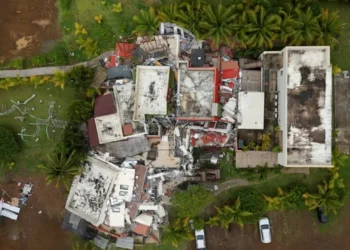
The report also refers to the January 19 suicide attack on a Chinese restaurant in central Kabul. ISIS-Khorasan claimed responsibility for the attack. According to the report, 12 people were killed, and 15 others were wounded in the incident.
The Security Council also recorded the April 10 attack on a Shiite shrine in Herat, which left at least 11 dead and 11 wounded. No group claimed responsibility for the attack, but the report notes that ISIS-Khorasan has repeatedly targeted Hazaras and Shiites in the past.
On terrorism financing, the report states that ISIS-Khorasan has expanded kidnapping for ransom in northern Afghanistan, targeting foreign workers and companies.
Another significant part of the report is devoted to the Tehrik-i-Taliban Pakistan (TTP). The Security Council said that the Taliban of Afghanistan have continued to support the TTP, and that the group’s increased attacks against Pakistan have intensified tensions and military clashes between Afghanistan and Pakistan.
According to the report, the Taliban have relocated about two thousand TTP fighters and their family members from areas near the Pakistani border to inner parts of Afghanistan. At the same time, Hibatullah Akhundzada, the Taliban Supreme Leader, has warned TTP leaders through private communications to halt attacks against Pakistan, or risk losing Taliban support.
The report also notes the continued activity of al-Qaeda in Afghanistan. Al-Sahab, al-Qaeda’s official media outlet, publicly supported the TTP’s operations against Pakistan for the first time on April 28. The Security Council said that al-Qaeda had previously provided training, ideological guidance, and support to the TTP.
One member state also reported that individuals affiliated with the Baloch Liberation Army have been trained by al-Qaeda instructors in Afghanistan alongside TTP members.
Meanwhile, the report says that the leadership of al-Qaeda in the Indian Subcontinent (AQIS) is present in Kabul, and that identity cards of Afghanistan have been issued to its members, a matter that, according to the report’s assessment, could indicate close cooperation between this group and the Taliban.
Regarding the East Turkistan Islamic Movement, the Security Council said that the group has once again concentrated in Badakhshan, particularly the Wakhan Corridor, and has established new bases in Kunduz. One member state said that the group’s fighters are being trained at a new al-Qaeda camp in Barg-e Matal, Nuristan. The report also notes the transfer of a number of the group’s members from Syria to Afghanistan, although one member state assessed that the group is small and militarily inactive.
On the subject of weapons, the report states that five years after the Taliban’s return to power, the presence of a large volume of weapons and advanced military equipment in Afghanistan has facilitated the transfer of some of this equipment to the TTP and other groups. Some member states said that armed groups’ access to equipment such as night-vision cameras has increased their combat capability and the lethality of their attacks.
The Security Council’s Monitoring Team also emphasized that obtaining precise figures on the number of fighters in terrorist groups is difficult, and that the report, in various instances, reflects the information and assessments of UN member states.
You can read the Persian version of this report here:
شورای امنیت: شماری از جنگجویان الشباب از سومالیا به افغانستان رفتهاند