• 8AM.MEDIA
  • ویب‌سایت فارسی
  • پښتو ویب‌پاڼه
  • اۉزبېکچه ویب‌سایت
  • Podcast
Wednesday, September 30, 2026
Hasht-e Subh
  • Home
  • News
    • Afghanistan News
    • World News
  • Opinion
    • Editorial
    • Analysis
  • Reports
    • Daily Reports
    • Investigative Reports
  • Society
    • The story of people
  • Women’s Word
  • Columns
    • Three Years After Afghanistan’s Fall: The Taliban’s Resurgence
    • Towards Equality
    • The Resurgence of the Taliban: Two Years Since Afghanistan’s Fall
    • Hebatullah Report Special Edition
    • Resistance for Education Special Edition
    • Special Column on Taliban’s Education Curriculum
    • Nawroz
  • Interviews
  • Contact Us
    • About Us
    • 8AM MEDIA Annual Awards
    • Submit an Article to Hasht-e-Subh
  • 8am.mediaBack
Subscribe
No Result
View All Result
  • Home
  • News
    • Afghanistan News
    • World News
  • Opinion
    • Editorial
    • Analysis
  • Reports
    • Daily Reports
    • Investigative Reports
  • Society
    • The story of people
  • Women’s Word
  • Columns
    • Three Years After Afghanistan’s Fall: The Taliban’s Resurgence
    • Towards Equality
    • The Resurgence of the Taliban: Two Years Since Afghanistan’s Fall
    • Hebatullah Report Special Edition
    • Resistance for Education Special Edition
    • Special Column on Taliban’s Education Curriculum
    • Nawroz
  • Interviews
  • Contact Us
    • About Us
    • 8AM MEDIA Annual Awards
    • Submit an Article to Hasht-e-Subh
  • 8am.mediaBack
No Result
View All Result
Hasht-e Subh
No Result
View All Result

New US Counterterrorism Strategy Prioritizes Al-Qaeda and ISKP

Kiomars Samadi Kiomars Samadi
14 May 2026 - Solar Hijri Date: 1405/02/24 [t_time:1778767254]
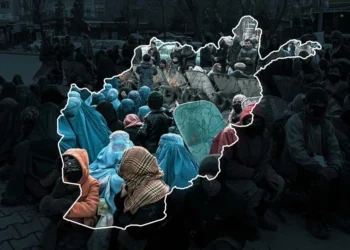
US personnel monitor global terrorism threats on digital screens displaying militant activity linked to Al-Qaeda and ISIS-K. (Photo credit: AI)

AI

A new United States strategy for combating terrorism has recently been drafted and signed by Donald Trump, the president of the country. The strategy discusses counterterrorism efforts in the farthest corners of the world: Africa, Europe, Asia, Central America, and beyond. Among these, the fight against Al-Qaeda and Islamic State Khorasan Province (ISIS-K) stands at the top of the agenda. It has been stated that Al-Qaeda is supported by the Islamic Republic against American interests, an allegation that has long been raised due to the hostile relationship between Tehran and Washington. Although the headquarters and supporters of ISIS-K remain unclear, there are claims that the group is active on Pakistani soil, an allegation the Taliban highlight more than others. The situation in Afghanistan under Taliban rule is clearer than daylight: a haven for regional and global terrorists, especially Al-Qaeda and ISIS-K. The Taliban maintain close ties with Al-Qaeda and, in some cases, even demonstrate obedience to the group. Yet despite extensive ideological and behavioral similarities with ISIS, they outwardly appear hostile toward it, a tactic that has deceived some countries and international organizations.

In the section on combating terrorism in Asia, the arrest of Mohammad Sharifullah, the alleged perpetrator of the Kabul airport attack, is cited as a prime example, and images of his capture are included across several pages. He was handed over to the United States by Pakistan, and Trump has repeatedly described the incident as a major achievement. The development has helped warm his administration’s relationship with Pakistan, particularly with the country’s current rulers. Whether Sharifullah is truly the main suspect, however, remains unclear. Recently, one Western media outlet reported that Pakistan may have handed over the wrong person to the United States, arguing that the prosecution’s evidence appears weaker when compared with the defense presented by Sharifullah’s lawyer. Whatever the case, Trump is currently using the arrest to claim political success, while Pakistan portrays itself as a partner in the fight against terrorism.

More importantly, the section on counterterrorism in Asia states: “The United States is rebuilding relations with Asian partners to confront radicalism.” When the United States speaks of combating radicalism and terrorism in Asia, Al-Qaeda is the primary target, followed by ISIS-K, two groups that have been observed in South Asian countries. With this in mind, when cooperation with partners is discussed, Pakistan is the first country that comes to mind; a country that, by handing over Sharifullah to the United States and now mediating between Washington and the Islamic Republic of Iran, has secured a favorable position in the eyes of the White House leadership. Of course, the United States has not only now, but also in the distant past, repeatedly praised Pakistan as an ally in the fight against terrorism, despite Islamabad itself being accused of supporting terrorism. Secondly, the headquarters of ISIS-K has still not been clearly identified. This means that some countries and organizations claim the group is based in Afghanistan, while on the other side, governments and groups, particularly the Taliban, view Pakistan as a hub for ISIS. Even some opponents of the Taliban believe ISIS has a presence on Pakistani soil. Zalmay Khalilzad, the former United States envoy for Afghan peace, also believes ISIS is present in Pakistan and has repeatedly raised such a significant claim. However, it remains unclear how much influence this has had on the White House’s approach. If the presence of ISIS-K on Pakistani soil is proven, the United States partnership with Pakistan would come under question, as it has in the past due to Islamabad’s support for terrorism. Thirdly, Al-Qaeda has become so weakened that the United States no longer requires a major campaign against the group. There are no clear indications that Al-Qaeda is capable of inflicting serious harm on American interests from Afghanistan or Pakistan, and American leaders are fully aware of this point. Fourthly, the selection of Pakistan as a partner in counterterrorism efforts is significant for Afghanistan because it makes conditions more difficult for the Taliban. In other words, Islamabad gains the upper hand and, seizing the opportunity under the pretext of combating the Tehrik-i-Taliban Pakistan (TTP), intensifies pressure on the Taliban.

On the other side, the Taliban rule Afghanistan, a group that is hostile toward ISIS but cooperates with Al-Qaeda, America’s irreconcilable enemy. The Taliban’s hostility toward ISIS is becoming clearer by the day and increasingly acceptable to the world, without attention being paid to the ideological commonalities between the two groups. Although the headquarters of ISIS-K has still not been identified, the group continues scattered activities against the Taliban, operations that have targeted some Taliban officials and fighters. The world has also reached the understanding that, compared with ISIS, the Taliban poses a lesser threat and that it may be preferable for the latter to contain the former. There are even countries that believe the removal of the Taliban would be harmful for Afghanistan, arguing that ISIS would immediately fill the vacuum left behind. The United States has also, on several occasions, acknowledged the necessity of maintaining contact with the Taliban to fight ISIS. For example, Marco Rubio once claimed in an interview that his country had sought cooperation from the Taliban regarding the fight against ISIS and that the request had not been rejected by the group. This means that, out of necessity, the United States may rely on the Taliban in the fight against ISIS, just as, according to Joe Biden, Washington and the Taliban cooperated in the elimination of Ayman al-Zawahiri, the former leader of Al-Qaeda. Accordingly, Pakistan is not the United States’ only option; rather, Washington has two options: the Taliban and Islamabad. These two options have conflicted over the past year over the issue of combating or supporting terrorism. It remains unclear whether the United States will make better use of the Taliban or Pakistan, or whether it will unite the two and then proceed with the fight against Al-Qaeda and ISIS-K.


You can read the Persian version of this analysis here:

استراتژی جدید امریکا علیه تروریسم؛ مبارزه با القاعده و داعش خراسان در اولویت است
ShareTweetSendSendShare

Related Posts

Saleh Mohammad Rigestani, General Military Commander of the National Resistance Front (NRF), stands in a camouflage uniform before a rocky mountain slope in a video released from the Hindu Kush. (Photo credit: Social Media)
Analysis

The Triumph of “Display” Over “Caution”

29 September 2026 [t_time:1790709280]
People gather near the fenced border area between Pakistan and Afghanistan following a deadly suicide bombing in Chaman that killed at least six people and forced the closure of the Spin Boldak crossing. (Photo Credit: Social Media)
Afghanistan News

Taliban Torture Children in Spin Boldak Over Alleged Smuggling to Chaman

29 September 2026 [t_time:1790701019]
Abdul Salam Hanafi shakes hands with Chinese Ambassador Zhao Xing during a farewell meeting in Kabul. (Photo credit: @FitratHamd)
Afghanistan News

Abdul Salam Hanafi Meets Chinese Ambassador in Kabul

29 September 2026 [t_time:1790699476]

Latest

Loading latest news...

Popular stories

  • Surveillance footage shows Taliban fighters surrounding and shooting a bound man in Herat. (Photo credit: Social Media)

    Taliban Shoot Young Man from Herat After Torturing Him with Hands Tied

    Share
    Share Tweet
  • Al-Qaeda Releases Hamza bin Laden Message on 9/11 Anniversary

    Share
    Share Tweet
  • UN Report Reveals Shifts in Family Attitudes and Rise in Domestic Violence in Afghanistan

    Share
    Share Tweet
  • Sources: Kandahar Bombing Leaves Seven Dead and Eight Injured at Mirwais Hospital

    Share
    Share Tweet
  • Afghanistan’s Empty Seat at the Annual UN General Assembly

    Share
    Share Tweet

Podcast

Insights
Insights

Join Lynne O’Donnell for 8AM’s podcast series, Insights.
Lynne talks with generals, diplomats, soldiers, journalists, politicians, activists, people who have front row seats for conflicts around the world, and citizens with a story to tell, happy or sad. For this first series, Afghanistan is the focus. Lynne and her guests talk about the collapse of the republic in August, 2021, and the impact since — for the people of Afghanistan, for the security of the region, for the safety of the world. It’s important, interesting and insightful.

Insights/22: Controlling the Narrative with Mina Sharif
byinsights8am

Controlling the Narrative

Lynne O’Donnell talks with Mina Sharif, author, activist, women’s rights campaigner, educator and mentor. They discuss who controls the narrative and who speaks for Afghanistan’s people when the Taliban appear to have seized control not only of the country but of the message, too.

Have a listen

Insights/22: Controlling the Narrative with Mina Sharif
Episode play icon
Insights/22: Controlling the Narrative with Mina Sharif
Episode Description
Episode play icon
Insights/21: Media Meltdown with Zahra Joya
Episode Description
Episode play icon
Insights/20: Terror Inc with Scott Richards
Episode Description
Episode play icon
Insights/19: Busting Stereotypes with Bushra Gohar
Episode Description
Episode play icon
Insights/18: Media Matters with Waliullah Rahmani
Episode Description
Episode play icon
Insights/17: What Goes Around Comes Around with Sima Samar
Episode Description
Search Results placeholder
Hasht-e Subh

8AM Media, also known as Hasht-e-Subh Daily, stands as Afghanistan's premier independent and non-profit newspaper, resonating as a beacon of journalistic integrity since its establishment in June 2007 by esteemed Afghan journalists and human rights advocates. With a steadfast commitment to citizen journalism and civic education, Hasht-e-Subh Daily has earned its place as the most esteemed publication in the nation.

Publisher: Sanjar Sohail
Email: [email protected]
Executive Director: Parwiz Kawa
Email: [email protected]

Read More

The Triumph of “Display” Over “Caution”

Banking Restrictions Keep Afghanistan’s Citizens and Traders Reliant on Exchange Shops and Hawala

Taliban Torture Children in Spin Boldak Over Alleged Smuggling to Chaman

Abdul Salam Hanafi Meets Chinese Ambassador in Kabul

Afghanistan Journalists Center: Taliban Have Detained Around 300 Journalists and Media Workers

Editor’s Choice

Every Saturday morning, 8AM MEDIA English Services Department will guide you through the week’s biggest stories from Afghanistan and the international community.

Subscribe

© 2026 - ©Hasht-e Subh Daily

No Result
View All Result
8am.Media
پښتو ویب‌پاڼه
ویب‌سایت فارسی
اۉزبېکچه ویب‌سایت
  • Home
  • News
    • Afghanistan News
    • World News
  • Opinion
    • Editorial
    • Analysis
  • Reports
    • Daily Reports
    • Investigative Reports
  • Society
    • The story of people
  • Women’s Word
  • Columns
    • Three Years After Afghanistan’s Fall: The Taliban’s Resurgence
    • Towards Equality
    • The Resurgence of the Taliban: Two Years Since Afghanistan’s Fall
    • Hebatullah Report Special Edition
    • Resistance for Education Special Edition
    • Special Column on Taliban’s Education Curriculum
    • Nawroz
  • Interviews
  • Contact Us
    • About Us
    • 8AM MEDIA Annual Awards
    • Submit an Article to Hasht-e-Subh
  • 8am.media

© 2026 - ©Hasht-e Subh Daily