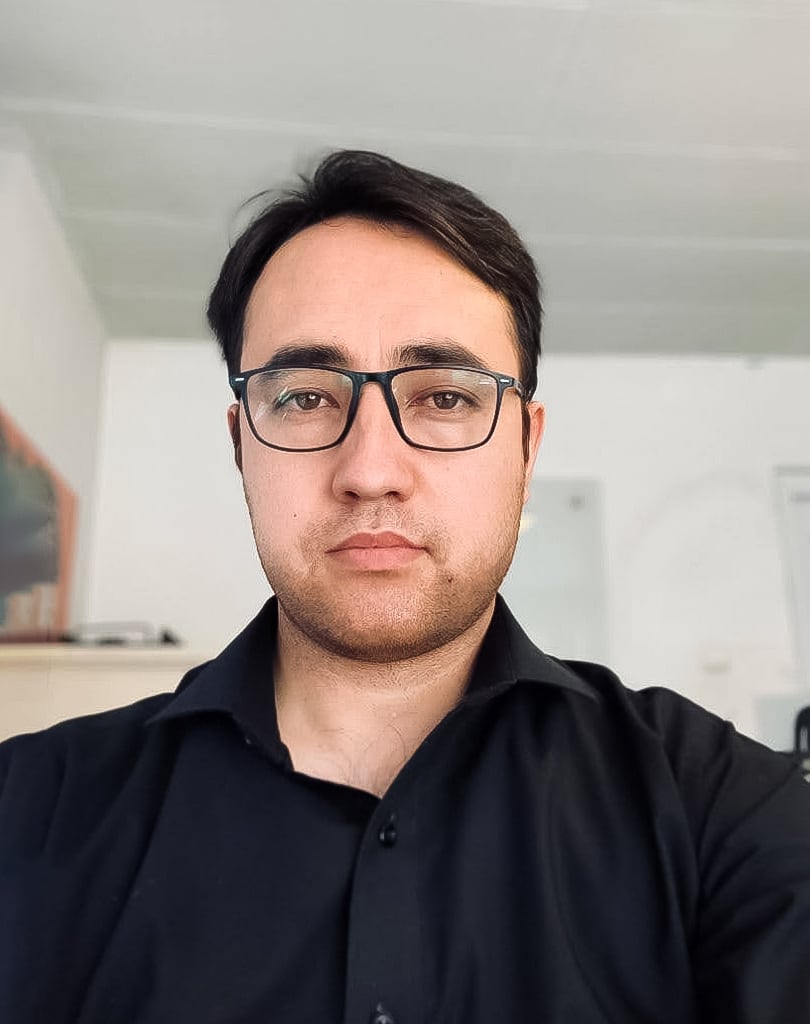

The military activity of Afghanistan’s United Front (AUF), led by Sami Sadat, began in recent weeks and apparently continues intensely. An official statement has been issued by the front in this regard, claiming responsibility for the military attacks. However, true to form, the Taliban tried to deny the presence and activity of this front on Afghanistan’s territory. A notable point regarding the United Front is the possibility of support from the United States. This possibility rests on the following indications:
1) The Afghanistan United Front was established in the United States after the Taliban’s return to power. Its office and administrative headquarters are also in this country. Its leader and most of its key members reside in this country as well. More importantly, it is clear that in a country of America’s stature, no institution, especially one whose founders are citizens of other countries, would be allowed to operate except by law. When the struggle against the Taliban forms the raison d’être of the United Front, and it still obtains a license to operate from the United States, this is an implicit indication of the possibility of Washington’s support for this front, which could also include military backing.
2) Sami Sadat is trusted by the United States. He most likely received his military training in this country or in other Western NATO member states. More importantly, during the era of the republic, he fought against the Taliban alongside American forces. His rise within the republic’s defense and security apparatus was also owed to American support. Perhaps his personal capability and perseverance were not without effect either. If the United States wanted to return to Afghanistan even now, it would rely on individuals with these three characteristics: being Pashtun, having been trained by American forces, and having fought alongside them against the Taliban.
3) Mr. Sadat supported Donald Trump, the current president of the United States, in the most recent American presidential election. Perhaps the support of people like Sadat was not decisive in Trump’s victory, but holding a gathering for this occasion and delivering a speech on the necessity of supporting Trump, along with attributing exaggerated qualities to him, would not go unnoticed by the occupant of the White House, a leader who has an appetite for being seen and places great value on others’ praise of him. Even assuming that the Trump administration intends to support opponents of the Taliban, it would support Sadat, not those hosted by Tehran.
4) Mr. Sadat recently gave an interview to Military.com, a publication run by American veterans and trusted by the Pentagon. For this reason, the interview is significant, especially under circumstances in which the Afghanistan United Front has turned to war against the Taliban. In this interview, Sadat explicitly announced the end of “political struggle” and the beginning of “military struggle” against the Taliban. If we consider the tone of the interviewee and the points discussed alongside the nature of the interviewing outlet, we can discern the likelihood of American support for the United Front.
5) We recall that some time ago the Taliban regime was placed on the U.S. State Department’s list of “hostage taking” regimes. Marco Rubio, the U.S. Secretary of State, stated clearly that the Taliban use hostage taking as a tool of leverage, which, in his words, would no longer be tolerated. Adam Boehler, the Trump administration’s special envoy for hostage affairs, warned that if the Taliban do not end the practice of hostage taking, they would share the fate of Venezuela and the Islamic Republic of Iran. When we take these warnings from the two American officials seriously, the likelihood of American support for the United Front appears more serious as well. If the United States wants to pressure the Taliban, deploying forces opposed to this group is one effective tool. Of course, given that it is the world’s foremost power, it has other effective tools at its disposal as well.
6) The very fact that the United States does not obstruct the Afghanistan United Front’s work suggests the possibility of this country’s support for it. If this front’s activity were not accompanied by a green light from the United States, it would be unlikely, while present on this country’s territory, to endanger the Taliban’s sovereign territory. But is war against the Taliban not costly? Yes, it is costly, but how is this cost financed? Minds turn immediately toward the host country. If Washington intended to pursue friendship with the Taliban, it would not allow a military front established on its soil to operate against the Taliban. When the United States demands that Afghanistan’s soil not be used against its interests, then how does an anti-Taliban military front, through the opportunity of its presence on American territory, create trouble for the Taliban regime?
Meanwhile, the Taliban’s silence is also noteworthy, especially given that they continually accuse Pakistan of supporting their opponents. This silence could stem from two reasons: they fear an official and open protest against the United States, or they do not consider the United Front’s activity worthy of a response. Or perhaps they are conveying their message to the United States through secret channels. Another possibility can also be imagined: even if American support for the United Front is clear, they still do not want it to become public, because exposing the matter would boost the morale of the Taliban’s opponents and diminish the morale of the group’s forces.
7) If the indications we have listed regarding the possibility of American support for the Afghanistan United Front are correct, the next question concerns the extent of that support. At least so far, it is clear that the White House has no plan to overthrow the Taliban regime. Accordingly, support for opponents of the Taliban, particularly the United Front, will not be on the scale of overthrowing a regime. Nor does the United Front enjoy the unified support of the Trump administration, owing to the various tendencies prevailing within this administration, tendencies that are becoming increasingly apparent in how they deal with the Islamic Republic’s case. The same holds true regarding the Afghanistan file. For example, John Bolton, the national security advisor of the first Trump administration, writes in his memoir that Zalmay Khalilzad was barred from meeting with him on the orders of Mike Pompeo, the secretary of state of that administration, because Bolton’s and Pompeo’s views were not aligned: the former was apprehensive about withdrawal from Afghanistan, while the latter was elated by it.
Now, in the second Trump administration, things are turning on the same old hinge. Therefore, the United Front may enjoy the support of the National Security Council, or of the War (Defense) and State Departments. Or it may enjoy the support of American veterans and some members of Congress and non-governmental organizations that influence the administration. For now, this support will be to the extent that the United Front is mentioned alongside other fronts, not that it possesses the capacity for overthrow. This front also entered the arena of war at precisely the moment when Ahmad Massoud and Mohammad Mohaqiq were hosted in Tehran, and following this event, the Freedom Fronts and the Homeland Army in Badakhshan clashed with the Taliban.
You can read the Persian version of this analysis article here: