The September 11, 2001, terrorist attacks, which brought down New York’s Twin Towers, provoked the fury of U.S. officials and galvanized Washington to dismantle the core of global terrorism. Evidence soon revealed that the perpetrators were members of al-Qaeda, then operating from Afghanistan under the protection of the Taliban. At the time, the Taliban, as Afghanistan’s rulers, sheltered Osama bin Laden, al-Qaeda’s leader. Exiled from Saudi Arabia, bin Laden had found a haven in Afghanistan, and the Taliban welcomed him as both a wealthy ally and a financial patron.
In the wake of the attacks, the United States launched its “war on terror,” centered on securing global safety. Its first demand was the handover of Osama bin Laden. But the Taliban chose confrontation over cooperation. Their refusal was rooted in loyalty: during the Taliban’s war against the Northern Alliance, bin Laden had stood by their side and provided vast financial support. Mullah Mohammad Omar, the Taliban’s leader at the time, is said to have made the final decision. The Taliban justified their defiance by invoking Islamic principles, framing the handover of bin Laden as a betrayal of “brotherhood in faith.” Their refusal paved the way for U.S. and NATO forces to invade Afghanistan under the banner of counterterrorism, toppling the Taliban regime.
After two decades of military presence, the U.S. formally withdrew its forces under the terms of the Doha Agreement signed with the Taliban in February 2020. The exit was completed in September 2021 and coincided with the collapse of Afghanistan’s republic. Now, four years into the Taliban’s return to power, Washington is once again considering reestablishing its presence at Bagram Air Base, which was once a hub for both Soviet and later American forces. Bagram’s strategic importance for the U.S. lies primarily in its proximity to China.
Although Donald Trump, during his first term as president, initiated talks with the Taliban in Doha, it was Joe Biden who oversaw the actual withdrawal. Yet Trump has repeatedly used campaign rallies to signal his intention to reclaim Bagram. The Taliban dismissed such rhetoric, effectively ruling out the possibility of ceding the base. However, in a recent joint press conference with the British prime minister, Trump again underscored his determination: “We handed over one of the world’s largest air bases to the Taliban without getting anything in return. One way or another, we will try to take it back. This could be breaking news.” Trump directly tied his demand to China’s military activities, adding: “One reason we need to retake Bagram is that the base is only an hour away from the site where China manufactures its nuclear weapons.” He also issued a stark warning to the Taliban: “If Afghanistan under Taliban rule refuses to return Bagram to its rightful owner, the United States, there will be serious consequences.” Bill Roggio, a senior fellow and editor at the Long War Journal under the Foundation for Defense of Democracies, argued in a September 19, 2025, analysis that it is highly unlikely the Taliban will agree to such a deal. The group has consistently rejected the presence of foreign forces, framing two decades of insurgency as a struggle to expel outsiders completely. This stance was also a central pillar of the Doha Agreement.
On September 13, 2025, former U.S. envoy for Afghan peace, Zalmay Khalilzad, traveled to Kabul on a visit widely interpreted as carrying a message from the Trump administration to the Taliban regarding the possible reclamation of Bagram Air Base. Yet many observers believe Trump’s statements are more rhetorical than practical, serving as both a campaign tool and a warning. Reestablishing Bagram would require lengthy bureaucratic reviews, logistical planning, and substantial funding.
Nonetheless, speculation has intensified since Khalilzad’s visit, suggesting Washington is exploring new avenues of influence in a region increasingly shaped by China and Russia. Trump’s rhetoric may also function as leverage: pressuring the Taliban to release American hostages, or to limit Beijing and Moscow’s regional footholds.
The reality, however, is that the U.S. already maintains advanced bases across the region and possesses ample intelligence on regional security dynamics. A direct military return to Afghanistan, reviving a costly, protracted war, appears neither logical nor consistent with the spirit of the Doha Agreement. Even so, American sources report that secret talks on Bagram have been underway with the Taliban since May of this year.
This raises a pivotal question: between survival and Bagram, which will the Taliban choose?
From a strategic perspective, the answer seems clear. The Taliban are likely to prioritize survival. Just as they once negotiated in Doha, they may again seek a deal, this time by ceding Bagram to Washington. Their bitter experience of refusing to hand over Osama bin Laden after 9/11, which resulted in regime collapse, weighs heavily. Unlike in 2001, when leadership was centralized under Mullah Omar and dissent was muted, today the movement is fractured. Criticism from within the ranks, despite repression and exile, has exposed internal rifts. This fragmentation makes a unilateral rejection of Washington’s demands far less certain.
Three scenarios emerge:
First, ceding Bagram could deepen divisions between the Taliban’s hardliners and pragmatists, sparking internal conflict. The Kandahar-based leadership, known for rigid decrees and an anti-Western ethos, rejects any deal with the U.S. In contrast, Taliban officials based in Kabul see engagement with global powers, particularly the U.S., as essential for the regime’s survival.
Second, Bagram could become the fault line of leadership change. Those favoring a U.S. deal might attempt a coup, whether violent or political, against the current leadership. Historically, Bagram has been the center of great power rivalry: built by the Soviets in the 1950s, pivotal during the 1980s war, and later transformed into America’s largest military hub in Afghanistan after 2001, hosting thousands of troops, aircraft, and a vast detention complex. Its location, 67 kilometers north of Kabul, near key highways linking to Central Asia, underscores its enduring strategic value.
Third, Taliban leaders, under internal pressures and external influence, particularly from Pakistan, may agree to cede Bagram in exchange for financial aid and political guarantees. In such a scenario, they would demand firm U.S. commitments to shield them against regional adversaries. Yet this move would provoke fierce opposition from China, Russia, and neighboring states, who could escalate support for Taliban opponents to destabilize the regime.
For the Taliban, the calculus is shaped by four years in power, a taste of wealth, and a survival instinct. Handing over Bagram may offer them another opportunity to consolidate rule, especially if the alternative is confrontation with a Trump administration bent on coercion.
For Washington, the strategic rationale is evident. From Bagram, the U.S. once conducted counterterrorism operations, tracked regional militant networks, and monitored Chinese and Russian activities. Yet a full operational return is doubtful. Reclaiming the base would demand thousands of troops, extensive logistics, and enormous costs, an undertaking that Congress is unlikely to approve, particularly after the lessons of 2001–2021. Diplomatic costs would be equally steep: recognition of the Taliban, lifting of sanctions, and granting concessions that Washington currently deems unacceptable.
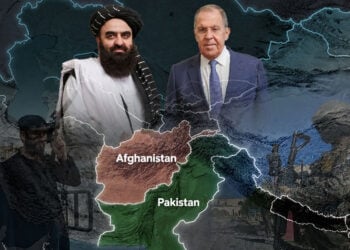
A recent analysis published on September 26 by the China Global South Project underscored regional anxieties. In a joint statement on September 25, the foreign ministers of China, Pakistan, Russia, and Iran, meeting on the sidelines of the UN General Assembly, declared: “The four countries emphasized the need to respect Afghanistan’s sovereignty, independence, and territorial integrity. Establishing foreign military bases in the region will not help Afghanistan’s current situation nor promote peace and stability. We strongly oppose it.” Many observers interpreted this as a direct response to Trump’s renewed calls for retaking Bagram.
You can read the Persian version of this analysis here: