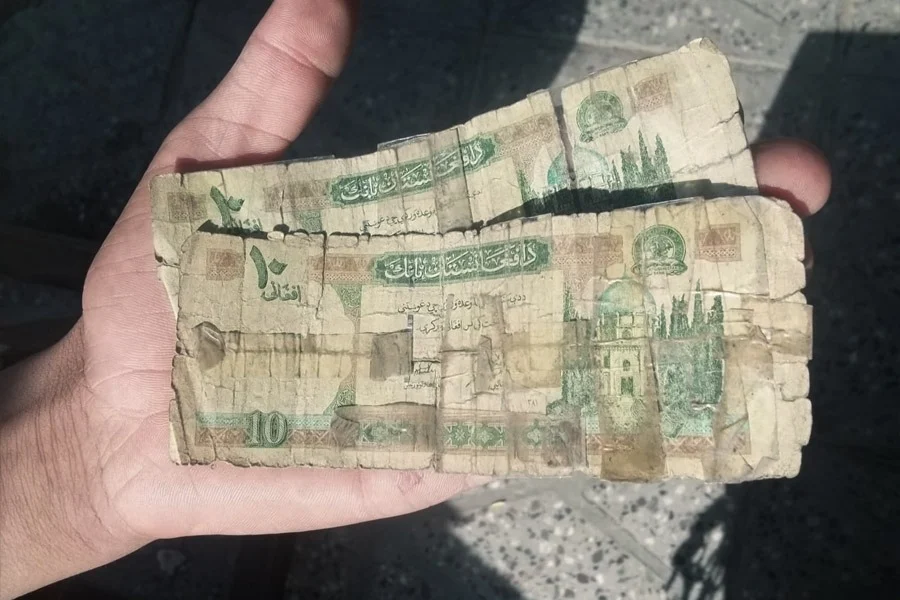
A number of citizens of Afghanistan are calling for the expansion of electronic payments in the country. They say that the dependence of daily transactions on cash, particularly in purchasing goods and paying for services, has created problems for them. According to them, worn-out banknotes, the refusal to accept torn bills, and the difficulty of transferring large sums are among the problems associated with using cash. These citizens add that electronic payments could make it possible to transfer money and pay for goods and services without carrying cash. In their view, recording transactions in electronic systems also makes it easier to track financial dealings.
On the other hand, a number of other residents of Kabul, speaking to the Hasht-e Subh Daily, expressed concern about the expansion of electronic payments. They say the lack of stable electricity and limited access to the internet and banking services make it difficult for part of the population to use this system. Concerns about the security of bank accounts, the hacking of information, and the cost of banking transactions are among the other challenges raised by citizens.
Shamsullah, a resident of Kabul, says he has been using electronic payments for a long time and considers the expansion of this system necessary. He adds that electronic payment can prevent the wearing out of banknotes and make it easier to transfer money between cities, stores, and small businesses.
Shamsullah says: “I use digital payments one hundred percent, and I have long thought it would be good if the payment system became digital. In my view, this system has no downside except in exceptional cases; it prevents money from wearing out and makes it easier to send and receive money between cities, small businesses, and stores.”
Shayesta, another resident of Kabul, considers the lack of stable electricity, internet access, and weak network signal to be among the obstacles to the expansion of electronic payments. She says that getting people accustomed to this system will take time, and cash should not be removed from the market all at once.
Shayesta says: “The banking system needs electricity and equipment, while many areas do not have stable electricity. Concerns about cybersecurity and the possibility of information being hacked, the high cost of internet, and weak network signal are among the other problems. Electronic payment is good, but I don’t think it will spread quickly in Afghanistan because it is costly. I myself do not have a bank card, because I would have to pay about one thousand Afghanis annually for it. Still, it would be good if people did not have to carry cash with them and could pay by card anywhere.”
Ali Asghar, another resident of Kabul, welcomes the expansion of electronic payments in Afghanistan. He says using this system could make it easier to pay for services, make purchases, and carry out other daily transactions, and could reduce people’s need to travel in person.
Ali Asghar says: “If digital payment systems in Afghanistan are properly activated, I myself will use them. Paying electricity bills, shopping, and obtaining certain services through these systems could reduce people’s need to travel around and save their time.”
At the same time, he considers weak cybersecurity to be among the main concerns regarding the expansion of electronic payments. According to him, for this system to expand, banks, large stores, and service companies need to be connected to the electronic payment network.
Ali Asghar says: “My concern about the digitization of payments is the weakness of the country’s cyber system. If the security of these systems is not strengthened, people will not be able to easily trust digital payments.”
Meanwhile, a number of economic experts say that the expansion of electronic payments could reduce dependence on cash and the costs associated with printing and collecting worn-out banknotes.
Mir Shekab Mir, an economic expert, considers the expansion of electronic payments effective in facilitating transactions and reducing the costs of money transfers. He says that recording transactions in electronic systems can increase the transparency of financial dealings. According to him, reducing the use of cash also lowers the costs of printing, transferring, and collecting worn-out banknotes.
Mr. Mir says: “Electronic payments can make daily transactions, small transactions, and even large commercial transactions faster, simpler, and more transparent, and can reduce the time needed to carry them out. Since transactions are recorded in the system, the tracking and transparency of financial dealings also increase. With the digitization of payments, the costs of printing, transferring, and distributing banknotes, as well as collecting and destroying worn-out banknotes, are reduced. Likewise, the risks resulting from the transfer of cash are also reduced with the expansion of digital payments.”
This economic expert says that a lack of financial knowledge, a low level of public familiarity with technology, distrust, a lack of internet and permanent electricity, and a weak banking system are among the challenges to the expansion of electronic payments in the country.
Previously, the Taliban-controlled central bank of Afghanistan had announced that the process of digitizing payments was progressing gradually and that efforts were being made to carry out part of transactions through electronic cards instead of cash.
The Taliban-controlled central bank began the process of collecting worn-out banknotes across the country in December 2023. This institution has announced that since the start of this process, it has removed billions of Afghanis worth of worn-out banknotes from monetary circulation.
Over the past year, about 2.5 billion Afghanis worth of worn-out banknotes have also been collected and removed from monetary circulation by this institution.
You can read the Persian version of this report here:
گردش پول فرسوده در کشور؛ شهروندان خواستار پرداخت الکترونیکی هستند