Amidst the claims made by Taliban officials, the most ludicrous assertion is that the Taliban system is making extensive efforts for the progress of the country. Firstly, progress and development in a country require individuals undertaking this vital mission to be equipped with knowledge and awareness in line with the modern era, as well as possessing the intellectual capacity to take responsibility for this work. Secondly, progress and development are unattainable without the presence of institutions and infrastructures facilitating these objectives. The Taliban not only lack knowledge and awareness but also consist of uneducated or poorly educated individuals who have recently migrated from mountains or underdeveloped villages to urban centers to assume control of the country’s affairs. Moreover, this group, influenced either by foreign agendas or its inherent ignorance, has systematically attempted to dismantle the infrastructure and institutions crucial for a nation’s improvement during its more than two-year rule. One of the sectors gravely impacted by the Taliban’s governance is Afghanistan’s education sector.
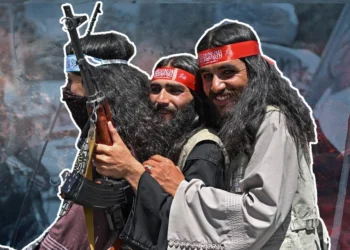
A document obtained by Hasht-e Subh Daily reveals that the Taliban director of education in Sar-e-Pol Province declared that during the inspection of 168 teachers and education workers, it was observed that their beards were short. He warned that if they did not grow their beards, they would face dismissal. According to this directive from the Taliban’s head of education, trimming a beard is considered a crime punishable under the law. The Taliban scrutinize the appearance of Ministry of Education employees, believing they are conducting “evaluation and quality assurance in the education system.”
In the Taliban’s interpretation of Islam, beards and turbans hold a unique and pivotal place. For them, not having a beard or even possessing a short beard is a clear indication of debauchery and deviation from religion. They apply these criteria to every situation. Naturally, when evaluating the quality of education, educational standards should be the focus, and the teachers’ beards and head coverings should be the least of concerns. Despite this, the Taliban show no concern for the literacy and knowledge of the teachers, nor do they address the restrictions placed on the education of children and teenagers within the territory. Their primary criterion for evaluation remains the conformity of teachers’ appearance with “Sharia.” They define Sharia in such a way that true Muslims are reduced to a select few who strictly adhere to the customs and traditions of their specific community and tribe.
This immature approach to education has caused educational institutions to regress, hindering them from fulfilling their primary duties. If this issue persists, our country is predicted to face a severe shortage of experienced and capable human resources, making it unable to undertake large-scale national projects without the assistance of foreign forces. It is conceivable that those advising the Taliban to treat national institutions and infrastructure with such recklessness and immaturity aim to keep Afghanistan powerless and reliant on external support for an extended period. It is not improbable that soon we will need to import labor from countries such as Pakistan and China to carry out even the most basic tasks, leaving Afghanistan dependent on others for an extended period. Presently, China is taking control of Afghanistan’s mines and importing all specialized personnel in this field from China.
In a bleak analysis, it could be argued that the primary objective of the Taliban is to deprive girls of modern education and to lure teenagers and young people into religious schools. In doing so, they are shaping an indoctrinated generation, easily exploited by foreign intelligence agencies, working to the advantage of others. The roots of the Taliban’s rise in the 1990s were in the religious schools of the border tribes spanning Pakistan and Afghanistan. The Taliban, alongside their regional allies, recognize the pivotal role of religious schools. They understand that these institutions can serve as potent tools to achieve their grand objectives. Taliban officials claim that approximately one million students are currently enrolled in religious schools in Afghanistan. If even half of these students embrace the Taliban’s ideology and religiopolitical narrative, a significant wave of repression and extremism will engulf the region, posing substantial risks from all directions. Rather than seeking an efficient force, the Taliban and their intelligence agencies are in search of compliant soldiers, individuals deaf and blind to everything except their orders, quick to act to fulfill predetermined goals.
Many analysts argue that the Taliban regime is short-lived and will collapse soon. They assert that the group’s harsh treatment of the populace, coupled with its failure to garner domestic and global legitimacy, sets the stage for its downfall. However, contrary to these speculations, mounting evidence and signs indicate that the Taliban’s rule is unlikely to decline easily. Regrettably, it is becoming increasingly apparent that the Taliban’s enduring control over Afghanistan will transform the nation into a parched land, devoid of water, grass, and hope, obliterating or weakening all infrastructures, at best. For years, the Taliban regime has kept the country mired in misery and poverty, decimating the fields of development and progress.
The pivotal factor determining a country’s future, education, is languishing in Afghanistan under the Taliban’s rule. Concerned elites committed to the country’s progress and excellence must not remain silent but actively seek ways to combat the tyranny inflicted by the Taliban. These dedicated individuals can provide online education for teenagers and young adults, regardless of gender. Although not all Afghan residents can access these training programs, the fact that some teenagers and young people have this opportunity is invaluable. Some progress has been made in this area, yielding fruitful outcomes. Furthermore, certain organizations have established clandestine schools for girls deprived of education. If these initiatives do not jeopardize the safety of girls, they undoubtedly constitute positive and constructive actions.
Critically, influential experts and concerned elites should harness social networks to critique and evaluate the Taliban’s ideology and delineate the problems afflicting Afghan society. Social networks have become the primary source of intellectual nourishment for young people. In a society where reading is not widespread and literacy rates are not high, the content disseminated on social networks naturally captivates the audience and shapes their mindset. Recognizing the importance of virtual space, experts should counter the Taliban’s ideas by leveraging social media. Currently, the Taliban wield a strong presence on social networks. They have realized the efficacy of these platforms in propagating their ideology. During the successive fall of Afghan provinces, the Taliban exploited social networks to demoralize the country’s security forces and present a facade of moderation, peace, and leniency.