• 8AM.MEDIA
  • ویب‌سایت فارسی
  • پښتو ویب‌پاڼه
  • اۉزبېکچه ویب‌سایت
  • Podcast
Monday, October 12, 2026
Hasht-e Subh
  • Home
  • News
    • Afghanistan News
    • World News
  • Opinion
    • Editorial
    • Analysis
  • Reports
    • Daily Reports
    • Investigative Reports
  • Society
    • The story of people
  • Women’s Word
  • Columns
    • Three Years After Afghanistan’s Fall: The Taliban’s Resurgence
    • Towards Equality
    • The Resurgence of the Taliban: Two Years Since Afghanistan’s Fall
    • Hebatullah Report Special Edition
    • Resistance for Education Special Edition
    • Special Column on Taliban’s Education Curriculum
    • Nawroz
  • Interviews
  • Contact Us
    • About Us
    • 8AM MEDIA Annual Awards
    • Submit an Article to Hasht-e-Subh
  • 8am.mediaBack
Subscribe
No Result
View All Result
  • Home
  • News
    • Afghanistan News
    • World News
  • Opinion
    • Editorial
    • Analysis
  • Reports
    • Daily Reports
    • Investigative Reports
  • Society
    • The story of people
  • Women’s Word
  • Columns
    • Three Years After Afghanistan’s Fall: The Taliban’s Resurgence
    • Towards Equality
    • The Resurgence of the Taliban: Two Years Since Afghanistan’s Fall
    • Hebatullah Report Special Edition
    • Resistance for Education Special Edition
    • Special Column on Taliban’s Education Curriculum
    • Nawroz
  • Interviews
  • Contact Us
    • About Us
    • 8AM MEDIA Annual Awards
    • Submit an Article to Hasht-e-Subh
  • 8am.mediaBack
No Result
View All Result
Hasht-e Subh
No Result
View All Result

Taliban’s Rule Is Multiplying Opponents, Not Supporters

Translated by Farhad Farhaad | Originally written in Persian by Kiomars Samadi

Mohammad Farhaad Mohammad Farhaad
12 October 2026 - Solar Hijri Date: 1405/07/20 [t_time:1791828037]
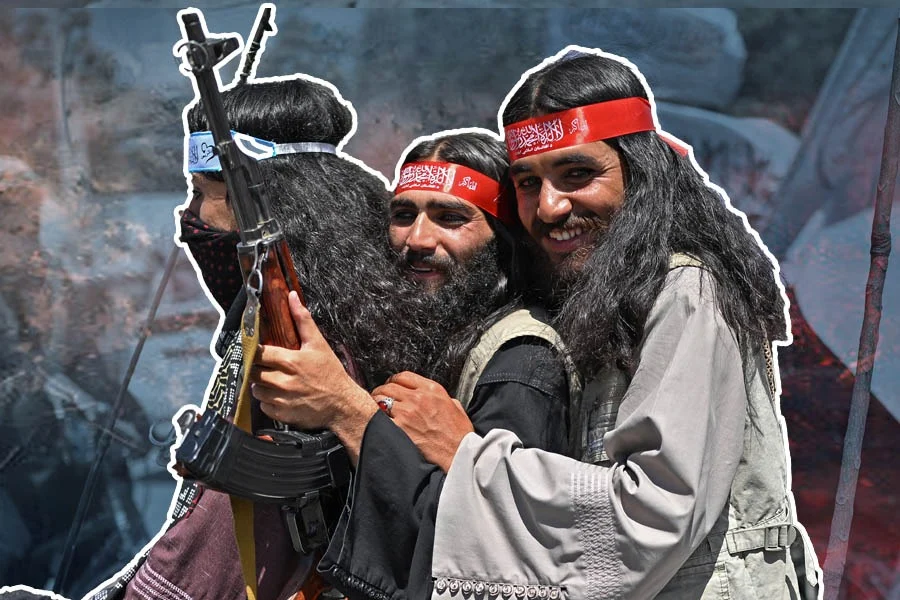
Three smiling Taliban members in red headbands stand close together, one of them carrying a rifle, as opposition to the group’s rule grows. (Photo credit: AFP)

AFP

One of the key indicators of a government’s political condition is its ability to retain allies, manage disagreements, and prevent “potential critics” from becoming “active opponents.” Governments do not become vulnerable only when their enemies multiply; sometimes they become more vulnerable when they fail to hold on to the forces close to them.

Gulbuddin Hekmatyar, leader of Hezb-e-Islami Afghanistan, is a noteworthy case in this regard. He is neither a secular figure opposing the Taliban from outside the tradition of Islamism, nor a personality whose differences with the group can be explained purely based on ethnic divisions. He has a long record in Islamist politics and the Afghan jihad, and in his struggle against the twenty-year republic and foreign forces, he followed a path that in some respects overlapped with the Taliban’s own record. After the Taliban’s return to power, he also adopted, at one point, a more aligned and cautious position toward the group’s performance.

Despite this background, the relationship between the two sides has for now reached a stage in which Hekmatyar openly challenges the legitimacy and governing methods of the Taliban. From here, one can arrive at the concept of the Taliban’s “repulsive force.” If a government, through its ethnic monopoly on power, its ban on political activity, and its refusal to accept the current realities of Afghanistan’s pluralistic society, alienates even forces that share some of its ideological foundations, serious and clear questions must be raised about its method of governance and its capacity for political absorption.

Of course, this does not mean that the emergence of every new opponent necessarily leads to the immediate weakening of the Taliban regime, or that a growing number of opponents makes its collapse certain. Yes, the Taliban’s opponents are scattered, at times rivals of one another, and lacking organizational capacity, and over the past five years or more they have not accomplished anything significant. However, the distancing of figures such as Hekmatyar, who could have remained alongside the Taliban, is a sign of a further erosion in the group’s capacity to attract those outside its own ranks.

Hekmatyar’s importance lies not only in his having joined the ranks of the Taliban’s critics and opponents, but in the fact that, from a position different from many other opponents, he can challenge two major claims of the group: the claim to “religious authority” and the claim of a link between Taliban rule and the Pashtuns.

To justify their political structure, the Taliban use concepts such as the “Islamic Emirate,” “obedience to the command of the Emir,” and the “implementation of Sharia.” Within such a framework, opposition to the Taliban regime is presented as opposition to the “Islamic order.” But when a figure with an Islamist record criticizes the Taliban regime using religious arguments, this equation becomes more complicated. Hekmatyar can emphasize that Islamism does not mean accepting the Taliban’s monopoly on power, and that no particular military or political movement can be equated with religion. He can also tie the legitimacy of obedience to a leader to criteria such as justice, consultation, and respect for the rights of the people. In that case, the conflict is no longer merely between the Taliban and opponents with a different worldview; a dispute also takes shape within the Islamist camp itself, one concerning the interpretation of religion, the limits of political obedience, and the source of a government’s legitimacy.

The second aspect is Hekmatyar’s ethnic affiliation. The Taliban are known for the prominent presence of Pashtun forces in their leadership and power structure, but this reality does not give them the exclusive right to represent the Pashtuns. The Pashtuns are not a politically homogeneous bloc. There are regional (southern and eastern), intra-ethnic (Durrani and Ghilzai), social, and political differences among them, and the demands and interests of all of them cannot be equated with the positions of a single political group. On this basis, the message conveyed by the stance of figures like Hekmatyar is clear: opposition to the Taliban is not necessarily opposition to the Pashtuns, and defending the political rights of the Pashtuns does not require accepting the Taliban’s monopoly on power.

The Taliban face a deeper challenge when their opponents can question these two monopolies simultaneously: the monopoly on interpreting religion and the monopoly on ethnic representation. In that case, the Taliban will be forced to justify their legitimacy not merely by referring to a religious or ethnic identity, but through their regime’s performance on justice, security, political participation, and accountability.

The significance of Hekmatyar’s entry into the ranks of the Taliban’s critics and opponents is also notable from another angle: this development can challenge the claim that the serious opponents of the Taliban, particularly the active military fronts, are mainly non-Pashtun. In Afghanistan’s political landscape, opposition to the Taliban is sometimes portrayed as though it were a conflict between the Pashtun Taliban and their non-Pashtun opponents. Regardless of how well such a narrative fits the complex and diverse reality of Afghanistan’s society, it can allow the Taliban to present opposition to their regime not as a dispute over the monopoly on power and the method of governance, but as an “ethnic confrontation.”

Accordingly, the presence of a figure who is Pashtun and at the same time an Islamist and a jihadi among the critics and opponents of the Taliban calls this view into question. Through his stance, Hekmatyar can show that opposition to the Taliban does not necessarily arise from outside the Pashtun community or from a position of ethnic confrontation with the group; rather, it can also take shape from within the very social environment that the Taliban claim to represent.


You can read the Persian version of this analysis article here:

حاصل عمل‌کرد طالبان؛ تکثیر مخالفان، نه حامیان

ShareTweetSendSendShare

Related Posts

Women’s dresses hang on display in Kandahar amid the Taliban’s ban on men sewing women’s clothing. (Photo credit: Exclusive)
Afghanistan News

Taliban Ban Men from Sewing Women’s Clothing in Kandahar

12 October 2026 [t_time:1791821245]
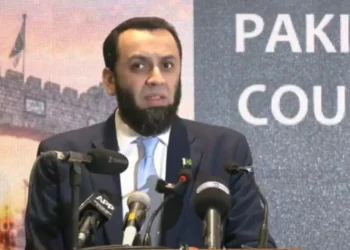
Pakistan’s Information Minister Attaullah Tarar says more than 20,000 terrorists have taken refuge in Afghanistan. (Photo credit: @TararAttaullah)
Afghanistan News

Pakistan Says Over 20,000 Terrorists Have Taken Refuge in Afghanistan

12 October 2026 [t_time:1791819015]
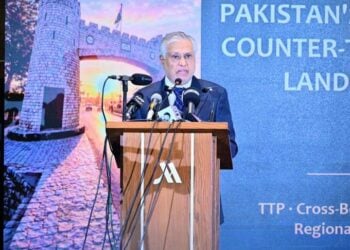
Pakistan’s Foreign Minister Ishaq Dar speaks at an international conference on counterterrorism and regional security, urging the Taliban to take practical action against the Tehreek-e-Taliban Pakistan (TTP). (Photo credit: @ForeignOfficePk)
Afghanistan News

Ishaq Dar Urges Taliban to Take Practical Action Against TTP

12 October 2026 [t_time:1791812530]

Latest

Loading latest news...

Popular stories

  • An aerial view shows collapsed buildings and widespread damage following an earthquake in Panama (Photo: Reuters)

    More Than 200 Aftershocks Recorded in Panama Since Friday’s Earthquake

    Share
    Share Tweet
  • UN Report Reveals Shifts in Family Attitudes and Rise in Domestic Violence in Afghanistan

    Share
    Share Tweet
  • Axios: Trump Expects Ukraine Not to Attack Russian Oil Refineries

    Share
    Share Tweet
  • The Politics We Inherited: Rethinking Afghanistan’s Political Culture

    Share
    Share Tweet
  • Pakistan and the Yemen War: Balancing Between Riyadh and Tehran

    Share
    Share Tweet

Podcast

Insights
Insights

Join Lynne O’Donnell for 8AM’s podcast series, Insights.
Lynne talks with generals, diplomats, soldiers, journalists, politicians, activists, people who have front row seats for conflicts around the world, and citizens with a story to tell, happy or sad. For this first series, Afghanistan is the focus. Lynne and her guests talk about the collapse of the republic in August, 2021, and the impact since — for the people of Afghanistan, for the security of the region, for the safety of the world. It’s important, interesting and insightful.

Insights/22: Controlling the Narrative with Mina Sharif
byinsights8am

Controlling the Narrative

Lynne O’Donnell talks with Mina Sharif, author, activist, women’s rights campaigner, educator and mentor. They discuss who controls the narrative and who speaks for Afghanistan’s people when the Taliban appear to have seized control not only of the country but of the message, too.

Have a listen

Insights/22: Controlling the Narrative with Mina Sharif
Episode play icon
Insights/22: Controlling the Narrative with Mina Sharif
Episode Description
Episode play icon
Insights/21: Media Meltdown with Zahra Joya
Episode Description
Episode play icon
Insights/20: Terror Inc with Scott Richards
Episode Description
Episode play icon
Insights/19: Busting Stereotypes with Bushra Gohar
Episode Description
Episode play icon
Insights/18: Media Matters with Waliullah Rahmani
Episode Description
Episode play icon
Insights/17: What Goes Around Comes Around with Sima Samar
Episode Description
Search Results placeholder
Hasht-e Subh

8AM Media, also known as Hasht-e-Subh Daily, stands as Afghanistan's premier independent and non-profit newspaper, resonating as a beacon of journalistic integrity since its establishment in June 2007 by esteemed Afghan journalists and human rights advocates. With a steadfast commitment to citizen journalism and civic education, Hasht-e-Subh Daily has earned its place as the most esteemed publication in the nation.

Publisher: Sanjar Sohail
Email: [email protected]
Executive Director: Parwiz Kawa
Email: [email protected]

Read More

Taliban’s Rule Is Multiplying Opponents, Not Supporters

13 Workers Detained in Parwan, Fate Unknown After 26 Days

Discrimination in Helmand’s Education Centers: Taliban Members Receive Better Facilities, Students Say

Taliban Ban Men from Sewing Women’s Clothing in Kandahar

Pakistan Says Over 20,000 Terrorists Have Taken Refuge in Afghanistan

Editor’s Choice

Every Saturday morning, 8AM MEDIA English Services Department will guide you through the week’s biggest stories from Afghanistan and the international community.

Subscribe

© 2026 - ©Hasht-e Subh Daily

No Result
View All Result
8am.Media
پښتو ویب‌پاڼه
ویب‌سایت فارسی
اۉزبېکچه ویب‌سایت
  • Home
  • News
    • Afghanistan News
    • World News
  • Opinion
    • Editorial
    • Analysis
  • Reports
    • Daily Reports
    • Investigative Reports
  • Society
    • The story of people
  • Women’s Word
  • Columns
    • Three Years After Afghanistan’s Fall: The Taliban’s Resurgence
    • Towards Equality
    • The Resurgence of the Taliban: Two Years Since Afghanistan’s Fall
    • Hebatullah Report Special Edition
    • Resistance for Education Special Edition
    • Special Column on Taliban’s Education Curriculum
    • Nawroz
  • Interviews
  • Contact Us
    • About Us
    • 8AM MEDIA Annual Awards
    • Submit an Article to Hasht-e-Subh
  • 8am.media

© 2026 - ©Hasht-e Subh Daily