“They told me to come, as Husna had been found. I was brought to a cold and quiet room. A bag was lying on the ground. Pointing to the bag, they said: This is Husna, your sister. Frozen, I replied, ‘No, this is not her! How can this be her?’ It felt as if all the joints in my body were falling apart. My legs trembled, my hands trembled, and I whispered every prayer I had learned as a child from my father, wishing that this was just a mistake. Then I opened the bag and instantly, the world crumbled down over my head. My sister was looking with soulless eyes, so cold and so frozen. The room smelled of death.”
These are the days after the first snow, the sky is still cloudy and the weather in Kabul is sad. I watch the outside room from the window, and am brought to my senses by a soft voice that says, “We did not print Husna’s photo, and we do not want her photo to be in front of my mother. She cannot stand it, she’s hurting, hurting from this pain, I told you at the beginning not to talk to my mother. I will speak, even though my pain is no less than hers. But she is a mother…a mother.”
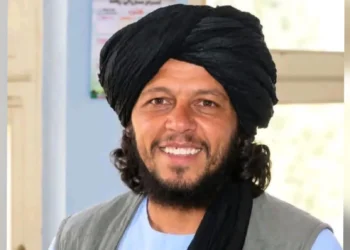
He spoke quietly throughout the interview, so that no sound could leave the room. It was a difficult moment – he doesn’t want to fall apart and yet he wants to fall apart – his eyes turn red and he swallows his grief, but a few seconds later, everything falls apart. There is no sound, his head is down and the shoulders are shaking, and in a moment, all efforts to maintain control breaks apart. This is Latif, brother of Husna Yosufi, a seventh-semester student at the Faculty of Public Administration and Policy, who died in the attack on Kabul University. The girl was buried with her wishes, but no one saw her, wrote about her or much less remember.
We are remembering November 2. The time is 10:46 a.m., when Kabul University got attacked. In those delicate moments, he is on duty and still does not know what happened. He opens Facebook. When he finds out that the judicial training center of Kabul University has been attacked, he thinks that his sister is less likely to be in danger, but still feels uneasy and continues to call his sister. These calls go unanswered, one after another. They speculate that the telecommunications networks may have been disrupted in the area due to the security attack, but still it is not possible for Husna to ignore her brother’s call.
Latif narrates: “Rauf, the grandson of my mother’s uncle, was Husna’s classmate. Husna always said that if I wanted to contact her and her phone was not available, to call Rauf. But neither Rauf nor my sister answered. There was no use in calling. I left my office for the university. From the Ministry of Agriculture onwards, the roads were blocked. I set off on foot. It was a commotion, such a commotion! The calls on my phone wouldn’t stop. Father had heard, and so had Rauf’s father. The sound of explosions and bullets were like hot water dousing my body. I met a worried young man nearby. It was Reza, Sohaila’s brother. The worst feeling at these kinds of moments is that the more you search, the less you are likely to find. Reza and I exchanged our numbers and decided to contact each other whenever there was any news. “I returned home, not knowing what was going to happen and what to say to Rauf’s parents and uncle.”
“It was about four o’clock and there was still no news. My mother was in shock and did not say a word. Suddenly, Sohaila’s brother called and announced that two of the wounded, Husna and Marwa, had been taken to Estiqlal Hospital. I headed there quickly. Husna’s injury was not good news, but I must admit that I was happy at the thought that she was alive at least, which was the best news in the world at that moment. Rauf’s father, who had arrived at Estiqlal Hospital before me, called and only a few words were needed to return me to a state of hopelessness. He said, ‘Don’t come, Latif, the person named Husna in Estiqlal Hospital has a different father’s name.’ With the weight of worry back on my shoulders, I returned to the university. I cannot explain in words the level of sorrow and apprehension I felt. I was just a speck of dust in a mountain of grief from families who were burning in sadness in search of their young university students.”
Latif continues, “It was a few minutes before five when my father called. As soon as I noticed his trembling voice, I realized that this was not good news. My father just said, ‘Just get yourself to the Forensic Medical Hospital,’ and hung up. I went there with a friend of mine. The situation was not good: a father looking for his child, a brother looking for his sister, a mother looking for her daughter. I asked someone why they had come there. With a cold, bitter smile as his face flickered with concern, he replied, ‘Brother, no one comes here in joy…’ Photos of a number of the dead and wounded had been posted on Facebook. Some people found out about their children being killed or injured on Facebook, but I – I did not find out, neither about Husna nor Rauf.”
“Someone told me to go to the 200-Bed Police Hospital in Afshar, as many who were wounded had been taken there. We left, but we were disappointed there as well. We were told that there were no wounded civilians there, and that we must go to the 400-Bed Hospital. This confusion made us even more devastated, as my father and Rauf’s father kept calling continuously while I had reached a dead end. I was in a city where I did not know where my sister was, leave alone what her condition was! I reached the 400-Bed Hospital. Many other uninformed families came here, too. Rauf’s uncle was there as well. My brother and uncle came too, as if they knew what I did not know. Suddenly they called for me, ‘Come on, Husna has been found. I was brought to a cold and quiet room. A bag was lying on the ground. Pointing to the bag, they said: This is Husna, your sister. Frozen, I replied, ‘No, this is not her! How can this be her?’ It felt as if all the joints in my body were falling apart. My legs trembled, my hands trembled, and I whispered every prayer I had learned as a child from my father, wishing that this was just a mistake. Then I opened the bag and instantly, the world crumbled down over my head. My sister was looking with soulless eyes, so cold and so frozen. The room smelled of death.”
“I came to my senses with a call from my father. When I answered, he asked what had happened. At first, I told my father not to worry, as she was only injured, but suddenly I said to myself, ‘How long will you hide it, Latif?’ It was hard and I never thought that one day this responsibility would be on my shoulders, but I mustered up the courage and said slowly, ‘Husna has given her life to you and mother.’ Meanwhile, the loud crying of Rauf’s uncle came from the other corner of the hospital corridor. Rauf was also dead… I wish that he at least had been only injured. Our sorrow was multiplied a hundredfold. What should I do now? I stood and walked sluggishly, but the reality was that I was like a moving corpse – I could neither hear a word nor understand it. As far as the eye could see, there were crying faces of the victims’ relatives. It was seven o’clock in the evening at the 400-Bed Hospital.”
Latif holds his bony hands over his face for a few seconds and wants the camera turned off so he can let go for a bit. I want to ask Latif something, but I can’t. I don’t know whether it makes sense or not, but I ask: Now that Husna is gone, what regret do you have in your heart? He replies: “It’s only sorrow for her youth, a hundred sorrows, a girl who studied English and went to university with love and had just started her seventh semester so that she could celebrate her graduation in a few months, a girl who was going to study for a master’s degree abroad, this girl who was my little sister. Of my father’s six children, I was the fourth and Husna the fifth child. Imagine how precious she was to us. At night, when I would come home from work, I would call her and she would open the door for me, but now what? Every time I have reached the gate from that day onwards, I remember that Husna is no more. It is a lie to say I do not cry and do not grieve. The night before the incident, when I called her to open the door, she had been reciting the Qur’an. She had been upset with me because I had called during her recitation. If only she were alive, I would have accepted her anger for the rest of my life. What use is it now that she’s buried in a corner of Karte Sakhi in this city full of war and hatred?”
Latif goes back to his account and says: “After we found out that we had lost Husna and Rauf, we found an ambulance and took both of them home. First we took Rauf to his father’s house in the sixth district and then Husna. What can I say? Pain is pain, no matter how you look at it. I brought my sister’s lifeless body home and my mother and father could neither cry nor shed tears, but just stared at Husna’s lifeless body. It took several hours for my mother to recover from the shock and suddenly she started crying, crying badly, wishing it was her instead. Husna had been shot on her right side – a stray bullet had hit the back of her head and she took her last breath due to severe blood loss.”
Latif says, “We all go through tragedies in our lives, but this tragedy saddens us no end, and what can I say except that I’m a newly graduated brother from Bangalore, India, with a sister in Iran who still doesn’t know… I should inform her.” In the midst of the suppressed grief, a faint, colorless smile sometimes appears on his face. I ask whether it’s something he remembers. He replies, “Once, I wanted to make an email for Husna – how funny she was – she would forget every password I typed. Finally, I made a password for her email, which was very funny, and I told her that she would never forget this one, and that this was our secret password together. Now that I remembered it, I suddenly caught myself wondering who would fill my sister’s laughter now?
I turn the conversation towards peace and optimism about it, with a man who is a victim of war and has a new pain in his heart. When it comes to peace and negotiation, he does not talk about it in detail, but just asks me to write: How much is one kilo of a happy heart worth?