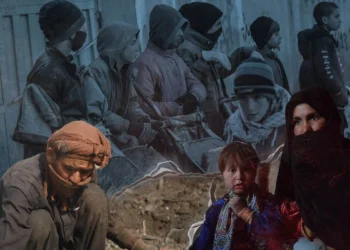
Some reporters state that Afghan media have faced financial crises, severe repression, and Taliban threats over the past year. According to them, Taliban restrictions in 2023 have increased compared to the previous year, leading many journalists in the country to quit their jobs and migrate. They claim that Taliban intelligence has created a “tight and terrifying” working environment for journalists and media. Alongside self-censorship by reporters, music, entertainment, and political programs have been banned on Afghan television, and female presenters are obliged to appear on camera wearing masks. Media support organizations have described 2023 as “highly damaging” and reported at least 110 incidents of violence against journalists in Afghanistan. According to these organizations, two journalists were killed last year, and 40 journalists were detained by the Taliban, with some detentions being temporary, while others endured months in prison.
Following the Taliban’s takeover, information dissemination has become challenging, and media operations have suffered irreparable setbacks. Media, alongside enduring severe Taliban-imposed constraints, have lost their professional immunity, with female journalists bearing the brunt of the risks.
The latest global press freedom index, published in 2023, reveals that Afghanistan ranks 152nd among 180 countries. According to the report, 43% of Afghanistan’s media outlets have closed since the Taliban’s takeover, leaving only 4,360 out of the 10,780 journalists employed in the media sector.
Nevertheless, some Afghan media reporters have faced financial crises, severe repression, and threats from the Taliban over the past year. Ahmad Nawid Kawush, who has worked as a reporter in various media outlets in the country for several years, states that Taliban restrictions in 2023 have intensified compared to the previous year. This has led to many journalists and correspondents in the country either leaving their jobs or migrating. Kawush himself is one of the journalists forced to leave the country.
According to Kawush, the Taliban’s intelligence has created a “constricted and frightening” working environment for journalists and media. He states, “The information dissemination situation in Afghanistan is severely restricted, and no journalist can independently report events. Everything must pass through the Taliban filter before being published. If a journalist publishes something contrary to the Taliban’s wishes, they are immediately detained, tortured, and beaten by this group.”
Journalists are facing self-censorship, and music, entertainment, and programs opposing the Taliban’s view are not broadcast on Afghan television. Female presenters also appear on camera wearing masks.
Maryam (pseudonym) is one of the female journalists in Afghanistan. Due to security concerns in Kabul, she prefers not to disclose her real name in reports. She states that the Taliban have turned the working environment for media, especially female reporters, into a “hell.” Speaking to the Hasht-e Subh Daily, Maryam says, “The Taliban have narrowed the space so much that we are forced to quit our jobs. Currently, only women in Kabul have permission to work in the media, but in the provinces, no woman or girl is allowed to work in the media.” She adds, “Most Taliban officials do not interview female reporters in Kabul, and their behavior towards us is inhumane. They see us differently, even though we appear with veils and masks in front of the camera.”
The lack of timely access to information and self-censorship are among the challenges faced by media support organizations and many journalists in 2023. Abdullah Walizada, another reporter, states that the Taliban do not share information with media outlets operating from outside their control. According to him, the Taliban label media beyond their influence as “hostile.” He asserts, “In 2023, in addition to other restrictions, the Taliban have severely limited access to information. This group is unresponsive to others, except for media with local publications.”
Many journalists refrain from discussing the situation of reporters under Taliban rule due to security threats. One of these journalists, speaking to the Hasht-e Subh Daily, reveals that threats and torture against journalists are among the major factors leading to self-censorship among media professionals in Afghanistan. They state, “From choosing a subject to addressing an issue and disseminating news, everything is under Taliban’s censorship. When we want to work on a report, we must use words that align with the Taliban’s preferences.”
Violence Against Journalists in 2023
According to reports from international organizations in 2023, at least 110 incidents of violence against journalists have been documented in Afghanistan, resulting in the death of two journalists.
The UN Educational, Scientific, and Cultural Organization (UNESCO) has announced that in 2023, two Afghan journalists were killed while performing their duties in Afghanistan. Although the organization did not provide details regarding the precise time and location of the journalists’ murders, it was reported that in March of the same year, one journalist was killed, and 18 others were injured in an explosion during a meeting in Balkh province.
Statistics from the Nai Supporting Afghanistan Open Media also indicate that in the past year, 40 journalists have been detained by the Taliban. Some of them have been held in temporary detention centers, while others have been released after spending several months in prison.
Media Shutdown
Before the Taliban’s takeover in Afghanistan, at least 107 television channels, 284 radio stations, hundreds of print magazines, and over 1,800 active websites were operating.
Reporters Without Borders has reported the total number of media outlets in Afghanistan as 547. The organization states that during the two years of Taliban rule, over 80% of female journalists have been forced to end their work in the media, and the year 2023 has been a period of hiatus for women journalists in the media.
The Afghanistan Journalists Center (AFJC) has also announced that the Taliban have issued at least 14 directives on how media and journalists should operate, significantly restricting media freedom. These restrictions include mandatory face covering, prohibition of interviews with men, and a ban on conducting programs in shared spaces with men, placing additional constraints on female journalists.
In the initial days of assuming control over Afghanistan, the Taliban took steps to impose restrictions and change media policies per their beliefs.
Meanwhile, the Media Oversight Organization in Afghanistan announced in May 2023 that the detention and threats against journalists in Afghanistan have increased by 60% compared to the previous year.
It is worth mentioning that in the 1990s, the Taliban banned the activities of most radio and television stations and newspapers in the country. However, the current closure of most media outlets is attributed to economic difficulties. The group claims that the media now operate according to the “principles of Islamic law.”