• 8AM.MEDIA
  • ویب‌سایت فارسی
  • پښتو ویب‌پاڼه
  • اۉزبېکچه ویب‌سایت
  • Podcast
Sunday, November 15, 2026
Hasht-e Subh
  • Home
  • News
    • Afghanistan News
    • World News
  • Opinion
    • Editorial
    • Analysis
  • Reports
    • Daily Reports
    • Investigative Reports
  • Society
    • The story of people
  • Women’s Word
  • Columns
    • Three Years After Afghanistan’s Fall: The Taliban’s Resurgence
    • Towards Equality
    • The Resurgence of the Taliban: Two Years Since Afghanistan’s Fall
    • Hebatullah Report Special Edition
    • Resistance for Education Special Edition
    • Special Column on Taliban’s Education Curriculum
    • Nawroz
  • Interviews
  • Contact Us
    • About Us
    • 8AM MEDIA Annual Awards
    • Submit an Article to Hasht-e-Subh
  • 8am.mediaBack
Subscribe
No Result
View All Result
  • Home
  • News
    • Afghanistan News
    • World News
  • Opinion
    • Editorial
    • Analysis
  • Reports
    • Daily Reports
    • Investigative Reports
  • Society
    • The story of people
  • Women’s Word
  • Columns
    • Three Years After Afghanistan’s Fall: The Taliban’s Resurgence
    • Towards Equality
    • The Resurgence of the Taliban: Two Years Since Afghanistan’s Fall
    • Hebatullah Report Special Edition
    • Resistance for Education Special Edition
    • Special Column on Taliban’s Education Curriculum
    • Nawroz
  • Interviews
  • Contact Us
    • About Us
    • 8AM MEDIA Annual Awards
    • Submit an Article to Hasht-e-Subh
  • 8am.mediaBack
No Result
View All Result
Hasht-e Subh
No Result
View All Result

Migration as a Silent Referendum Against the Taliban

Translated by Farhad Farhaad | Originally written in Persian by Rastakhiz Shoala

Mohammad Farhaad Mohammad Farhaad
15 November 2026 - Solar Hijri Date: 1405/08/24 [t_time:1794725737]
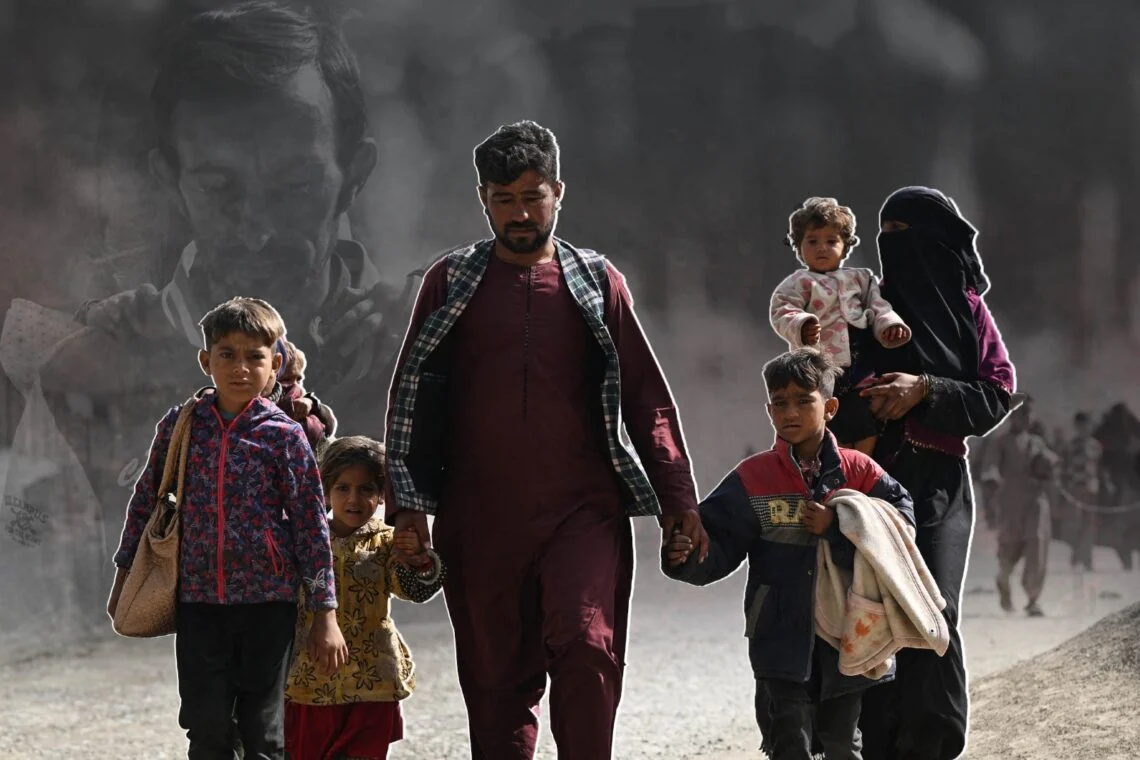
A father holds his children’s hands as a mother carries a toddler while a family walks along a dusty road amid rising migration from Afghanistan. (Photo credit: AFP)

AFP

The mass migration from Afghanistan since the Taliban’s return to power is not merely a response to poverty, unemployment, and livelihood hardships. This phenomenon must be examined in connection with political and social restrictions, the denial of fundamental rights, and the absence of a clear outlook for the future. For a large number of citizens, leaving the country means distancing themselves from a situation in which the ability to choose, participate, and build a future has been curtailed. From this perspective, migration can be seen as a “silent referendum” on the quality of Taliban governance, one whose result is reflected not in ballot boxes but in the departure of families, young people, and skilled professionals from the country.

Of course, this interpretation does not mean that all migrants leave Afghanistan for political reasons. Some migrate to find work and income, some to join their families, and others to gain access to education, healthcare, or security. Nevertheless, when these factors exist within a context of political and social restrictions, migration becomes an indicator of citizens’ confidence in the country’s future. The central question is why a large number of people, despite the dangers of migration routes and the hardships of life in host countries, do not consider staying in Afghanistan a reliable option for their future.

Poverty and unemployment are major drivers of migration, but the phenomenon cannot be fully explained by economics alone. Afghanistan faced structural economic problems before the Taliban’s return as well. However, after August 2021, the reduction in foreign aid, the decline in economic activity, and new restrictions made people’s livelihoods even harder. In its 2026 report, the United Nations Development Programme (UNDP) stated that in 2025, around 28 million people, equivalent to 74 percent of Afghanistan’s population, were unable to meet their basic needs. Economic growth of 1.9 percent has also failed to keep pace with population growth and the demands of the labor market.

Even so, the issue is not only a lack of income. It is the lack of any possibility of building a predictable life. A family that does not know when its daughter will be able to return to education, a young man with no prospect of employment, and a woman who has been deprived of job opportunities and social presence may see migration as the only remaining way to protect their future. In such circumstances, migration shifts from an economic decision to a response to the political and social structure.

Young people are among the groups that face the dilemma of staying or leaving more than others. Educational and employment restrictions, particularly for girls, have taken away a large share of their future opportunities. A joint report by the United Nations Educational, Scientific and Cultural Organization (UNESCO) and the United Nations Children’s Fund (UNICEF) in November 2026 shows that more than 2.6 million girls have been deprived of secondary education since the Taliban returned to power. In addition, 53 percent of children of primary school age are outside the formal public education system.

These restrictions do not have only educational consequences. They also affect families’ decisions about whether to stay or leave. For many families, migration is a way to secure education and a different life for their children. As a result, Afghanistan is not only losing part of its skilled workforce but also limiting the opportunity to nurture the next generation of professionals.

The departure of doctors, university professors, engineers, journalists, and other skilled professionals causes harm that goes beyond a reduction in the labor force. These individuals take with them the knowledge, experience, and institutional capacity of the country. When educational, medical, and economic institutions face a shortage of skilled personnel, the quality of services declines, and conditions for future generations to remain become even more difficult. In this way, restrictions increase migration, and migration in turn weakens the country’s capacity to improve its situation.

No country can build a stable and developed future while skilled professionals continue to leave, the young generation faces widespread deprivation, and half of the population is restricted from participation. Calling on migrants to return, without creating the necessary conditions, cannot halt this trend. Sustainable return is possible only when citizens enjoy security, job opportunities, education, fundamental freedoms, and the ability to take part in determining their own fate.

From this perspective, the migration of the people of Afghanistan can be seen as a silent referendum on the quality of Taliban governance. It is not a direct and uniform vote against the group, but an indicator of the gap between society’s expectations and the conditions created by the ruling structure. This referendum has no ballot box, but its result is visible in empty homes, the departure of young people, the migration of women, and the loss of skilled professionals.

Until the Taliban respond to the position of citizens in the political structure, women’s right to education and work, social freedoms, and society’s need for participation, migration will remain one of the clearest signs of the crisis of trust in Afghanistan. A country whose citizens are forced to leave in search of education, work, freedom, and security faces not only an economic crisis but also a crisis in the relationship between society and political power.


You can read the Persian version of this article here:
مهاجرت به‌عنوان همه‌پرسی خاموش علیه طالبان

ShareTweetSendSendShare

Related Posts

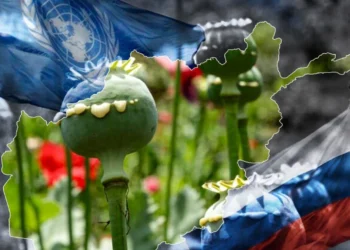
A collage shows opium poppy pods inside a map of Afghanistan beside the flags of the United Nations and Russia, amid a UN report on rising poppy cultivation. (Photo credit: Social Media)
Analysis

Poppy Cultivation Surges in Afghanistan as Russia and the Taliban Square Off Against the UN

15 November 2026 [t_time:1794723360]
An official reviews the detailed plan for Parcel 2.2 of Kabul New City, where residents say a businessman demolished about 200 plots. (Photo credit: mudh.gov.af)
Daily Reports

Businessman Seizes Residents’ Land in Kabul New City Amid Alleged Taliban Collusion

15 November 2026 [t_time:1794720281]
Map of Bamyan province highlighted in red inside the 3D map of Afghanistan.
Afghanistan News

Sources: Taliban Insult, Threaten and Detain Two Female Healthcare Workers for 24 Hours in Bamyan

15 November 2026 [t_time:1794715397]

Latest

Loading latest news...

Popular stories

  • A scanned copy of the Taliban order outlining new restrictions requiring female doctors to have a mahram when working with male colleagues. (Photo credit: 8am.media)

    Taliban Order Female Doctors to Have Male Guardians to Work With Male Colleagues

    Share
    Share Tweet
  • Araghchi Warns: US Must Choose Between Accepting Iran’s Proposal and Continuing the War

    Share
    Share Tweet
  • ISIS-Khorasan: A Real Threat to the People of Afghanistan and a Political Opportunity for the Taliban

    Share
    Share Tweet
  • UN Report Reveals Shifts in Family Attitudes and Rise in Domestic Violence in Afghanistan

    Share
    Share Tweet
  • Taiwan Accuses China of Escalating Military Activities in the Western Pacific

    Share
    Share Tweet

Podcast

Insights
Insights

Join Lynne O’Donnell for 8AM’s podcast series, Insights.
Lynne talks with generals, diplomats, soldiers, journalists, politicians, activists, people who have front row seats for conflicts around the world, and citizens with a story to tell, happy or sad. For this first series, Afghanistan is the focus. Lynne and her guests talk about the collapse of the republic in August, 2021, and the impact since — for the people of Afghanistan, for the security of the region, for the safety of the world. It’s important, interesting and insightful.

Insights/22: Controlling the Narrative with Mina Sharif
byinsights8am

Controlling the Narrative

Lynne O’Donnell talks with Mina Sharif, author, activist, women’s rights campaigner, educator and mentor. They discuss who controls the narrative and who speaks for Afghanistan’s people when the Taliban appear to have seized control not only of the country but of the message, too.

Have a listen

Insights/22: Controlling the Narrative with Mina Sharif
Episode play icon
Insights/22: Controlling the Narrative with Mina Sharif
Episode Description
Episode play icon
Insights/21: Media Meltdown with Zahra Joya
Episode Description
Episode play icon
Insights/20: Terror Inc with Scott Richards
Episode Description
Episode play icon
Insights/19: Busting Stereotypes with Bushra Gohar
Episode Description
Episode play icon
Insights/18: Media Matters with Waliullah Rahmani
Episode Description
Episode play icon
Insights/17: What Goes Around Comes Around with Sima Samar
Episode Description
Search Results placeholder
Hasht-e Subh

8AM Media, also known as Hasht-e-Subh Daily, stands as Afghanistan's premier independent and non-profit newspaper, resonating as a beacon of journalistic integrity since its establishment in June 2007 by esteemed Afghan journalists and human rights advocates. With a steadfast commitment to citizen journalism and civic education, Hasht-e-Subh Daily has earned its place as the most esteemed publication in the nation.

Publisher: Sanjar Sohail
Email: [email protected]
Executive Director: Parwiz Kawa
Email: [email protected]

Read More

Migration as a Silent Referendum Against the Taliban

Poppy Cultivation Surges in Afghanistan as Russia and the Taliban Square Off Against the UN

Trucks Stall at Iran’s Rimdan Border as Afghanistan’s Fruit and Vegetable Exports Spoil

Two Aircraft Collide at Miami International Airport in US

UNICEF: Poverty, Conflict and Climate Crises Threaten Children’s Future

Editor’s Choice

Every Saturday morning, 8AM MEDIA English Services Department will guide you through the week’s biggest stories from Afghanistan and the international community.

Subscribe

© 2026 - ©Hasht-e Subh Daily

No Result
View All Result
8am.Media
پښتو ویب‌پاڼه
ویب‌سایت فارسی
اۉزبېکچه ویب‌سایت
  • Home
  • News
    • Afghanistan News
    • World News
  • Opinion
    • Editorial
    • Analysis
  • Reports
    • Daily Reports
    • Investigative Reports
  • Society
    • The story of people
  • Women’s Word
  • Columns
    • Three Years After Afghanistan’s Fall: The Taliban’s Resurgence
    • Towards Equality
    • The Resurgence of the Taliban: Two Years Since Afghanistan’s Fall
    • Hebatullah Report Special Edition
    • Resistance for Education Special Edition
    • Special Column on Taliban’s Education Curriculum
    • Nawroz
  • Interviews
  • Contact Us
    • About Us
    • 8AM MEDIA Annual Awards
    • Submit an Article to Hasht-e-Subh
  • 8am.media

© 2026 - ©Hasht-e Subh Daily