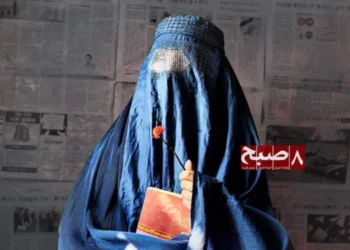
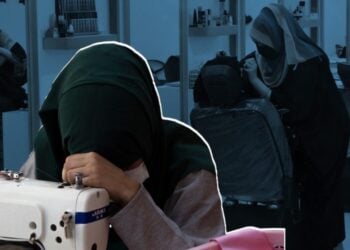
Recently, I read an article from exiled media outlets that continue to report on Afghanistan despite the fragile security conditions. The article, drawing on research from the Georgetown Institute for Women Peace and Security (GIWPS) and the Peace Research Institute Oslo (PRIO), labeled Afghanistan under Taliban rule as the worst country for women. I had seen similar reports from various organizations, all depicting Afghan women’s situation as dire. I’m not sure how these studies were conducted or what criteria were used, but it’s possible their findings were influenced by media reports, oppressive laws, and the Taliban’s restrictive measures against women. However, calling our situation merely the “worst” does not do justice to the full horror of our lives. As a girl who has experienced these circumstances firsthand, feeling deprivation deep in my bones, and witnessing the suffering of friends and classmates, I know that our reality far surpasses that label.
Ask any Afghan girl, whether she’s twelve or sixty, about life under the Taliban, or visit the impoverished provinces where the worst human rights abuses occur. The situation is catastrophic, and the violations against women are inhumane. Over the past three years, countless girls in these areas have fallen victim to child marriage. Many have been forcibly married to Taliban fighters, while others have faced execution for crimes they did not commit. Some were stoned to death secretly, without any legal process. Women like Qadria had their fates publicized, but no one knows where they ended up or how they suffered before their deaths. Many endured horrific torture before their executions, their final moments marked by the brutality of those who have twisted Islam into a tool of oppression.
Consider the girl whose image went viral when her father tried to sell her due to extreme poverty. Recall her tearful eyes and her voice breaking as she explained her father was selling her for “200,000” Afghanis. Think of the eight-year-old girl sold for one hundred and ten thousand Afghanis, or the women and girls arrested, tortured, and abused in Taliban prisons, forced into sexual slavery. These cases, along with countless others happening in secrecy, paint a grim and tragic picture of Afghan women’s reality.
In the past three years, women and girls have been deprived of every basic right necessary for survival. Women’s voices are now deemed “Awrah” (intimate parts), and the Taliban’s supreme leader has decreed that women cannot speak to men. The Taliban’s misogyny is so extreme that one member declared that women’s voices should be silenced because they tempt men: “When women speak softly, they stir the hearts of men with temptation.” When deprivation is this severe, how can one describe a woman’s condition in such a place? Is it merely “the worst,” or is it truly catastrophic?
Recently, I reached out to a sixteen-year-old girl who, despite her harsh circumstances, had always clung to hope and ambition. I asked her how she was doing. Instead of her usual voice message, she sent a single sentence: “Life within the four walls of the house has become so bitter and unbearable that I want to end it.” I was stunned. How do you respond to someone who once inspired others to persevere but now feels such despair? If a strong girl like Maryam has lost hope, how many others, in even worse conditions, are contemplating suicide? How many girls, like Shakila and Shakiba, are overwhelmed by depression and surrendering to forced marriages? How many have abandoned their dreams or been forced to leave their homeland?
Amid this ongoing crisis, a Taliban official laughed when asked about the suffering of Afghan girls. When a reporter asked, “When will girls’ schools reopen?” he responded with a dismissive laugh: “Which schools?” This response reflects the Taliban’s denial of women’s existence and their refusal to acknowledge their rights.
The Taliban’s oppressive rule has made life so unbearable for Afghan girls and women that thoughts of escape, suicide, and self-loathing become common. This account is just a glimpse of the suffering I’ve witnessed. I don’t know the full extent of the tragedies and human rights violations happening across Afghanistan, but as someone deprived of the right to work, study, and live freely, I can say that Afghanistan under Taliban rule is not just the worst; it is the most disastrous place for women.
You can read the Persian version of this Afghan woman’s story here:
افغانستان زیر حاکمیت طالبان فاجعهبارترین کشور برای زنان است | روزنامه ۸صبح