• 8AM.MEDIA
  • ویب‌سایت فارسی
  • پښتو ویب‌پاڼه
  • اۉزبېکچه ویب‌سایت
  • Podcast
Saturday, October 17, 2026
Hasht-e Subh
  • Home
  • News
    • Afghanistan News
    • World News
  • Opinion
    • Editorial
    • Analysis
  • Reports
    • Daily Reports
    • Investigative Reports
  • Society
    • The story of people
  • Women’s Word
  • Columns
    • Three Years After Afghanistan’s Fall: The Taliban’s Resurgence
    • Towards Equality
    • The Resurgence of the Taliban: Two Years Since Afghanistan’s Fall
    • Hebatullah Report Special Edition
    • Resistance for Education Special Edition
    • Special Column on Taliban’s Education Curriculum
    • Nawroz
  • Interviews
  • Contact Us
    • About Us
    • 8AM MEDIA Annual Awards
    • Submit an Article to Hasht-e-Subh
  • 8am.mediaBack
Subscribe
No Result
View All Result
  • Home
  • News
    • Afghanistan News
    • World News
  • Opinion
    • Editorial
    • Analysis
  • Reports
    • Daily Reports
    • Investigative Reports
  • Society
    • The story of people
  • Women’s Word
  • Columns
    • Three Years After Afghanistan’s Fall: The Taliban’s Resurgence
    • Towards Equality
    • The Resurgence of the Taliban: Two Years Since Afghanistan’s Fall
    • Hebatullah Report Special Edition
    • Resistance for Education Special Edition
    • Special Column on Taliban’s Education Curriculum
    • Nawroz
  • Interviews
  • Contact Us
    • About Us
    • 8AM MEDIA Annual Awards
    • Submit an Article to Hasht-e-Subh
  • 8am.mediaBack
No Result
View All Result
Hasht-e Subh
No Result
View All Result

Attack on Kaaj, Dreams Shaded with Innocent Blood and Burred Under the Mud

Hasht-E Subh Hasht-E Subh
19 November 2022 - Solar Hijri Date: 1401/08/28 [t_time:1668827223]

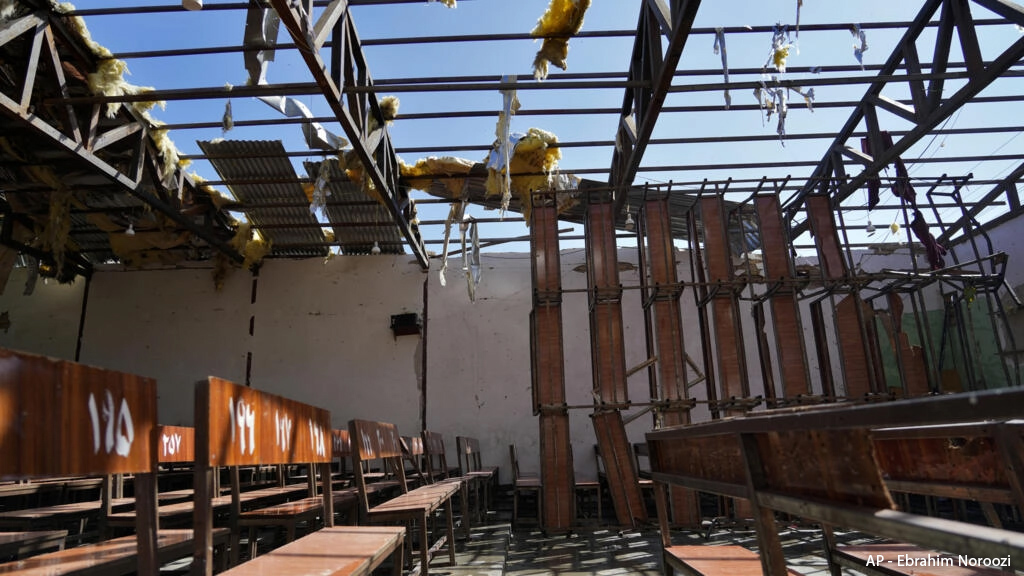
In a split second, hearts stopped beating. On September 30, as the day dawned crisp and clear, while students were taking a mock exam, two suicide bombers attacked the Kaaj Educational Center in Dasht-e Barchi, Kabul. The attackers killed the guards, entered the classroom, shot students, and one of them exploded himself. At least 53 innocent lives, mainly females, died, and dozens were injured.

The lives of the wounded ones changed forever.

“The doctors removed my left eye,” Fatima laments her fate. The attack on Kaaj took 17-years-old Fatima’s left eye, injured her hands and jaw, and raptured her eardrums. This happened when Fatima began a beautiful morning, excited to take the Kankor practice exam – an entrance exam for universities in Afghanistan. Little did she know that blood will fill in the answers. Fearing for their lives, her classmates burst into tears after hearing the shots. As a Hazara girl, Fatima always feared this moment.

Hazaras, a Shia Muslim ethnicity, the most peace-loving and supporting ethnicity have been the very primary target during any regime and political era for the sack of their ethnic affiliation and school of thought.
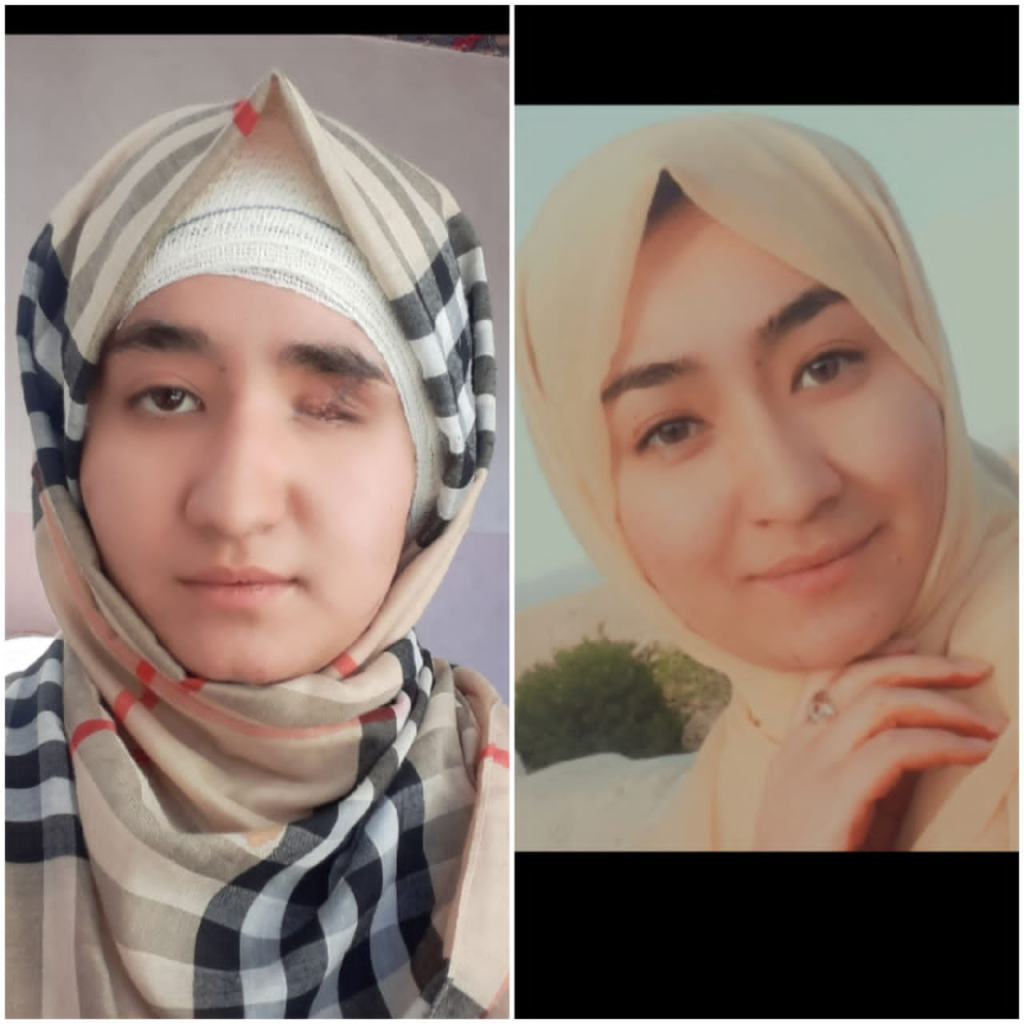
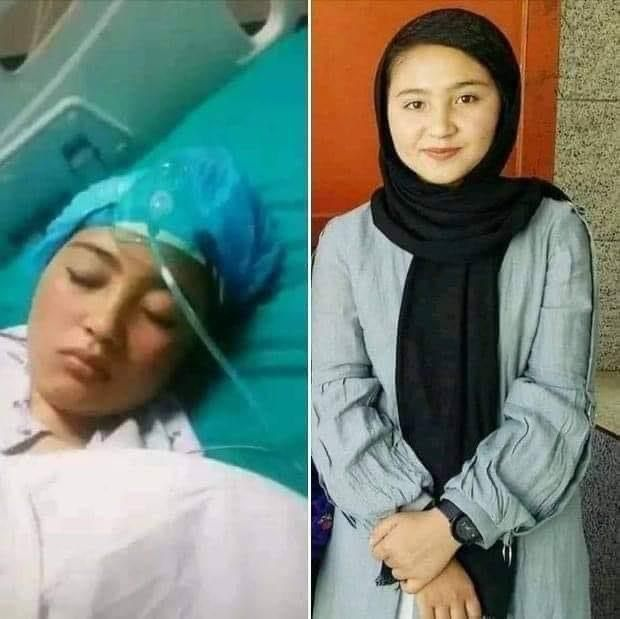
Fatima Amiri, One of the KEC Survivals, Before and After the Attack

Fatima hid under a table, and the gunman exploded himself. The classroom darkened, and so did Fatima’s world. “I thought I was dead until I smelled my hair burning.” With blood all over her body, she still thought it was beautiful to be alive. Fatima jumped over the wall into the street and screamed for help. Eventually, she made it to the hospital but was worried for her friends. Her family assured her that they were fine. “They were not; they had died,” Fatima cries. Their dreams are buried, but Fatima does not let the pain crush hers. With one eye and a heavy heart, she recently took the Kankor exam and got accepted to study Computer Science. Fatima cannot afford to see the world with two eyes anymore. The doctors in Afghanistan cannot perform her eye operation, and traveling outside the country is expensive.

Fatima is not the only Hazara who got hurt while striving for knowledge. Terrorists are increasing their attacks on Hazaras in educational centers.

cording to the Hazara Inquiry report, the total number of casualties from attacks on educational centers in the Hazara neighborhood is approximately 775, with 346 killed and 429 injured. For some of the attacks, ISKP (Islamic State-Khorasan Province), ISIS (Islamic State of Iraq and Syria), and the Taliban took responsibility, while for some, no one has taken responsibility.

Many other Hazara students’ dark memories jogged after the attack on Kaaj.

“I lost my cousin, my best friend, and my other half, ” Gulamiz sobs. Malaka, a 19-years-old girl, was injured in an attack on the Kawsar-e Danish educational center that killed 30 people. After being in a coma for six days, she died. One night before the incident, Malaka and Gulamiz had a conversation about the security of students. Malaka was willing to risk her life for knowledge. Since nobody heard of Hazaras, she believed that only through education could she let the world know of their existence.

In the face of Hazara killings, the then-Afghan governments and all other states remained silent. In his article, Relentless Atrocities: The Persecution of Hazaras, Mehdi J. Hakimi claims that even when Afghanistan ratified the Rome Statute, the situation of Hazaras did not improve.
Malaka Ebrahimi – One of the Attack Victims

Malaka’s dreams only remained as words on pages of a bloodied notebook. She was waiting for the Kankor exam, but death was waiting for her. Malaka’s death broke Gulamiz, and the memories of that day still haunt her. “I saw naked bodies, bloodied notebooks, hands, legs, and heads,” Gulamiz trembles. The depression kept her indoors for months. But her late cousin’s dreams inspired her to move on. She is living Malaka’s dreams to sense her existence. Gulamiz is now studying international relations at Mount Holyoke College in Massachusetts, Boston. “No one sees me as a Hazara here; they see me as a human,” Gulamiz breathes heavily. After moving to the US, she realized how differently they treated her in Afghanistan.

As stated by Hakimi, Hazaras in Afghanistan cannot freely exercise their fundamental rights, such as the right to education and freedom of religion. According to the Hazara Inquiry report, the first massacre against Hazaras occurred in the nineteenth century, when the Afghan king Abdur Rahman Khan labeled them as infidels. Roughly 60% of Hazaras were killed, enslaved, and forced to migrate. Also, during Afghanistan’s civil war in the twentieth century, they faced social, economic, and political discrimination. Persecutions continue to this day, and now under the Taliban, they fear the most.

21-years-old Mursal, another Hazara girl, recalls her dark memories. In an attack on Mawoud educational center, now known as Kaaj, Mursal’s legs were injured. Her best friends died too. After the attack, Mursal could not walk for days, and it took her a year to sit in a classroom again. “Bricks fell on my back, but the burning books captured my eyes.” Her best friends would still be alive if it had not been for education. But Mursal now loves education more than ever and is studying Environmental Studies at the American University of Central Asia. Mursal calls herself a victim because the memories torment her to date. “The saddest part is that families could not recognize their children; the explosion either burnt them or cut off their heads,” Mursal shivers.
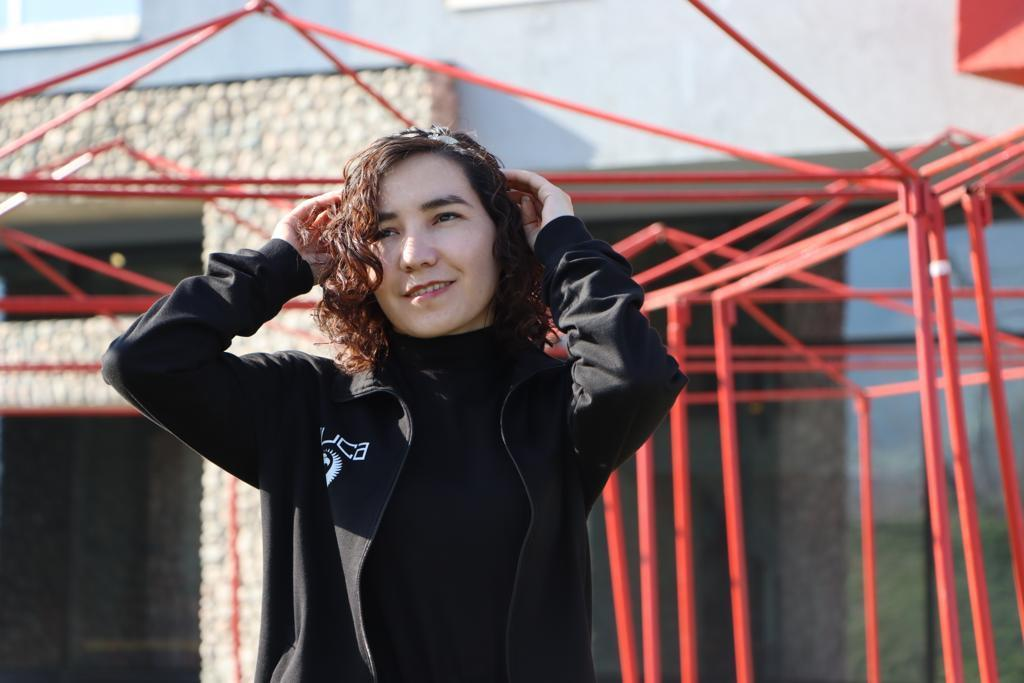
Mursal Jamal – One of the Attack Survivals

Besides educational centers, Hazaras are targeted in hospitals, workplaces, and worship places. From 2010 to 2022, a group of Hazara advocates have recorded 3836 casualties: 1537 killed and 2299 injured.

In April 2022, the UK parliamentarians launched an inquiry into the atrocities perpetrated against Hazaras in Afghanistan and Pakistan. Their first report writes that Hazaras face genocide as a religious and ethnic minority at the hands of the Taliban and the ISKP. Under the UN Genocide Convention and customary international law, the findings commit all states to protect Hazaras and prevent a possible genocide.

“How many more Hazara lives will it take for the world to call it a genocide,” Gulamiz wonders.


Story Narrated by Zuhal Qaderdan
ShareTweetSendSendShare

Related Posts

Armed Taliban members and Morality Police confront women and men on a street as a woman is shown being flogged in the background, amid the UNAMA-reported crackdown. (Photo credit: BBC + Wikipedia)
Daily Reports

UNAMA Report: Taliban Intensify Crackdown on Women as Arbitrary Detentions Continue

16 October 2026 [t_time:1792132313]
Taliban spokesman Zabihullah Mujahid speaks during a press conference in Kabul, Afghanistan. (Photo Credit: Getty Images)
Afghanistan News

Taliban Accuse UNAMA of Portraying Them Negatively

15 October 2026 [t_time:1792085547]
A female doctor gives a biscuit to a child held by their mother amid rising malnutrition among children in Afghanistan. (Photo credit: UNICEF)
Afghanistan News

UNICEF: Over Four Million Children in Afghanistan to Need Malnutrition Treatment in 2027

15 October 2026 [t_time:1792083832]

Latest

Loading latest news...

Popular stories

  • An aerial view shows collapsed buildings and widespread damage following an earthquake in Panama (Photo: Reuters)

    More Than 200 Aftershocks Recorded in Panama Since Friday’s Earthquake

    Share
    Share Tweet
  • Trump Again Says War with Iran Will End “Very Soon”

    Share
    Share Tweet
  • Axios: Trump Expects Ukraine Not to Attack Russian Oil Refineries

    Share
    Share Tweet
  • UN Report Reveals Shifts in Family Attitudes and Rise in Domestic Violence in Afghanistan

    Share
    Share Tweet
  • The Politics We Inherited: Rethinking Afghanistan’s Political Culture

    Share
    Share Tweet

Podcast

Insights
Insights

Join Lynne O’Donnell for 8AM’s podcast series, Insights.
Lynne talks with generals, diplomats, soldiers, journalists, politicians, activists, people who have front row seats for conflicts around the world, and citizens with a story to tell, happy or sad. For this first series, Afghanistan is the focus. Lynne and her guests talk about the collapse of the republic in August, 2021, and the impact since — for the people of Afghanistan, for the security of the region, for the safety of the world. It’s important, interesting and insightful.

Insights/22: Controlling the Narrative with Mina Sharif
byinsights8am

Controlling the Narrative

Lynne O’Donnell talks with Mina Sharif, author, activist, women’s rights campaigner, educator and mentor. They discuss who controls the narrative and who speaks for Afghanistan’s people when the Taliban appear to have seized control not only of the country but of the message, too.

Have a listen

Insights/22: Controlling the Narrative with Mina Sharif
Episode play icon
Insights/22: Controlling the Narrative with Mina Sharif
Episode Description
Episode play icon
Insights/21: Media Meltdown with Zahra Joya
Episode Description
Episode play icon
Insights/20: Terror Inc with Scott Richards
Episode Description
Episode play icon
Insights/19: Busting Stereotypes with Bushra Gohar
Episode Description
Episode play icon
Insights/18: Media Matters with Waliullah Rahmani
Episode Description
Episode play icon
Insights/17: What Goes Around Comes Around with Sima Samar
Episode Description
Search Results placeholder
Hasht-e Subh

8AM Media, also known as Hasht-e-Subh Daily, stands as Afghanistan's premier independent and non-profit newspaper, resonating as a beacon of journalistic integrity since its establishment in June 2007 by esteemed Afghan journalists and human rights advocates. With a steadfast commitment to citizen journalism and civic education, Hasht-e-Subh Daily has earned its place as the most esteemed publication in the nation.

Publisher: Sanjar Sohail
Email: [email protected]
Executive Director: Parwiz Kawa
Email: [email protected]

Read More

UNAMA Report: Taliban Intensify Crackdown on Women as Arbitrary Detentions Continue

Taliban Accuse UNAMA of Portraying Them Negatively

UNICEF: Over Four Million Children in Afghanistan to Need Malnutrition Treatment in 2027

FAO: Returning Migrants and Rising Prices of Essential Goods Worsen Afghanistan’s Humanitarian Crisis

UNICEF: Access to Safe Water in Afghanistan’s Schools Helps Protect Children’s Health

Editor’s Choice

Every Saturday morning, 8AM MEDIA English Services Department will guide you through the week’s biggest stories from Afghanistan and the international community.

Subscribe

© 2026 - ©Hasht-e Subh Daily

No Result
View All Result
8am.Media
پښتو ویب‌پاڼه
ویب‌سایت فارسی
اۉزبېکچه ویب‌سایت
  • Home
  • News
    • Afghanistan News
    • World News
  • Opinion
    • Editorial
    • Analysis
  • Reports
    • Daily Reports
    • Investigative Reports
  • Society
    • The story of people
  • Women’s Word
  • Columns
    • Three Years After Afghanistan’s Fall: The Taliban’s Resurgence
    • Towards Equality
    • The Resurgence of the Taliban: Two Years Since Afghanistan’s Fall
    • Hebatullah Report Special Edition
    • Resistance for Education Special Edition
    • Special Column on Taliban’s Education Curriculum
    • Nawroz
  • Interviews
  • Contact Us
    • About Us
    • 8AM MEDIA Annual Awards
    • Submit an Article to Hasht-e-Subh
  • 8am.media

© 2026 - ©Hasht-e Subh Daily