The Human Rights Service of the United Nations Assistance Mission in Afghanistan (UNAMA) has reported at least 443 cases of arbitrary arrest and detention and 97 cases of ill-treatment of citizens by the Taliban’s Morality Police in its report for the third quarter of 2026. According to the report, women were detained for failing to observe the hijab required by the Taliban, and in one case a 13-year-old girl spent a night in detention. In addition, four former members of Afghanistan’s defense and security forces were killed, and at least 14 cases of their arbitrary arrest and detention were recorded. UNAMA also reported the detention of journalists, restrictions on media activity, the closure of institutions linked to the Shia community, and continued restrictions on women and other citizens.
Deprivation of Women’s Education and Schooling
The UNAMA report states that the ban on girls’ education beyond the sixth grade entered its fifth year in September 2026. Women have also been deprived of higher education since December 2022.
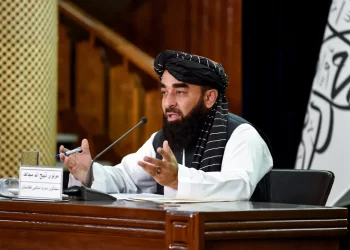
Citing Zabihullah Mujahid, the Taliban spokesperson, UNAMA wrote that on August 25, in a conversation with the media about reopening girls’ schools, he said there were Sharia considerations in this regard and that the group’s clerics must reach an agreement.
In the report, UNAMA also cited Zabihullah Mujahid as saying on August 16, regarding women’s right to work, that office work cannot be considered a right of women, and that preserving their dignity is what matters. According to Mujahid, women are allowed to work in sectors such as health, education, passports and airports, in cases deemed necessary from the perspective of Sharia.
UNAMA also reported that on September 7, 2026, one year had passed since the ban on Afghanistan’s female United Nations staff working in, and entering, the organization’s offices across the country.
Detention of Women for Failing to Observe the Hijab
In July, August and September, the UNAMA Human Rights Service documented more than 50 cases of women being detained in Kabul and Herat on charges of violating the Taliban’s hijab directive. One more case of detention was recorded in Badakhshan.
According to UNAMA, in one of these cases, a 13-year-old girl was detained for violating the hijab directive and spent a night in custody. She was released the next day after her father came forward.
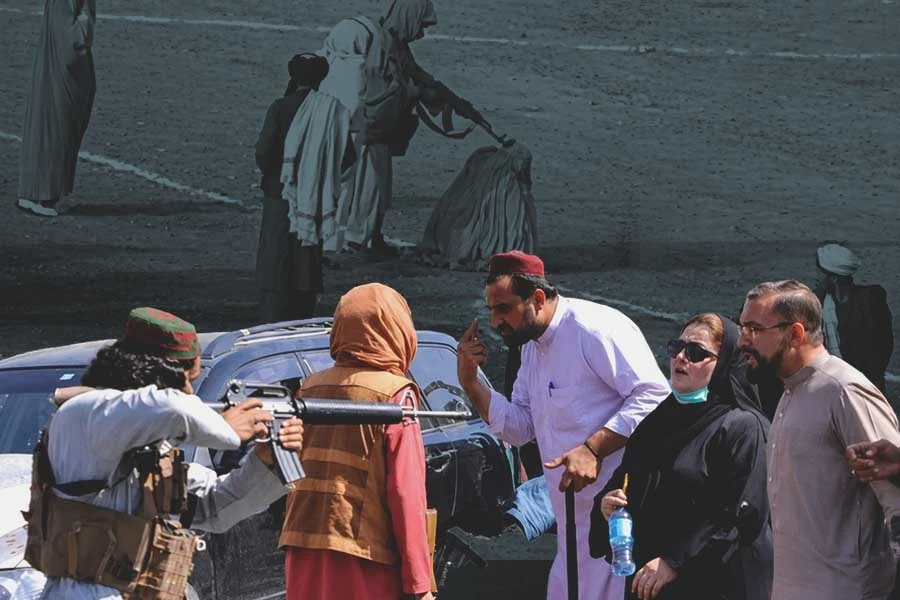
The report also states that on July 10, the Taliban’s Morality Police detained 10 women at the Friday Market in Herat for not wearing a prayer chador and took them to the office of the Ministry for the Propagation of Virtue and Prevention of Vice. According to the report, the women’s release was conditional on guarantees from their families and local representatives that they would observe the hijab in the future. According to UNAMA, in another incident, the Taliban’s Morality Police confronted a father in a market whose 12-year-old daughter was not wearing a chadari. According to the report, the man was briefly detained and was released after bystanders intervened, and he pledged to buy a chadari for his daughter.
UNAMA also reported cases of women being threatened with detention and beating for failing to observe the hijab required by the Taliban or for not having a mahram (male guardian). According to UNAMA, in Farah, at a large gathering on July 2, the Taliban’s Morality Police asked men to monitor the clothing of the women in their families and to prevent them from going to the market at dinner time and from using public transport without a mahram.
The UNAMA report cites Saif al-Islam Khyber, spokesperson for the Taliban’s Ministry for the Propagation of Virtue and Prevention of Vice, as saying on September 27 that he confirmed the detention of women in Kabul and Herat and described failure to observe the group’s required hijab as a “serious crime.” He also said women are obliged to cover their entire bodies, from the hair on their heads to their toenails.
Restrictions on Women’s Movement and Daily Life
The UNAMA report shows that restrictions related to the mahram requirement have also affected women’s access to basic services. According to the report, on August 8, the Taliban’s Morality Police in Parwan prevented two women from entering a health center because, according to the group, they had no mahram. Similarly, on August 17, the Taliban’s Morality Police had barred a woman from entering a market in Helmand for the same reason.
The report states that on August 6, the Taliban’s Ministry of Hajj and Endowments sent the next day’s Friday sermon to imams of mosques across the country, which stressed that women should stay at home, obey their husbands, and not leave the house without their permission.
According to the UNAMA report, on August 16 the Taliban’s Ministry of Justice (MoJ) published the “Curriculum for Preachers,” which presents the husband as the ruler of the family. The preachers were also asked to encourage men to make the women under their guardianship observe the hijab in front of non-mahram men.
Hundreds of Civilian Casualties in Border Incidents
UNAMA said that between October 1, 2025 and September 30, 2026, border incidents killed 512 civilians and injured another 1,236. According to the report, 33 of these civilian casualties, including 13 killed and 20 injured, were recorded in the third quarter of 2026.
The UNAMA report states that on July 9, artillery fire by Pakistani military forces during clashes with Taliban forces in Dur Baba district of Nangarhar wounded a male civilian.
Also, on September 21, an air strike by Pakistani military forces on a house in Nurgal district of Kunar left three people dead, including a woman, a man, and a 16-year-old girl. Four others were wounded in the attack, including a woman, two men and a four-year-old boy.
According to the report, on September 27, firing by Pakistani military forces at pedestrians in the Angoor Adda area of Barmal district in Paktika also led to the death of a male civilian.
In its report, UNAMA also reported explosions of planted explosive devices in border areas. According to the report, in four separate incidents in Kunar province, three teenage boys and one man who were engaged in daily activities, including grazing livestock, were wounded.
Former Security Force Members Continue to Be Targeted
In the reporting period, the UNAMA Human Rights Service documented at least 14 cases of arbitrary arrest and detention and four killings of former members of Afghanistan’s defense and security forces. According to the report, some of those who returned to the country after years of living abroad were also targeted. According to UNAMA, on July 9, a person linked to the former government was shot dead by unknown armed men in Paktika province, three weeks after returning from Iran.
The report states that in another incident, a former member of the Khost Protection Force, who had returned to Afghanistan from the United States 10 days earlier, was shot and killed by unknown armed men while relaxing on July 18. According to UNAMA, on July 28, an official or former member of the National Police was detained by the General Directorate of Intelligence (GDI) at Kabul airport on his return to Afghanistan.
28 People Flogged in Three Months
UNAMA said that although the Taliban’s Supreme Court stopped publishing official announcements about corporal punishment on its website and social media on April 22, UNAMA documented corporal punishment of 28 people, including 22 men and six women, in the third quarter of 2026.
According to the report, in one of these cases, on August 4, the Taliban’s primary court in Jaghori district of Ghazni province flogged four men and one woman with between 36 and 39 lashes on charges of theft and relations outside marriage. According to UNAMA, the punishment was carried out in public, and photography and filming of the scene had been prohibited.
Three Civilians Killed During Poppy Eradication Campaign
UNAMA said that during the poppy eradication campaign in Badakhshan province, from August 1 to 16, the Taliban killed three civilians following protests by residents. According to the report, in Yaftal district and the Bazar-e Ittifaq area, an attempt by Taliban fighters to detain a person accused of poppy cultivation was met with the man’s escape and protests by his mother and several residents.
According to the UNAMA report, as the protests spread, Taliban fighters opened fire on residents, killing two men and a woman and wounding eight others. Also during this incident, unknown individuals shot and killed two members of the Taliban’s special forces.
New Restrictions on Media and Detention of Journalists
UNAMA said that on August 2, the Taliban’s Ministry of Information and Culture ordered the media to cover programs marking the anniversary of the group’s return to power and to describe the period of the republic as one of “oppression and violence.”
According to the report, the activity of Radio Islah in Kabul was also suspended on July 27 by the Taliban’s Ministry of Justice because of the outlet’s name and its alleged resemblance to a political group from the republic era.
According to UNAMA, the Alpas media center was shut down on August 26 by the Taliban’s General Directorate of Intelligence (GDI). The reason given for the action was the center’s alleged affiliation with entities abroad. Also, the activity of Rah-e Farda TV, which belongs to the Shia community, was suspended on September 6. The network had previously been suspended on February 28, 2026, after condemning Pakistani attacks.
Meanwhile, Tamadon TV, which had been shut down since June 23, resumed its activity online from outside the country.
UNAMA also reported the detention of journalists. According to the organization, a journalist in Badakhshan was detained by Taliban intelligence on August 5 for criticizing discriminatory treatment of residents and was released on August 24. Another journalist, who has been in detention since July 6, 2025, remains in the custody of Taliban intelligence without a court order.
Khatam al-Nabiyyin University and Shia Centers Shut Down
UNAMA also reported the detention of staff and the closure of several educational, cultural, and religious institutions linked to the Shia community. According to the report, these actions were mainly linked to land seizures and ownership claims by the ruling authorities.
The report states that on September 5, Taliban security forces and Ministry of Justice employees entered Khatam al-Nabiyyin University in the Darul Aman area of Kabul and detained 28 male employees of the university. Four professors were released the same day, and the other staff were freed by September 8 and 9.
The report states that on September 16, the Taliban’s Ministry of Higher Education revoked the operating license of Khatam al-Nabiyyin University in Kabul and Ghazni. The ministry cited the group’s “continued violation of regulations and failure to implement corrective measures” as the reason for its decision.
According to UNAMA, between September 6 and 9, at least six other people were also detained for criticizing or protesting the closure of this university. The detention of these individuals was reported to have lasted from a few hours to seven days.
Also, on September 19, six employees of the Khatam al-Nabiyyin school and cultural complex in the Qala-e Nazer area were detained. In this incident, students were removed from the school, and the center was shut down on the order of the Taliban’s Ministry of Justice.
Also, on September 27, seven service, educational, and religious centers of the Shia community in western Kabul were shut down, including a health clinic, two educational institutions, a sports club, two schools, and a mosque.
Shurta Law: Ban on Demonstrations and Authority to Use Force
The UNAMA report states that the Taliban’s “Shurta” law was published on August 22, 2026, in issue 1496 of the group’s official gazette. According to the report, several articles of this law grant broad powers to the Taliban’s security institutions to deal with suspects under the pretext of maintaining public order.
UNAMA wrote that under Article 2 of the Taliban’s “Shurta” law, a crime includes any violation of the current orders of the group’s leadership that it has declared prohibited or obligatory. Also, Article 16 of this Taliban law prohibits the punishment of children under the age of seven, and for children from age seven until puberty, it provides for their referral to parents or guardians, if they pledge to reform them, or their transfer to a reformatory.
According to the UNAMA report, Article 41 of the Taliban’s “Shurta” law allows the group’s security officials to use methods such as advice, forcing suspects to repent, and, in cases involving major crimes, threats of death, for what is described as the reform of suspects.
The UNAMA report states that Articles 37 to 39 of the Taliban’s “Shurta” law permit the use of force, weapons, water cannons, and explosives in circumstances such as necessity, ensuring public order, armed conflict, and rebellion. Also, Article 50 of this law bans all demonstrations and protests.
According to the report, the Taliban spokesperson said on September 2 that demonstrations have no place in an Islamic system and belong to democratic societies and the republic era.
At Least 443 Detentions by the Taliban’s Morality Police
According to the UNAMA report, arbitrary detentions by the Taliban’s Morality Police have continued across the country for various reasons. In one case, two barbers were detained on August 17 in Ali Khel district of Paktika on charges of trimming customers’ hair and beards in a Western style, and were held for one month.
Also, according to UNAMA, on August 21, about 100 shops in Rodat district of Nangarhar were shut down by the Taliban’s Morality Police because the shopkeepers did not attend congregational prayers.
You can read the Persian version of this report here: