• 8AM.MEDIA
  • ویب‌سایت فارسی
  • پښتو ویب‌پاڼه
  • اۉزبېکچه ویب‌سایت
  • Podcast
Wednesday, October 14, 2026
Hasht-e Subh
  • Home
  • News
    • Afghanistan News
    • World News
  • Opinion
    • Editorial
    • Analysis
  • Reports
    • Daily Reports
    • Investigative Reports
  • Society
    • The story of people
  • Women’s Word
  • Columns
    • Three Years After Afghanistan’s Fall: The Taliban’s Resurgence
    • Towards Equality
    • The Resurgence of the Taliban: Two Years Since Afghanistan’s Fall
    • Hebatullah Report Special Edition
    • Resistance for Education Special Edition
    • Special Column on Taliban’s Education Curriculum
    • Nawroz
  • Interviews
  • Contact Us
    • About Us
    • 8AM MEDIA Annual Awards
    • Submit an Article to Hasht-e-Subh
  • 8am.mediaBack
Subscribe
No Result
View All Result
  • Home
  • News
    • Afghanistan News
    • World News
  • Opinion
    • Editorial
    • Analysis
  • Reports
    • Daily Reports
    • Investigative Reports
  • Society
    • The story of people
  • Women’s Word
  • Columns
    • Three Years After Afghanistan’s Fall: The Taliban’s Resurgence
    • Towards Equality
    • The Resurgence of the Taliban: Two Years Since Afghanistan’s Fall
    • Hebatullah Report Special Edition
    • Resistance for Education Special Edition
    • Special Column on Taliban’s Education Curriculum
    • Nawroz
  • Interviews
  • Contact Us
    • About Us
    • 8AM MEDIA Annual Awards
    • Submit an Article to Hasht-e-Subh
  • 8am.mediaBack
No Result
View All Result
Hasht-e Subh
No Result
View All Result

Chains of Poverty and the Harsh Tradition of Child Selling: Destroying Dreams and Driving Forced Marriages in Herat

Amin Kawa Amin Kawa
13 September 2025 - Solar Hijri Date: 1404/06/22 [t_time:1757747235]
A woman in traditional clothing tends to cooking pots on the ground in a village in Afghanistan. (Photo Credit: Al Jazeera)

Al Jazeera

After the Taliban took power and schools and universities were closed to girls, the rate of forced and underage marriages has surged sharply. These restrictions have paved the way for the reinforcement and expansion of socially harmful traditions surrounding girls’ marriages, leaving hundreds of young girls as victims of such policies and customs each year. In some villages of Herat province, child marriage is not only prevalent but has also become an accepted custom and a survival strategy for impoverished families. This report reflects accounts from several women who confess that, in addition to themselves, their husbands have other wives and have, at the same time, pledged their children to adult men for money or livestock, forcing them into marriage as young as 13 or 14 years old.

In certain villages of Herat province, some families pledge their daughters in childhood, in exchange for money or livestock, to adult men or adolescent boys. These girls are officially married to the men who have paid the money or livestock, often starting from the age of 12. In these villages, it is also customary for men to have two wives simultaneously. According to available information, having two wives is considered a sign of power and honor among men in these communities. Some women say they have accepted this situation and do not oppose their husbands’ polygamy.

Fereshta (pseudonym), a woman from Chahak village in Injil district of Herat, says she pledged her six-month-old daughter in exchange for 80 sheep and 100,000 Afghanis. She states, “Our custom is not monetary; it is livestock-based. I also gave another daughter in exchange for 60 sheep and 100,000 Afghanis. Now they [the husbands] are satisfied with their lives; at first, when they were small, they didn’t understand, but now they are content with each other.”

She adds that in her village, it is customary for men to marry two or three times and to have two or more wives simultaneously. She explains, “Here, it is a tradition that everyone must have two wives. Even those who are poor find a way to take a second wife. If they have a daughter or livestock, they give it and take a second wife. My husband has a co-wife as well. Seven years into my marriage, my husband took a second wife. We people marry off our daughters in childhood; we do not let them grow up and hold a proper wedding when they mature.”

Nasima (pseudonym), a mother of two, says her father pledged her at the age of two, and after seven years of engagement, she was married. She recalls the bitter memories of her childhood, saying that she used to feel scared and run away to her father’s house whenever her in-laws spoke among themselves. She adds, “When they [referring to her husband’s family] spoke among themselves, I was afraid and would say I want to go to my father’s house. After marriage, I did not have children for seven years; now I have two sons. We are seven sisters, and our father married all seven of us in this way. My youngest sister may have been around 14 years old when she got married.”

Sara (pseudonym), another woman, forced her 13-year-old granddaughter into an underage marriage. She recounts, “She was 13 years old. I gave her in exchange for 20 sheep and 150,000 Afghanis. Out of this money, I spent 90,000 Afghanis, and only 60,000 remained. She remained engaged for two years, then they married.” She adds that due to financial hardship, she was compelled to marry off her 13-year-old granddaughter.

The report’s findings indicate that in an area called “Shahrak-e Sabz” in Herat, poor families live after being displaced from other provinces. Some of these families confirm that due to poverty and hunger, they had to marry their children off in exchange for money or livestock to men much older than them. They recount other painful stories, with some families even selling their children while still in the womb.

A man and a woman, who did not allow their interview to be recorded, explained that they sold their child before birth to a wealthy individual due to extreme poverty. According to them, when the child was born, the individual came and took the child away.

The child’s mother, in poor physical and mental health, recounts, “Three days after I gave birth, because of our dire economic situation, I agreed to sell my daughter for several hundred thousand Afghanis. A day after her birth, they came and took my baby, but they did not pay the promised money, and we have no news of that family. Otherwise, which mother could bear to sell her child?”

Meanwhile, another woman in the same settlement sold her one-month-old child for 100,000 Afghanis and says she pledged her other daughter at age 14. She explains, “The younger the child, the lower the price, and the older, the higher. My 14-year-old daughter is waiting for her fiancé to arrive from Iran so we can hold the wedding, but we do not have the financial means. We gave our one-month-old daughter 100,000 Afghanis. Since we do not want to remain hungry and want our other children to survive, we are forced to do this.”

Since the closure of schools and universities, the number of such marriages has increased, and alongside existing customs, the current situation has led many underage girls to have no say in their marriage.

A teacher at a girls’ school says, “One of my students, who is in fifth grade, after being absent for a week, returned to class and happily told others that they had told her that if she gets married, they would provide her with a watch, clothes, shoes, food, and everything she likes. In this way, they persuaded her to get engaged to a man older than herself.”

These marriages occur amid persistently high rates of domestic violence in Afghanistan, with some women and girls even resorting to infanticide to escape such abuse.

You can read the Persian version of this report here:

زنجیر فقر و سنت تلخ کودک فروشی؛ قاتل رویاها و عامل ازدواج‌های اجباری در هرات

ShareTweetSendSendShare

Related Posts

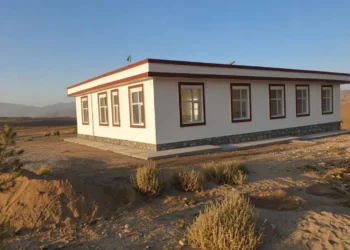
The building of the health center in Ghazni (Photo: Exclusive)
Afghanistan News

Community-Funded Healthcare Center Completed in Ghazni

14 October 2026 [t_time:1791984614]
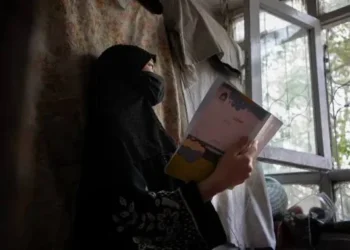
An Afghan girl holding her book and standing in front of a window (Photo: UNICEF)
Afghanistan News

UNICEF: More Than 2.6 Million Girls in Afghanistan Barred from Education Since 2021

14 October 2026 [t_time:1791982900]
Kenneth Roth - Former Executive Director of Human Rights Watch (Photo: kenneth-roth)
Afghanistan News

Kenneth Roth: Forced Returns of Afghans from France Increase Risk of Persecution and Torture

14 October 2026 [t_time:1791980791]

Latest

Loading latest news...

Popular stories

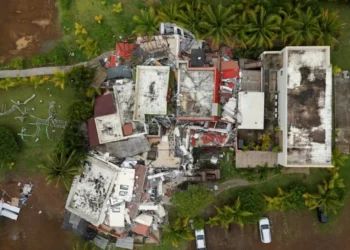
  • An aerial view shows collapsed buildings and widespread damage following an earthquake in Panama (Photo: Reuters)

    More Than 200 Aftershocks Recorded in Panama Since Friday’s Earthquake

    Share
    Share Tweet
  • Axios: Trump Expects Ukraine Not to Attack Russian Oil Refineries

    Share
    Share Tweet
  • UN Report Reveals Shifts in Family Attitudes and Rise in Domestic Violence in Afghanistan

    Share
    Share Tweet
  • The Politics We Inherited: Rethinking Afghanistan’s Political Culture

    Share
    Share Tweet
  • Mujahid: Pakistan Should Address Its Internal Problems Instead of Making Accusations

    Share
    Share Tweet

Podcast

Insights
Insights

Join Lynne O’Donnell for 8AM’s podcast series, Insights.
Lynne talks with generals, diplomats, soldiers, journalists, politicians, activists, people who have front row seats for conflicts around the world, and citizens with a story to tell, happy or sad. For this first series, Afghanistan is the focus. Lynne and her guests talk about the collapse of the republic in August, 2021, and the impact since — for the people of Afghanistan, for the security of the region, for the safety of the world. It’s important, interesting and insightful.

Insights/22: Controlling the Narrative with Mina Sharif
byinsights8am

Controlling the Narrative

Lynne O’Donnell talks with Mina Sharif, author, activist, women’s rights campaigner, educator and mentor. They discuss who controls the narrative and who speaks for Afghanistan’s people when the Taliban appear to have seized control not only of the country but of the message, too.

Have a listen

Insights/22: Controlling the Narrative with Mina Sharif
Episode play icon
Insights/22: Controlling the Narrative with Mina Sharif
Episode Description
Episode play icon
Insights/21: Media Meltdown with Zahra Joya
Episode Description
Episode play icon
Insights/20: Terror Inc with Scott Richards
Episode Description
Episode play icon
Insights/19: Busting Stereotypes with Bushra Gohar
Episode Description
Episode play icon
Insights/18: Media Matters with Waliullah Rahmani
Episode Description
Episode play icon
Insights/17: What Goes Around Comes Around with Sima Samar
Episode Description
Search Results placeholder
Hasht-e Subh

8AM Media, also known as Hasht-e-Subh Daily, stands as Afghanistan's premier independent and non-profit newspaper, resonating as a beacon of journalistic integrity since its establishment in June 2007 by esteemed Afghan journalists and human rights advocates. With a steadfast commitment to citizen journalism and civic education, Hasht-e-Subh Daily has earned its place as the most esteemed publication in the nation.

Publisher: Sanjar Sohail
Email: [email protected]
Executive Director: Parwiz Kawa
Email: [email protected]

Read More

Community-Funded Healthcare Center Completed in Ghazni

UNICEF: More Than 2.6 Million Girls in Afghanistan Barred from Education Since 2021

Kenneth Roth: Forced Returns of Afghans from France Increase Risk of Persecution and Torture

The Nightmare of the White-Robed Men: Wounds That Linger in the Minds and Souls of Women in Herat

UN: Cities Must Be at the Center of Planning

Editor’s Choice

Every Saturday morning, 8AM MEDIA English Services Department will guide you through the week’s biggest stories from Afghanistan and the international community.

Subscribe

© 2026 - ©Hasht-e Subh Daily

No Result
View All Result
8am.Media
پښتو ویب‌پاڼه
ویب‌سایت فارسی
اۉزبېکچه ویب‌سایت
  • Home
  • News
    • Afghanistan News
    • World News
  • Opinion
    • Editorial
    • Analysis
  • Reports
    • Daily Reports
    • Investigative Reports
  • Society
    • The story of people
  • Women’s Word
  • Columns
    • Three Years After Afghanistan’s Fall: The Taliban’s Resurgence
    • Towards Equality
    • The Resurgence of the Taliban: Two Years Since Afghanistan’s Fall
    • Hebatullah Report Special Edition
    • Resistance for Education Special Edition
    • Special Column on Taliban’s Education Curriculum
    • Nawroz
  • Interviews
  • Contact Us
    • About Us
    • 8AM MEDIA Annual Awards
    • Submit an Article to Hasht-e-Subh
  • 8am.media

© 2026 - ©Hasht-e Subh Daily