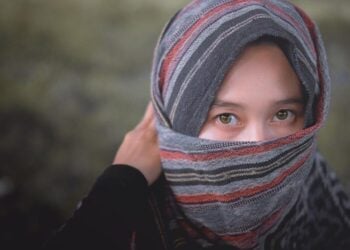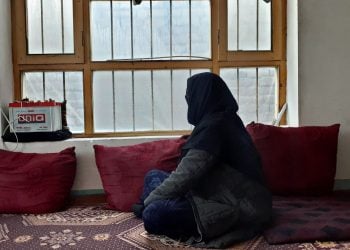

Bahar is a pseudonym for a teenage girl. Her story is based on experiences similar to those of thousands of girls deprived of education in Afghanistan.
Every morning, Bahar watches her brother with sadness as he gathers his books and slings his backpack over his shoulders to go to school. She misses her classmates, teachers and the atmosphere of the classroom. She cries alone, and her mother knows there is nothing she can do. She does not even dare to wipe away Bahar’s tears.
Every day, from the balcony of her apartment, Bahar watches crowds of boys heading happily to school. She is 15 years old. In 2023, after successfully completing grade six, she was barred from continuing her secondary education. Bahar has an exceptional talent for mathematics and dreams of becoming a successful doctor, a dream that depends on her being able to continue her secondary and higher education.
Since losing permission to attend school, Bahar has felt helpless and imprisoned within the four walls of her home. But she is not alone in this painful experience. Since the Taliban returned to power on August 15, 2021, a generation of Afghan girls has been left out of school, with many losing their dreams of returning to the classroom.
A Generation Deprived of Education
Afghanistan is now the only country in the world where girls are barred from formal education beyond grade six. According to, more than 2.6 million girls have been denied secondary education since 2021.
This deprivation goes beyond the closure of school gates. It has taken away opportunities for growth, learning and building a future from millions of girls across Afghanistan. Girls like Bahar, who once went to school with enthusiasm and talent, are now forced to spend most of their time at home, cut off from educational and social opportunities.
For many girls, school is more than a place to study. It is an environment for social interaction, personal development, participation and planning for the future. Being deprived of education can therefore have consequences that extend far beyond falling behind in their studies.
One such consequence is psychological distress. A scientific study of young Afghan women and girls who have been denied further education reported high levels of depressive symptoms and suicidal thoughts. Although the study alone cannot represent the experiences of all Afghan girls, it raises an alarm about the psychological effects of prolonged educational deprivation.
Girls who have spent years away from school and social connections have not only lost educational opportunities. They may also gradually lose hope and optimism about their futures. The ban on girls’ education has therefore become an issue that extends beyond the right to education, affecting Afghanistan’s social and human future as well.
International Warnings
The denial of education to Afghan girls has drawn widespread criticism from international organizations in recent years, Antonio Guterres the United Nations secretary-general, has said he is deeply concerned about the Taliban’s “far-reaching discriminatory policies” against women and girls in Afghanistan, which he says affect every aspect of their lives.
Dr. Tajudeen Owalé, UNICEF’s representative in Afghanistan, has also warned about the consequences of denying girls an education. He said Afghanistan urgently needs female teachers, nurses, community health workers and doctors. He asked: If girls and women are denied education today, who will care for sick girls and women in the future?
In contrast, Neda Mohammad Nadim, the Taliban’s minister of higher education, has said the ban on girls’ education will be lifted only if Taliban leader Hibatullah Akhundzada issues an order to do so.
A Future Facing a Shortage of Female Professionals
Denying girls an education will also affect Afghanistan’s workforce in the long term. Girls who are currently unable to continue secondary education will have fewer opportunities to attend university, participate in society, find employment and contribute to social decision-making in the future.
This issue is particularly important in the healthcare sector. Many families across Afghanistan prefer female healthcare workers to examine and treat sick women and girls. If girls cannot receive an education at school and university today, Afghanistan will face shortages of female teachers, doctors, nurses, midwives and other healthcare professionals in the years ahead.
UNICEF has warned that if restrictions continue, Afghanistan could lose as many as 20,000 female teachers and 5,400 female healthcare workers by 2030.
As a result, the consequences of the ban on girls’ education will not affect girls alone. Families, the healthcare system, the labor market and Afghan society as a whole will suffer from a shortage of skilled female professionals.
Education and the Risk of Child Marriage
Being deprived of education can also be linked to increased vulnerability to early marriage. According to the United Nations’ Afghanistan Gender Country Profile, approximately 28.7 percent of Afghan girls had married before the age of 18 in 2023, while 9.6 percent had married before turning 15.
The same report says statistical modeling indicates that the ban on girls’ education beyond primary school is associated with a 25 percent increase in the risk of child marriage. It estimates that 37.5 percent of Afghan girls may be at risk of child marriage.
Poverty, the economic crisis, the denial of secondary education, forced marriage and a weak support system have made girls more vulnerable. When a girl is deprived of school, she also loses part of her social network, opportunities for personal development and ability to make independent decisions. In this sense, being left out of education can have consequences that affect her and her family for years.
A Future That Must Not Be Taken Away From Girls
Bahar’s story is not just the story of one girl. It reflects the experiences of thousands of Afghan girls who grew up excited about school and books, only to be suddenly separated from their classrooms, classmates, teachers and dreams.
Being deprived of education means more than losing the opportunity to study. It also limits opportunities for personal growth, choice and participation in society. A girl who cannot attend school today may be unable to go to university, choose the career she wants or contribute to building her community in the future.
Yet this situation must not become the final destiny of Afghanistan’s children. The first and most fundamental step is to safely reopen schools and universities to girls. Afghan girls have the right to receive an education like children elsewhere in the world and to make decisions about their own futures. Their return to educational institutions must be supported by safe learning environments, qualified teachers and opportunities to continue their studies.
Until that becomes possible, the international community and civil society organizations can support informal education, community-based learning and online classes for Afghan girls. These programs should be designed around families’ circumstances and their limited access to the internet. The safety of students, teachers and their families must also remain a priority.
Alongside education, Afghanistan urgently needs female teachers, female healthcare workers and psychological support programs for children. Girls who have spent years away from school and social interaction need opportunities to learn, communicate, receive psychological support and rebuild their confidence in the future.
Bahar still loves mathematics, and she can still have a different future. Her present deprivation must not be allowed to determine the rest of her life.
Afghanistan’s children do not need pity. They need the right to education, safety and a genuine opportunity to build their own futures.