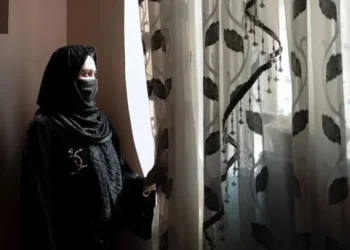

Several women in Afghanistan say that domestic violence against them has increased since the Taliban’s return to power in the country. They say that the absence of support institutions to address this violence, economic dependency, and restricted access for women to education and work have made them more vulnerable to violence. According to them, many women, despite facing beatings, insults, and psychological abuse, are unable to leave violent environments because they lack independent income and a safe place to live. These women emphasize that the stigma attached to divorce, family pressure to preserve marriages, and prevailing social traditions also force women into silence and endurance of violence.
Some women who have suffered violence in their own homes say that the absence of an effective mechanism for seeking justice, along with their limited access to support institutions, has created conditions that allow the violence to continue. They add that when women have no institutions to turn to, men do not consider themselves accountable for violence against their wives either. According to these women, appeals to Taliban institutions also often fail to result in serious action on their complaints, and instead of receiving support, women are met with advice to obey their husbands and continue their marriages. They emphasize that ongoing violence has brought psychological consequences such as fear, anxiety, insomnia, and diminished self-confidence, and in some cases has robbed them of the ability to make decisions and lead an independent life.
Husna (pseudonym), one of the women who has suffered domestic violence, says that after the Taliban took control of Afghanistan, the restrictions imposed on women and the decrees issued on marriage, divorce, education, and work have increased their vulnerability to violence. She adds that women’s economic dependency on their husbands, the lack of independent income, and the absence of adequate means to secure their children’s future and a safe life after separation have made it impossible for many women, despite enduring violence, to leave abusive environments. According to Husna, this situation has kept women trapped in a cycle of dependency and violence, depriving them of the ability to make independent decisions about whether to continue or end their marriages.
Husna says: “I got married at the age of 14, when I knew nothing about married life or what responsibilities it entailed. When I went to my in-laws’ house, I was mistreated every day, from beatings to arguments. A home is supposed to be a safe place for a person, but my home became a place full of fear and terror. Even when I was pregnant, my mother-in-law would wake me from sleep and not allow me to bathe properly, and she would serve my food in a very dirty, broken bowl. This treatment took a severe toll on my morale and even caused me to lose the child I was carrying. My husband also beat me whenever he could. I have lost my self-confidence, developed nervous and psychological problems, suffer from insomnia, and constantly feel afraid.”
Husna asks families to investigate the family into which they intend to marry their daughters before the wedding takes place and to consider the consequences of such marriages. She also calls for families to support women who are victims of violence, saying that families should not force women into silence and endurance of violence because of prevailing social traditions.
This woman says: “My family sent me for psychological treatment several times, but I was not able to continue it. Now I have a child, and because of my child I cannot leave this life. If I separate and take my child, who will feed them? I have no job and nothing to support my life. On the other hand, I cannot file a complaint because of my family’s name and honor. People blame the woman, but a man is never blamed to the same degree.”
Sakina (pseudonym), another woman who has suffered domestic violence, says she has repeatedly been severely beaten by her husband, and in one instance the beating was so severe that she could not get up for a week. She adds that despite reporting her husband’s behavior to his family, none of his relatives supported her against the violence, and instead justified his behavior using traditional beliefs. According to her, after the birth of her first child, she decided to separate from her husband, but her own family’s opposition and the social stigma attached to divorce prevented her from carrying out this decision.
Sakina says: “My husband once beat me so badly that I could not get up for a week. He pulled my hair so hard that it came out, and my head still hurts. I do not know where to turn. When I go to my family, the prevailing social traditions matter more to them, and I have no hope in Taliban institutions either.”
This woman adds that financial dependency on her husband and her father’s family, combined with having three children, has deprived her of the ability to make independent decisions about her life. Sakina also says that her husband’s family has interfered in various aspects of her personal life, from her movements and dress to her use of the telephone and the choice of her child’s name.
She adds: “I complained to my husband’s family about him several times, but they said, ‘What are you doing that makes your husband hit you? A man has the right to hit his wife.’ We are financially dependent on our husbands and their families, and this dependency has forced us to bow our heads and endure our lives, whatever they may be.”
Mitra (pseudonym), another woman who has suffered domestic violence, says that the absence of an effective mechanism to address domestic violence has prevented women in many cases from pursuing their rights. She adds that instead of encouraging women to seek justice, families in many cases urge them to be patient and preserve their reputation, and this approach allows violence against women to continue.
Mitra says: “When men realize that there is no institution for women to turn to, they commit violence with a clear conscience. They beat their wives and do whatever they want. We, women, caught up in this violence have no refuge at all.”
This woman adds that she once went to a Taliban institution to seek justice, but says that to access that institution she needed a male guardian (mahram), and her complaint did not lead to any result. According to Mitra, in cases where women turn to these institutions to resolve domestic violence, the matter is instead pursued through family meetings, where women are asked to remain silent to preserve their reputation.
Mitra says: “When we complain to the Taliban, they recite verses and hadiths to us and send us back home; no serious action is taken. A cleric comes, the woman is blamed, and she goes back home. No one listens to our pain as women; every hardship and sorrow falls on the woman.”
Women and girls in Afghanistan have faced domestic, social, and cultural violence for years, but since the Taliban’s return to power, sweeping restrictions on education, work, social participation, and women’s access to support and judicial institutions have deepened concerns about their increased vulnerability to violence. Economic dependency, the lack of independent income, and shrinking educational and employment opportunities have also reduced many women’s ability to leave violent environments.
This year, alongside issuing decrees and restrictive regulations against women, the Taliban have also drafted a “Code of Principles for the Separation of Spouses,” which critics say could increase the potential for violence against women and girls.
The British Embassy in Afghanistan, citing the United Nations, has said that 46 percent of married women in Afghanistan experience physical violence, 34 percent experience psychological violence, and six percent experience sexual violence. These figures reflect a structural crisis in women’s rights that has worsened with the collapse of institutions such as the Ministry of Women’s Affairs, the Afghanistan Independent Human Rights Commission, and women’s shelters.
You can read the Persian version of this report here:
خشونت خانوادهگی علیه زنان در سایه محدودیتهای طالبان؛ قربانیان: جایی برای پناه نداریم