• 8AM.MEDIA
  • ویب‌سایت فارسی
  • پښتو ویب‌پاڼه
  • اۉزبېکچه ویب‌سایت
  • Podcast
Wednesday, November 11, 2026
Hasht-e Subh
  • Home
  • News
    • Afghanistan News
    • World News
  • Opinion
    • Editorial
    • Analysis
  • Reports
    • Daily Reports
    • Investigative Reports
  • Society
    • The story of people
  • Women’s Word
  • Columns
    • Three Years After Afghanistan’s Fall: The Taliban’s Resurgence
    • Towards Equality
    • The Resurgence of the Taliban: Two Years Since Afghanistan’s Fall
    • Hebatullah Report Special Edition
    • Resistance for Education Special Edition
    • Special Column on Taliban’s Education Curriculum
    • Nawroz
  • Interviews
  • Contact Us
    • About Us
    • 8AM MEDIA Annual Awards
    • Submit an Article to Hasht-e-Subh
  • 8am.mediaBack
Subscribe
No Result
View All Result
  • Home
  • News
    • Afghanistan News
    • World News
  • Opinion
    • Editorial
    • Analysis
  • Reports
    • Daily Reports
    • Investigative Reports
  • Society
    • The story of people
  • Women’s Word
  • Columns
    • Three Years After Afghanistan’s Fall: The Taliban’s Resurgence
    • Towards Equality
    • The Resurgence of the Taliban: Two Years Since Afghanistan’s Fall
    • Hebatullah Report Special Edition
    • Resistance for Education Special Edition
    • Special Column on Taliban’s Education Curriculum
    • Nawroz
  • Interviews
  • Contact Us
    • About Us
    • 8AM MEDIA Annual Awards
    • Submit an Article to Hasht-e-Subh
  • 8am.mediaBack
No Result
View All Result
Hasht-e Subh
No Result
View All Result

Fear of a Bleak Future: Majority of Balkh Province Residents Reluctant to Send Their Children to School

Moqim mehran Moqim mehran
25 July 2023 - Solar Hijri Date: 1402/05/03 [t_time:1690291103]

Before the fall of the previous government, Balkh province had over 600,000 male and female students, with girls making up more than 45 percent of the total. However, after the Taliban took over, approximately half of the students were denied access to education. This situation has resulted in a noticeable decline in the number of male students attending schools. Over the past two years, factors such as increasing unemployment rates, forced migration, and Taliban-imposed restrictions on education, along with changes in the curriculum, have led to an unprecedented decrease in the student population in Balkh province.

According to sources, the changes in the educational curriculum and the decrease in the number of students attending schools are considered an irreparable blow to the country’s education system. The director of education in a district of Balkh province, who requested anonymity in this report, informed Hasht-e Subh Daily that prior to the fall of the previous government, most classes were “double-shifted” due to the high number of students. However, currently, despite merging two classes, the classrooms remain incomplete. He further stated that all districts in Balkh province are facing a similar situation.

One of the reasons behind the decline in the number of students attending schools is forced migration and people fleeing the country.

Mohammad Nabi, a resident of Chahar Kint district in Balkh province, left Afghanistan due to security threats. He now resides in Attock City, near Islamabad, the capital of Pakistan. In an interview with the Hasht-e Subh Daily, Mohammad Nabi stated, “Apart from losing my job, I had to leave the country because the Taliban prevented girls from going to school. Today, I weave carpets in a foreign land, while my children study in Afghan schools. Thousands of families are disappointed that their daughters cannot attend school, but they also lack the means to migrate and leave the country.”

However, a member of educational supervision from the Sholgara district, Balkh province, also reports a decline in student attendance in the area. He emphasizes that approximately half of the students have left each class, resulting in a merger of three classes into one in remote areas. He attributes the decrease in student attendance to people’s discouragement of education, the increase in religious subjects, and students’ lack of interest in studying these subjects.

Mohammad Nabi Homayunzada (pseudonym), a former official of the Education Department in Balkh province, also links the decrease in student attendance in the region to poverty and families’ fear of their children being taught suicide lessons in schools. According to Homayunzada, he knows many families who do not send their children to school. He added, “I know dozens of students who have left education and gone to Iran and Turkey. If the world doesn’t pay attention and the Taliban doesn’t change, in another year, all schools in Afghanistan will be converted into religious schools, and all students will be indoctrinated as suicide attackers.”

Mohammad Noor Noori (pseudonym), a member of the Education Authority in Balkh Province, also confirms the decrease in the number of students in classrooms. He states that people’s interest in schools has diminished, and the increasing strictures imposed by the Taliban’s Moral Police have exhausted both students and teachers. He says, “Every week, the Moral Police of the Taliban enter classrooms and issue new orders. The pressure from the Moral Police has even worn down the Taliban in the Education Authority of the province. They complain covertly as they cannot express it openly.”

On the other hand, Rajab Ebrahimi, a civil activist in the country, believes that a large number of people were employed in the security forces, police, and national security under the previous government. After the government’s fall, all these citizens became unemployed and sought refuge with their families in neighboring countries due to fear of the Taliban. Ebrahimi says that many organizations and NGOs were active, providing jobs for dozens of citizens, but now they have all left the country. He adds, “Most people have lost their jobs, and with the increasing poverty in the country, they are forced to prevent their children from going to school and engage them in difficult jobs just to find a piece of bread. Additionally, in the Shia-majority areas of Balkh province, the Taliban have banned the teaching of Ja’fari jurisprudence. This has discouraged people from allowing their children to attend school.”

The number of students in Balkh province is declining. Previously, new textbooks published by the Taliban have also raised concerns. These books, part of the modern literacy department of the Ministry of Education, align with the Taliban’s curriculum and cover topics such as Jihad, weaponry, and introductions to the group’s leaders. Most citizens believe that such books, along with other restrictive measures by the Taliban, are facilitating extremist teachings in the country.
ShareTweetSendSendShare

Related Posts

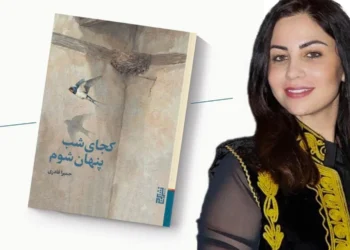
Afghan author Homeira Qaderi appears beside the cover of her memoir “Where in the Night Should I Hide,” which recounts the fall of Kabul. (Photo credit: Exclusive)
Interviews

“Many People Should Not Read This Book”: Interview with Homeira Qaderi

11 November 2026 [t_time:1794389345]
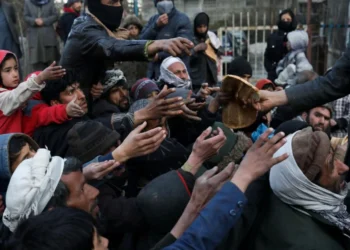
A crowd of men and children reach out for pieces of free bread as a hand distributes loaves amid deepening poverty in Afghanistan. (Photo credit: Reuters)
Analysis

The Survival Economy in Afghanistan: When Securing Basic Needs Replaces Production and Jobs

11 November 2026 [t_time:1794385780]
US Congressman André Carson speaks during a session of Congress amid growing concerns over the deportation of Afghan migrants. (Photo credit: WTHR)
Afghanistan News

US Congressman Condemns Deportation of Afghan Migrants as Cruel

11 November 2026 [t_time:1794385299]

Latest

Loading latest news...

Popular stories

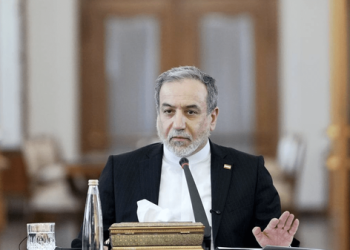
  • Iranian Foreign Minister Seyed Abbas Araghchi speaks during a public appearance (Photo: Farsnews)

    Araghchi Warns: US Must Choose Between Accepting Iran’s Proposal and Continuing the War

    Share
    Share Tweet
  • UN Report Reveals Shifts in Family Attitudes and Rise in Domestic Violence in Afghanistan

    Share
    Share Tweet
  • UAE Official: Risk of War Between US and Iran Remains

    Share
    Share Tweet
  • Iranian Media Report Explosions in Southern Iran

    Share
    Share Tweet
  • ISIS-Khorasan: A Real Threat to the People of Afghanistan and a Political Opportunity for the Taliban

    Share
    Share Tweet

Podcast

Insights
Insights

Join Lynne O’Donnell for 8AM’s podcast series, Insights.
Lynne talks with generals, diplomats, soldiers, journalists, politicians, activists, people who have front row seats for conflicts around the world, and citizens with a story to tell, happy or sad. For this first series, Afghanistan is the focus. Lynne and her guests talk about the collapse of the republic in August, 2021, and the impact since — for the people of Afghanistan, for the security of the region, for the safety of the world. It’s important, interesting and insightful.

Insights/22: Controlling the Narrative with Mina Sharif
byinsights8am

Controlling the Narrative

Lynne O’Donnell talks with Mina Sharif, author, activist, women’s rights campaigner, educator and mentor. They discuss who controls the narrative and who speaks for Afghanistan’s people when the Taliban appear to have seized control not only of the country but of the message, too.

Have a listen

Insights/22: Controlling the Narrative with Mina Sharif
Episode play icon
Insights/22: Controlling the Narrative with Mina Sharif
Episode Description
Episode play icon
Insights/21: Media Meltdown with Zahra Joya
Episode Description
Episode play icon
Insights/20: Terror Inc with Scott Richards
Episode Description
Episode play icon
Insights/19: Busting Stereotypes with Bushra Gohar
Episode Description
Episode play icon
Insights/18: Media Matters with Waliullah Rahmani
Episode Description
Episode play icon
Insights/17: What Goes Around Comes Around with Sima Samar
Episode Description
Search Results placeholder
Hasht-e Subh

8AM Media, also known as Hasht-e-Subh Daily, stands as Afghanistan's premier independent and non-profit newspaper, resonating as a beacon of journalistic integrity since its establishment in June 2007 by esteemed Afghan journalists and human rights advocates. With a steadfast commitment to citizen journalism and civic education, Hasht-e-Subh Daily has earned its place as the most esteemed publication in the nation.

Publisher: Sanjar Sohail
Email: [email protected]
Executive Director: Parwiz Kawa
Email: [email protected]

Read More

“Many People Should Not Read This Book”: Interview with Homeira Qaderi

The Survival Economy in Afghanistan: When Securing Basic Needs Replaces Production and Jobs

US Congressman Condemns Deportation of Afghan Migrants as Cruel

Takal: Russian Deputy Prime Minister to Visit Kabul Tomorrow

Russia Supports Iran’s Readiness to Negotiate with the US

Editor’s Choice

Every Saturday morning, 8AM MEDIA English Services Department will guide you through the week’s biggest stories from Afghanistan and the international community.

Subscribe

© 2026 - ©Hasht-e Subh Daily

No Result
View All Result
8am.Media
پښتو ویب‌پاڼه
ویب‌سایت فارسی
اۉزبېکچه ویب‌سایت
  • Home
  • News
    • Afghanistan News
    • World News
  • Opinion
    • Editorial
    • Analysis
  • Reports
    • Daily Reports
    • Investigative Reports
  • Society
    • The story of people
  • Women’s Word
  • Columns
    • Three Years After Afghanistan’s Fall: The Taliban’s Resurgence
    • Towards Equality
    • The Resurgence of the Taliban: Two Years Since Afghanistan’s Fall
    • Hebatullah Report Special Edition
    • Resistance for Education Special Edition
    • Special Column on Taliban’s Education Curriculum
    • Nawroz
  • Interviews
  • Contact Us
    • About Us
    • 8AM MEDIA Annual Awards
    • Submit an Article to Hasht-e-Subh
  • 8am.media

© 2026 - ©Hasht-e Subh Daily