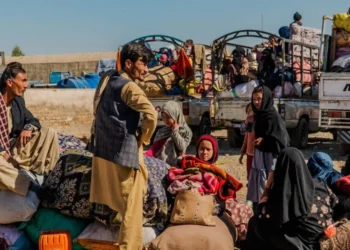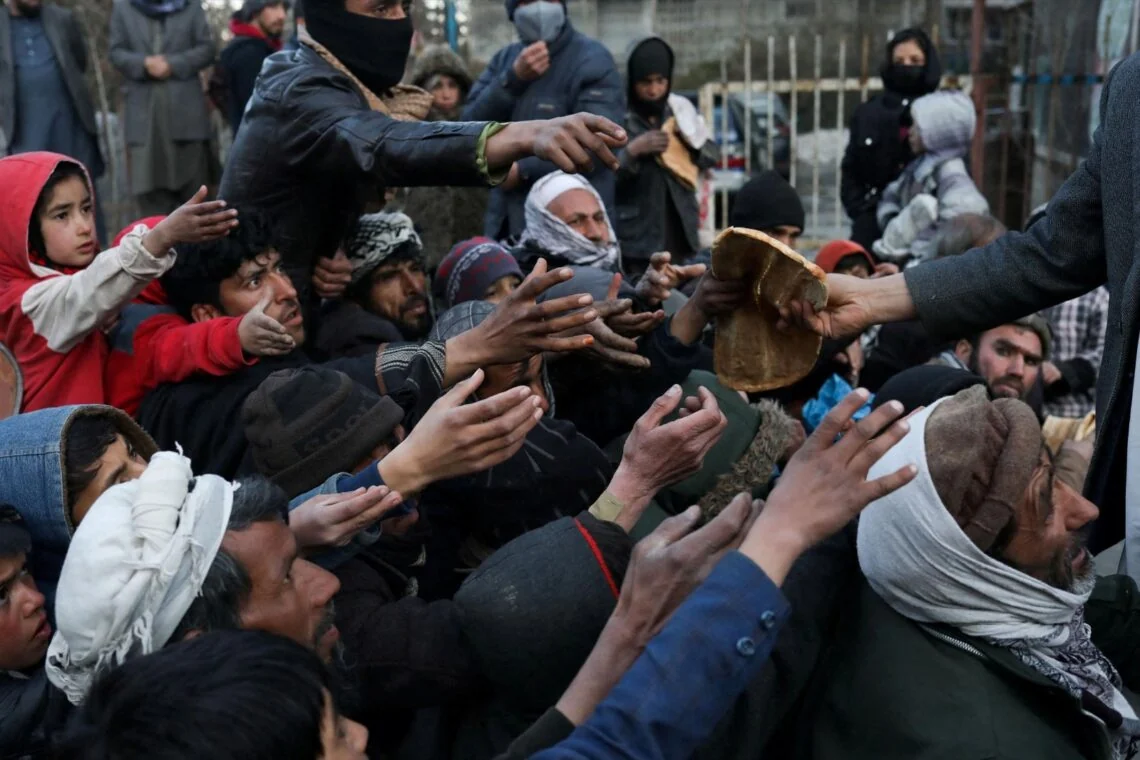
The long lines of people outside bakeries waiting for a few loaves of free bread should be seen as more than an act of charity. When hundreds of women and men depend on the virtual gifts of TikTok users to meet the most basic need of life, the problem is not only hunger and poverty. The image speaks of an economy in which a large part of the population no longer strives for progress, production and a better life, but merely to stay alive.
This is what can be called a “survival economy,” a situation in which securing food, shelter, and other basic needs becomes the main priority of families, leaving little room for saving, investment, education, and planning for the future. In such an economy, working does not necessarily mean earning enough, and even people who are ready to work may have to rely on others for their daily bread.
Afghanistan faces such a situation today. But it is not merely the result of historical poverty, reduced foreign aid, the return of migrants, or the country’s general economic problems. The Taliban’s policies have also played a direct role in its emergence and spread. Since returning to power, the group has imposed restrictions on a large part of the country’s economic and social structure, deprived women of broad opportunities for work and economic activity, and, through its policies, limited the ability of half the population to take part in rebuilding the economy. In other words, part of the bread that people now queue for could previously have been secured through their own work and income, but the ruling policies have taken away income-earning opportunities from many families.
The Taliban and the Removal of the Workforce from the Economy
One of the clearest examples of the impact of Taliban policies on Afghanistan’s economy is the sweeping restrictions on women’s employment. After returning to power, the group barred women from many government and non-government jobs, restricted their work in non-governmental organizations and international institutions, closed the gates of universities and educational centers to girls, and subjected several women-owned businesses to restrictions or closure.
These decisions are not merely violations of women’s rights; they have direct economic consequences. A woman who is deprived of work does not lose only her personal income. The family whose expenses were partly covered by her earnings also faces reduced purchasing power. A business that closes because of Taliban restrictions affects not only its owner but also its employees, its customers and a chain of related economic activities.
With these policies, the Taliban have in effect pushed part of the country’s workforce out of the formal economy. According to estimates by the International Labour Organization (ILO) published in August 2026, women’s participation in Afghanistan’s labour force has fallen to about 5.1 percent. The ILO says the decline in women’s employment since the Taliban’s return to power, particularly since 2022, has been severe, and that employment growth in recent years has been largely limited to men. These figures show that the exclusion of women from work is no longer merely a matter of individual opportunity. It has become a structural factor weakening Afghanistan’s economy. A country in dire need of job creation and higher incomes has, under Taliban policies, lost part of its human capacity.
From this perspective, when a woman standing outside a bakery says she does not want to beg and would rather provide for her children with her own hands, her words should not be seen merely as an expression of personal feeling. They are a silent protest against a situation in which the possibility of working has been taken from her, yet the responsibility of supporting her family remains on her shoulders.
An Economy Unable to Create Jobs
The survival economy expands when the link between work, production, and income breaks down. In a healthy economy, economic activity should create job opportunities, raise household income, and make saving and investment possible. In Afghanistan, however, a large part of the population faces a market that cannot absorb labour, and the opportunities that do exist are often low-paid, unstable and informal.
Of course, Afghanistan’s economic crisis did not begin only after the Taliban’s return. Prolonged war, the economy’s heavy dependence on foreign aid, weak infrastructure, and structural problems existed beforehand. But instead of creating suitable conditions for economic recovery, the Taliban have made the environment for economic activity more difficult through political and social restrictions. Policy uncertainty, restrictions on women’s activity, a weak banking system, reduced public purchasing power, and the absence of a clear political outlook all affect business owners’ decisions to invest. No investor can commit capital to the market with sufficient confidence without a reasonable degree of certainty about the future, the rules of economic activity and access to labour.
Under such conditions, instead of expanding production and creating jobs, the economy becomes preoccupied with preserving the minimum of existing activity. Businesses struggle to survive, workers take refuge in daily-wage and informal jobs, and families spend a large share of their limited income on food and other essentials. This cycle makes escaping poverty harder every day.
Women Have Been Deprived of Work, and Families Pay the Price
One of the contradictions of Taliban policy is that, at a time when Afghanistan needs more production, income, and employment, the Taliban impose restrictions that shrink the society’s economic capacity. By barring girls from secondary and university education, the Taliban have not only limited the educational future of a generation but are also weakening the country’s future workforce. A woman who is not allowed to study or work cannot participate fully in the economy. A society whose women are deprived of education and work faces a shortage of human resources and specialized capacity in education, health, trade, services and production.
These restrictions are not limited to women in formal employment. Women who have set up small businesses at home or earn income through handicrafts, tailoring, food production and small-scale trade face numerous obstacles. Restrictions on movement, the requirement to comply with strict regulations, difficulty accessing markets, and limits on women’s presence at exhibitions and in economic activities reduce the possibility of expanding these businesses. According to a report by the United Nations Development Programme (UNDP), Taliban restrictions on women’s education, employment and movement have shrunk Afghanistan’s workforce and damaged the country’s economic capacity. The report stresses that excluding women from economic participation harms not only them but also weakens the well-being of families and the country’s development prospects.
Therefore, when women line up for free bread, one must ask what factors have brought them to this point. Part of the answer must be sought in Taliban policies, which have taken away women’s opportunities to earn income and increased families’ economic dependence.
TikTok: Who Fills the Gap Left by the Absence of Economic Policy?
Distributing free bread through TikTok appears, on the surface, to be a humane initiative to help those in need. People of Afghanistan living abroad provide the cost of the bread by sending virtual gifts, and bakers distribute it among people through live broadcasts. For a family that cannot afford bread, this can be the difference between going hungry and being fed. But the phenomenon itself raises a serious question: why has meeting people’s most basic need come to depend on such initiatives? Why, instead of earning the cost of their family’s bread through work and income, must people wait for users of a social network to send them virtual gifts?
Here, TikTok has become a kind of informal social protection mechanism, one with no defined budget, no universal coverage, and no guarantee of continuing. The amount of bread distributed depends on the number of gifts received and on users’ willingness to help. If users’ attention declines or the host of the broadcast cannot collect enough support, the distribution of bread is also limited. This initiative deserves recognition from a humane standpoint, but it should not be seen as a sign of the economy’s strength or as a substitute for welfare policy. Digital charity can reduce part of the hunger, but it cannot create jobs for people, bring women back to the labour market or increase domestic production.
The main danger is that, in the absence of political accountability, poverty becomes a moral issue and responsibility for it falls on charitable individuals. In that case, instead of questioning Taliban policies and their economic consequences, public attention shifts to who distributed more bread and which user sent more help. Yet the main question should be: why, in a country where millions of people are ready to work, has the supply of daily bread come to depend on virtual aid?
How the Survival Economy Is Devouring the Future of Afghanistan
The survival economy does not only mean poverty today. It can also destroy the country’s economic future. A family that spends all its income on food cannot save. A young person struggling to find daily-wage work will have less opportunity for education and skills. A child growing up in a family caught in poverty and hunger may be deprived of education and opportunities for growth. In this way, poverty is passed from one generation to the next. The survival economy becomes a cycle in which low income, lack of savings, weak education, and limited job opportunities reinforce one another.
Taliban policies deepen this cycle. Depriving girls of education means limiting their future job opportunities. Depriving women of work means reduced household income in the present. Restricting women’s economic activities means a shrinking market and reduced production capacity. These are not costs that only women pay; the whole of society in Afghanistan pays for them. In such circumstances, even limited economic growth does not necessarily lead to an improvement in people’s lives. In its 2026 report, the UNDP says Afghanistan’s economy achieved limited growth in 2025, but population growth outpaced economic growth and real per capita income declined. Thus, the economy may grow on paper while families become poorer in their daily lives. This is the very contradiction of the survival economy: economic activity may continue in some sectors, yet a large part of society still cannot meet its basic needs.
You can read the Persian version of this analysis article here:
اقتصاد بقا در افغانستان؛ گذار از تولید و اشتغال به تأمین نیازهای اولیه