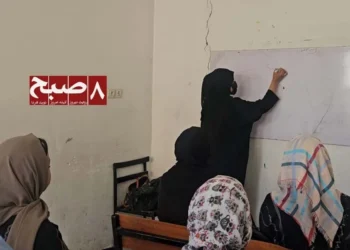
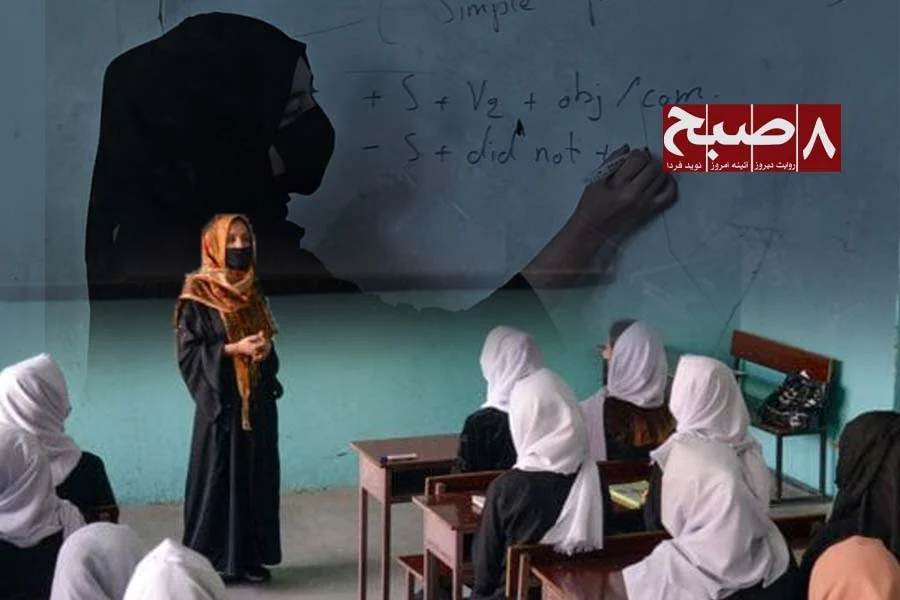
On World Teachers’ Day, several education activists say that the continued restrictions on girls’ education could leave Afghanistan with a shortage of female teachers in the coming years. They add that keeping universities and teacher training centers closed to girls has blocked the entry of new personnel into the teaching profession. According to these activists, some of the current female teachers will also leave their posts in the coming years, and there will not be enough trained personnel to replace them.
Speaking to the Hasht-e Subh Daily, the activists warn that the shortage of female teachers could jeopardize girls’ access to education, particularly in rural and remote areas. They say that training a teacher is a process that takes several years and that it is not possible to make up for the shortage in the short term. These experts call on education officials to adopt a clear plan for training and recruiting female teachers.
Saamia Elamyar, an education activist, says the Taliban’s education restrictions have not only affected the working conditions of current female teachers but have also limited the pathway for training new personnel in this sector. She adds that women who have spent years training to enter the teaching profession now face uncertainty about continuing their professional careers. According to Elamyar, depriving girls of access to universities and teacher training centers will ultimately lead to a decline in the number of specialized personnel for girls’ education.
The education activist says: “If girls today cannot pursue higher education and prepare professionally for teaching, in a few years we will face a generation in which there will be no new, specialized personnel to teach girls. With one generation of girls deprived of university, part of the future workforce of the education sector is also limited.”
Zainab Kohistani, another education activist, also says that the continued deprivation of girls from universities and teacher training centers will widen the gap between schools’ need for female teachers and the available personnel. She adds that, on the one hand, a number of current female teachers are gradually leaving the workforce, and on the other hand, the education restrictions have prevented the training of new personnel to replace them.
This woman says: “If girls remain deprived of higher education and teacher training centers for many years, we will face a serious shortage of female teachers in the future. Under such conditions, both the quality of education suffers, and girls’ access to female teachers becomes more limited.”
Meanwhile, several human rights activists say the consequences of depriving girls of education are not limited to the loss of the opportunity to study. They add that training, hiring, and retaining female teachers is part of fulfilling girls’ right to education, because in some areas, the presence of a female teacher can make it possible for girls to attend school.
Abdullah Ahmadi, an education activist, says that if the training of female teachers remains halted, the shortage of such personnel will grow in the coming years. He stresses that this issue not only reduces the number of teachers but can also affect girls’ attendance at schools.
Mr. Ahmadi says: “If we do not train enough female teachers today, we cannot expect to have enough female teachers in the future. The fewer new personnel are trained, the fewer replacements we will have for current female teachers in the future.”
He adds that in some families, particularly in remote areas, parents prefer their daughters to be taught by female teachers, and a reduction in this workforce could limit some girls’ access to education.
This human rights activist says: “For many families, a female teacher is not just an educator. In some areas, her presence can make it possible for girls to attend school. If the number of female teachers declines, the attendance of some girls at schools may also decline.”
Shiba (pseudonym), a female teacher in Kabul, says that the continued restrictions on girls’ education not only affect the future of students but have also cast uncertainty over the future of the teaching profession for women. She adds that most current female teachers will one day leave their jobs, but if girls remain deprived of universities and teacher training centers, no new personnel will be trained to replace them.
This female teacher says: “Today we teach in schools, but we are worried about who will take our place in a few years. If girls today cannot study and cannot find their way into universities and teacher training centers, there will be fewer female teachers in the future. This is not only a problem for teachers. When there is no female teacher, some girls may also lose the chance to go to school.”
The warning about the future of the female teaching workforce comes as the United Nations Children’s Fund (UNICEF), in its latest analysis, said that if restrictions on girls’ education and women’s employment continue, Afghanistan could lose up to 20,000 female teachers and 5,400 female health workers by 2030. The agency has also said that the number of female teachers in primary education fell from nearly 73,000 in 2022 to about 66,000 in 2024, a decline of more than 9 percent.
UNICEF has warned that Afghanistan faces a “dual crisis.” On the one hand, part of the specialized female workforce is leaving employment, and on the other hand, girls are being deprived of the education needed to replace this workforce. According to the agency’s analysis, if the ban on girls’ secondary education continues until 2030, more than two million girls will be deprived of education beyond the primary level.
Girls’ secondary education in Afghanistan was halted in September 2021, and in December 2022 women were also barred from studying at universities. According to UNICEF, the continuation of these restrictions reduces not only girls’ opportunities to study but also Afghanistan’s capacity to train specialized female personnel in sectors such as education and health.
Currently, under a Taliban order, girls above the sixth grade are not allowed to attend school, and female teachers can only teach girls up to the sixth grade.
You can read the Persian version of this report here:
محرومیت دختران از آموزش؛ زنگ خطر کمبود آموزگاران زن به صدا درآمده است