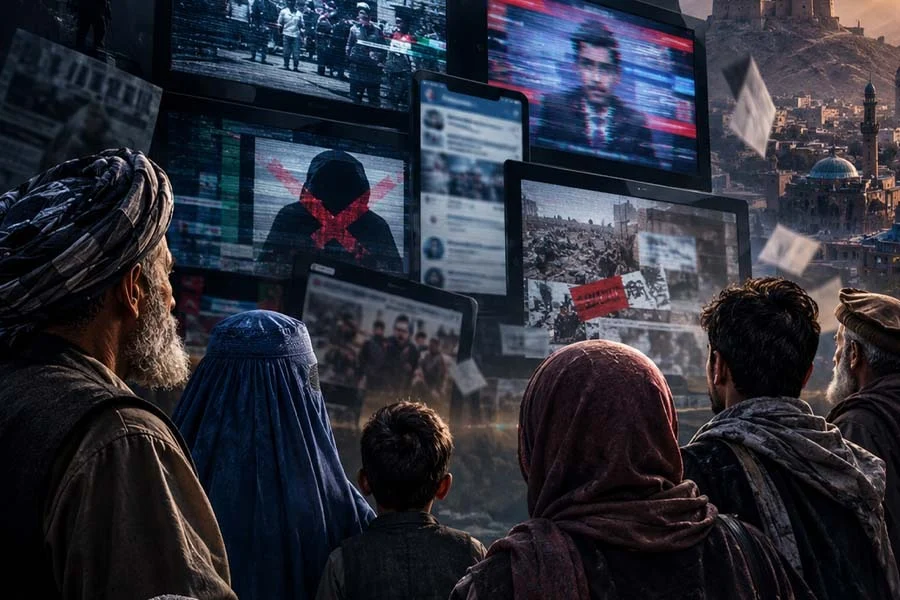
On September 28, 2026 (6 Mizan 1405), World News Day, we have an opportunity to pause and reflect on one of the most fundamental needs of contemporary society: the right to know. The 2026 World News Day theme stresses a simple but foundational principle: people must know the facts, understand what matters, and be able to access trustworthy journalism. The occasion is observed alongside the International Day for Universal Access to Information, and it emphasizes the role of fact-based journalism, the professional responsibility of the media, and the importance of public trust in news. In a world where every smartphone can become a tool for producing and publishing information, and where any event can spread across the globe in seconds, the issue is no longer just access to information. The issue is how to tell the difference between fact and rumor, news and propaganda, evidence and claim, and professional reporting and content fabricated with the help of artificial intelligence.
Yet as this day is being marked, an important question is also being raised about the state of the media in Washington: if a dispute arises between the government and the media in a country with a long history of press freedom, what can prevent a political disagreement from turning into a restriction on the media? On September 19, 2026, when the White House barred reporters from certain outlets (CNN, MS NOW, and Politico) from entering the White House grounds, they immediately challenged the move on the grounds of journalists’ rights and the First Amendment of the U.S. Constitution. A few days later, the same restricted reporters were able to cover events involving the U.S. president at the United Nations (UN), while the legal debate over restrictions on their access in Washington continued. The significance of this episode lies in what it shows about a fundamental issue: the relationship between government and media, even in a system with a long tradition of press freedom. Such a relationship always requires oversight institutions, independent courts, clear rules, and media that can stand up to power without fear of political or economic pressure, hold the government to account, and resolve disputes through legal institutions.
Lionel Barber, a journalist and former editor of the Financial Times (FT), in an article he wrote for World News Day that was also published in the Hasht-e Subh Daily, begins the same discussion from the historical phrase “the arsenal of democracy” as applied to America. Mr. Barber argues that the strength of a democracy lies not only in its economic and military power, but that the free flow of information and the existence of an independent media are also part of the capacity of a democratic society. In his view, an independent media is one of the tools through which a society can monitor power, examine official claims, and prevent the truth from becoming the exclusive property of political power.
Articles by international writers and journalists in the Hasht-e Subh Daily, such as the writings of Mira Selva and other authors, on the value of journalism, truth, access to information, and the future of the media and reporting, show that the debate over the relationship between power and the press is not limited to one country and is also relevant to Afghanistan’s media landscape. For countries like Afghanistan, the importance of this experience lies in a more general and more complex principle. No society should consider its own narrative of the relationship between power and the media to be the only one that exists. In any society, the media becomes important when it can question power, scrutinize the official narrative, bring different narratives to the public’s ears, and demand evidence and proof for claims that need examination. In a society where the media merely repeats the words of the government, citizens may receive a great deal of information, but they will not necessarily have access to enough information to judge reality.
In Afghanistan, this issue is tied to the history of the country’s press and to its political, social, intellectual, and cultural developments. The work of the late Professor Mohammad Kazem Ahang, “The Course of Journalism in Afghanistan,” is one of the important and enduring works documenting the history of reporting and the media in Afghanistan. The work attempts to trace the course of Afghanistan’s press from the beginning of the journalism experience to later periods and to show how the press took shape and changed in step with the intellectual and political developments of society. The importance of this book lies in the fact that it does not regard journalism merely as a list of newspapers and magazines, but sees it as part of the history of the formation of public opinion, political developments, literature, culture, and society’s relationship with power.
In the historical narrative used by Mohammad Kazem Ahang, the course of Afghan journalism begins with “Shams al-Nahar,” a newspaper published during the reign of Amir Sher Ali Khan in the 1860s, and one of the first press experiences in Afghanistan. There are disagreements among various sources about the exact date of the first publication of Shams al-Nahar. Regardless of this historical disagreement, the importance of Shams al-Nahar is that it brought Afghanistan to a stage in which news, articles, ideas, and information could reach audiences in a more regular manner. The emergence of the printing press and the press in that period was not merely a technical development. It was the beginning of a new public sphere in which thought could go beyond the confines of the individual and the small circle. This process reached a new stage with Siraj al-Akhbar. The publication of the new series of Siraj al-Akhbar in 1911 and the role of Mahmud Tarzi in it are regarded as an important turning point in the history of Afghanistan’s press. Siraj al-Akhbar not only published news; it also discussed education, progress, independence, politics, society, literature, science, and world developments. In this way, the press went from being a means of transmitting information to a tool for shaping public debate.
The writings of Tarzi and his colleagues show that a newspaper can also become a school for social and political awareness. After Afghanistan’s independence, “Aman-e Afghan” became one of the important media outlets of that period under Amanullah Khan. Its publication in 1920 continued the same trend that linked the press with the government, reform, independence, and public awareness. But in this same historical experience, a fundamental contradiction is also visible: the government used the media for public awareness and for building a new society, but at the same time the media could also become a tool for conveying the government’s official narrative. This duality has recurred many times in the history of Afghanistan’s media. The media can be a tool for society to question power, and it can also be a tool for power to explain its policies to society. In the same setting, the life of Khalilullah Khalili, one of the most important literary and intellectual figures of Afghanistan, shows that the relationship between literature and power has never been linear. Khalili was close to the government in some periods and distanced himself from it in others. But after the Soviet army’s entry in December 1979, his poetry increasingly became the language of exile, homeland, and resistance. This shift points to something important: when the political space closes, news, media, and narrative do not necessarily disappear. They can move from official politics to poetry, literature, and the memory of the diaspora.
The expansion of the media in Afghanistan has always been accompanied by a complicated relationship between law and power. The process of legislating for the media began with the Press Regulation (December 31, 1924), and press laws were later formed in the 1950s and subsequent periods. In 2007, a draft media law with 11 chapters and 53 articles was also debated in parliament, but it stalled at the final stage of ratification because of certain technical and substantive problems. This course shows that the issue of the media in Afghanistan has always been bound up with the country’s political and legal developments. Eventually, the post-Bonn constitution recognized freedom of expression, and its Article 34 deemed freedom of expression a right of citizens and protected the publication of material without prior submission to the government. As a result, after 2001, Afghanistan’s media landscape expanded dramatically. Hundreds of television stations, radio stations, newspapers, magazines, and online outlets operated. Women journalists entered the media field, private media took shape, political and social programs increased, and for the first time in decades, Afghan society witnessed a highly diverse media environment.
Over time, the printed press was no longer the only form of mass communication. Radio and television entered people’s homes and, to some degree, changed the boundaries between city and village, literate and illiterate, and center and periphery. The sound of radio could reach places that newspapers could not. News, music, educational programs, conversations, and social programs entered people’s daily lives through radio. In this context, in 2008, the interesting experience of an ordinary propaganda radio outlet in Uruzgan Province called “Da Uruzgan Zhagh,” or “Voice of Uruzgan,” was of particular importance. The radio had been launched in Tarinkot, the capital of Uruzgan, with the support of the International Security Assistance Force (ISAF).
At the outset, such an outlet operated within the context of the presence of international forces and the war in Afghanistan, and naturally its connection to the information and propaganda environment of the war could not be overlooked. But the experience of the radio’s local staff, and the need and thirst of local people for diverse information, gradually showed that a propaganda outlet can go beyond its initial framework and become part of people’s daily lives. Alongside political and military propaganda, Da Uruzgan Zhagh also addressed local, educational, and cultural topics and the daily needs of people, such as basic first aid advice for farmers or for women and mothers at home, and even educational programs for children, in the local language and local styles. The importance of this experience lay in the fact that the media takes root in society when it is not merely a messenger but becomes part of people’s lives.
During the republic era, a journalist was not just a conveyor of news; in many cases, journalists had become intermediaries between citizens and the government. A citizen who had no access to a government official could raise a problem with a journalist. A journalist who prepared a report on corruption or abuse could put an issue on the public agenda. A media outlet that reported on a security incident could set the account of local people against the official narrative. This very role made the media one of the most important institutions of the public sphere in Afghanistan.
In that period, alongside the expansion of the media, serious problems also existed: security threats, the killing of journalists, political pressure, financial dependency, economic difficulties, weak access to information, pressure from armed groups and government officials, and at times the political use of the media. Despite these problems, the media managed to bring a large part of Afghan society into a new public sphere. People debated elections, corruption, education, women’s rights, war, peace, and the performance of the government, and in many cases the media moved this debate from the private sphere into the public sphere.
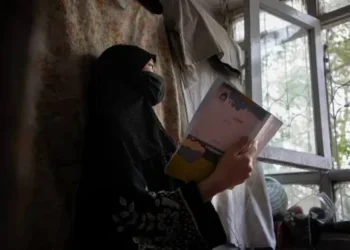
But perhaps one of the most important changes of this period was the large-scale entry of women into the media field. Women entered the public sphere not only as presenters and hosts but also as reporters, correspondents, producers, photographers, editors, media managers, and analysts. Their presence meant that a part of Afghan society that for decades had had fewer opportunities to be present in the public sphere had now become a narrator of society itself. This presence, however, also came at a high cost. During the two decades of the republic, women journalists and media workers, along with other journalists, were targeted with threats, violence, and killings. In March 2021, the Afghanistan Journalists Center (AFJC) announced that at least 18 women journalists and media workers had been killed over the previous two decades. That list also included women of Afghanistan and foreign women journalists. Among them are the names of Shakiba Sanga Amaj of Shamshad TV, Zakia Zaki, director of Radio Sada-e Sulh (Voice of Peace), Palwasha Tokhi of Radio Bayan, Malalai Maiwand, a presenter at Enikass, and other women media workers. These names are not just a list of victims. Each name represents a professional path, a family, and a social presence. They entered the profession of journalism at a time when the media in Afghanistan was one of the most important ways for women to be present in the public sphere.
In 2021, the AFJC announced that of at least nine media workers killed, five were women. These figures show that in the final years of the republic, women faced not only job restrictions but also very serious dangers for doing the same work their male colleagues were doing. The story of media freedom in Afghanistan cannot be written without the story of women journalists. Their presence was one of the most important signs of the expansion of the public sphere under the republic, and their deaths were one of the heaviest costs paid by Afghanistan’s media community.
But after August 15, 2021, the story of news and the media changed profoundly, and a large part of this media landscape faced a new crisis. Several media outlets shut down, others scaled back their activities, and many journalists, especially women journalists, faced serious restrictions and threats. In such conditions, one of the most dangerous forms of censorship is when a journalist deletes a sentence they ought to write before they even write the news. If a journalist knows they might be detained or threatened over a report, if a media outlet knows that publishing a story might jeopardize its operations, and if a citizen knows that expressing an opinion might cost them dearly, society gradually enters a stage of self-censorship. In this situation, there is no longer any need for a censor to be present for every sentence; fear can do the work of censorship.
This is not only a problem for journalists. In a society where journalists cannot report on what they see, that society loses part of its memory. If an incident is not recorded, if the voices of victims are not heard, if a political decision is not documented, and if the different narratives of an event are not placed side by side, tomorrow’s history will depend more on the accounts of those who had greater power to record and publish. This is why the importance of a free and professional media in society is clear. The media is not the enemy of the government and should not be its megaphone either. In a healthy society, the media should be part of the public sphere, a place where citizens can question power, power can explain itself, and society can see different narratives side by side. A healthy government also benefits from the existence of free media that reflect society’s problems.
Meanwhile, artificial intelligence has now opened a new chapter for journalism. On the one hand, artificial intelligence can help with transcribing interviews, translation, document searches, data analysis, and categorizing information and news content. On the other hand, the same technology can make the production of fake content easier. Therefore, the future of journalism lies not in setting artificial intelligence aside but in using it responsibly. A journalist must be able to take advantage of the speed and capability of the technology of their age, but the final responsibility for verifying the truth, identifying the source, and being accountable must remain human and real. This is because the core value of the media will no longer lie in producing sentences. It will lie in choosing the right question, finding a credible source, going to the scene of an event, examining documents, listening to different accounts, spotting contradictions, and also shouldering the social responsibility of a news story. If a news report is wrong, the audience must know who checked it and which institution was responsible for publishing it.
Social media is also not, in itself, an enemy of the media. On the contrary, journalists and media outlets can use it to reach their audiences more quickly. The problem begins when the number of views takes the place of the value of the news, and speed takes the place of accuracy. A short video may be viewed millions of times within a few hours, while an investigative report may take a long time and have far fewer readers. But the social value of the two is not necessarily the same. To correct its own errors, society needs reports backed by research, documents, scrutiny, and professional responsibility.
The history of journalism in Afghanistan, from Shams al-Nahar to radio and television, from Siraj al-Akhbar and Aman-e Afghan to the private media after 2001, and from the local radio Da Uruzgan Zhagh to today’s digital media, is, alongside the history of changing tools, also the history of changing relations between people and information. If the tools have changed, one question remains: who has the right to narrate, and who has the right to ask questions?
In Afghanistan today, the issue of free and professional news and media is doubly important, in a country that has experienced decades of war, migration, political propaganda, censorship, and conflicting narratives. If credible accounts of this history are not recorded, a large part of the country’s collective memory will be lost among political and propaganda narratives. To know itself, society needs independent narrators. In such a society, a journalist is not merely someone who makes news or writes reports. They are sometimes the witness to an incident, sometimes the voice of a family, sometimes the recorder of a generation’s life, and sometimes the questioner who confronts the most powerful person in the room with a simple question. Ultimately, the media is neither the enemy of the government nor its natural instrument. Sometimes the work of a journalist or writer is not pleasing, not to the government, not to the opposition, and sometimes not even to the audience. But the value of journalism lies precisely here: the truth is not always what we like to hear.
If these narrators fall silent, it is not just a profession that has fallen silent; part of society’s memory has been paralyzed. Perhaps this is why World News Day is not only a day to honor journalists. It is an opportunity to recall a general principle: a society that does not seek the truth will sooner or later lose its power of discernment.
You can red the Persian version of this analysis article here: