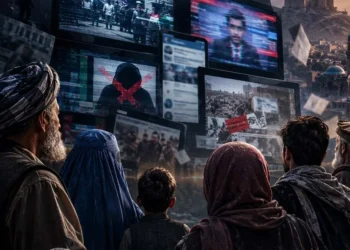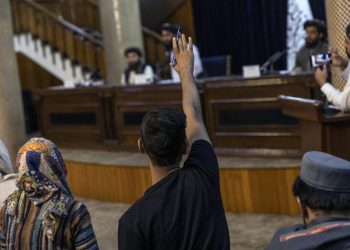

Several journalists working under Taliban rule have expressed concern over the intensifying crackdown on the media and the complete restriction of access to information. According to them, no media outlet under Taliban control can publish the existing realities and can only disseminate content that the Taliban permit. They emphasize that journalists in Afghanistan cannot publish even the smallest comment or opinion on incidents that in any way criticize the Taliban or expose the group’s shortcomings, and if they do, they face humiliation, insults, and arrest. These journalists stress that freedom of expression has effectively been eliminated and that working with exile-based media, under the shadow of fear, censorship, and threats, has become a costly and high-risk activity. They add that they are either forced to work under fear and accept the risk of retaliation and imprisonment, or turn journalism into a tool for reflecting Taliban narratives.
A journalist in Kabul, who asked for anonymity in the report, said that journalists working in domestic media cannot, under any circumstances, publish real information. According to him, journalists working for exile media also struggle significantly to gather field information accurately.
The journalist stressed: “The Taliban consider free media their ideological enemy. Not only have they heavily censored domestic media, but the atmosphere of fear among the people has expanded to such an extent that citizens do not dare to cooperate with independent media. In many cases, we have spoken to individuals who have effectively been targeted or whose families have been subjected to violence, yet they do not dare to share details. Even doctors who cooperate with free media are punished by the Taliban under various pretexts and fabricated cases. This situation is extremely distressing.”
Setara (pseudonym), a journalist in western Afghanistan, said that journalists are deprived of the right to access information. According to her, only the information that the Taliban want is provided to journalists. She clarified that gender discrimination is also becoming alarmingly institutionalized within the media, and the Taliban do not even share their intended information with female journalists. According to her, the Taliban refuse to share information with women journalists under the pretext of not having a mahram, or they ask them to send their male colleagues instead.
The journalist said: “Several times, in programs I participated in, other women and I were stopped at the entrance and prevented from entering. They even ordered that if the journalist is a woman, she is not allowed to participate. These restrictions have reduced the number of female journalists and, at the same time, have made the work of information dissemination more difficult for all journalists. We do not have freedom of expression, and we cannot reflect reality as it is.”
Mohammad, a journalist, said that the Taliban do not believe in freedom or access to information, and that Afghanistan is currently experiencing its darkest and most terrifying period in terms of media freedom. According to him, media outlets are under strict surveillance and control by the Taliban, and the group has extensively restricted the flow of information, showing no belief in freedom of information.
He added, “There is nothing called access to information in Afghanistan. The flow of information access is in its darkest period or has completely collapsed. This is not normal, and it is clearly evident that the Taliban do not believe in freedom and access to information.”
Tabesh (pseudonym), another journalist, said that no journalist, and even social media users, can write anything on their Facebook pages about the increase in armed robberies, insecurity, and citizens’ concerns without mentioning the Taliban. According to him, if a journalist writes or comments on a security incident, they are arrested, tortured, and forced to apologize by the Taliban.
He added: “Only those media outlets and journalists in Afghanistan can operate who become a complete mouthpiece for the Taliban. They must reflect whatever the Taliban say without omission and even beyond expectations. Such media are encouraged, provided with security measures, and invited to events and programs. As a result, some people even praise this group in public, while the smallest criticism of the Taliban carries the risk of arrest and imprisonment.”
Ferdows (pseudonym), a journalist working for a domestic outlet, said that he works out of necessity to provide for his family and does not enjoy any form of professional freedom. According to him, even the content assigned to him is closely scrutinized to prevent the use of words that contradict Taliban values.
He added, “The media outlet where I work is entirely at the service of the Taliban. Whatever they want and instruct is what gets published. In fact, the managers of these media outlets are effectively subordinate to the Taliban, and those working here, in an effort to show loyalty, share even the smallest issues with the Taliban and publish them only after receiving their approval.”
Meanwhile, several journalists have, over the past two weeks, launched a campaign calling for the release of journalists detained by the Taliban. According to them, these journalists have been arrested on charges of cooperating with exile media and are being held in Taliban prisons.
According to organizations supporting journalists, Shekab Ahmad Nazari, Bashir Hatef, and Hamid Farhadi are currently being held in Taliban prisons. They state that the mental condition of these journalists is critical and that they have no access to legal counsel or necessary facilities.
Previously, Mohammad Omar Mukhlis, a former Taliban commander in Paktia province, admitted during his farewell gathering that the group had intended to kill journalists, but many of them managed to leave the country. He said: “We would have killed all journalists. They were not journalists; they were traitors. We would have killed and pursued them, but they survived, fled, and reached their patrons.”
Additionally, the Afghanistan Journalists Center (AFJC) in its annual report for 2025 stated that the Taliban have intensified their control over the media and that repression and censorship have increased to an unprecedented level. According to the report, in 2025, at least 207 cases of media freedom violations and violence against journalists were recorded, including two deaths and one injury, as well as 183 cases of threats, including 21 cases of the detention of journalists and media activists.
The organization also stated that since the Taliban began banning the broadcast of live images in the media in August 2024, this restriction has been officially announced in the provinces of Kapisa, Kandahar, Takhar, Badghis, Helmand, Nangarhar, Nuristan, Farah, Nimroz, Badakhshan, Baghlan, Jawzjan, Zabul, Parwan, Kunduz, Bamyan, Daikundi, Faryab, Panjshir, Laghman, Sar-e Pol, Balkh, Herat, Paktia, and Uruzgan.
Meanwhile, Reporters Without Borders (RSF), in its 2025 World Press Freedom Index report, stated that Afghanistan ranked 175th out of 180 countries. According to the organization, media freedom in the country has been severely damaged, and Taliban policies have included strict restrictions on independent reporting, the elimination of media pluralism, and targeted repression of journalists, particularly women.
You can read the Persian version of this report here: