• 8AM.MEDIA
  • ویب‌سایت فارسی
  • پښتو ویب‌پاڼه
  • اۉزبېکچه ویب‌سایت
  • Podcast
Sunday, November 8, 2026
Hasht-e Subh
  • Home
  • News
    • Afghanistan News
    • World News
  • Opinion
    • Editorial
    • Analysis
  • Reports
    • Daily Reports
    • Investigative Reports
  • Society
    • The story of people
  • Women’s Word
  • Columns
    • Three Years After Afghanistan’s Fall: The Taliban’s Resurgence
    • Towards Equality
    • The Resurgence of the Taliban: Two Years Since Afghanistan’s Fall
    • Hebatullah Report Special Edition
    • Resistance for Education Special Edition
    • Special Column on Taliban’s Education Curriculum
    • Nawroz
  • Interviews
  • Contact Us
    • About Us
    • 8AM MEDIA Annual Awards
    • Submit an Article to Hasht-e-Subh
  • 8am.mediaBack
Subscribe
No Result
View All Result
  • Home
  • News
    • Afghanistan News
    • World News
  • Opinion
    • Editorial
    • Analysis
  • Reports
    • Daily Reports
    • Investigative Reports
  • Society
    • The story of people
  • Women’s Word
  • Columns
    • Three Years After Afghanistan’s Fall: The Taliban’s Resurgence
    • Towards Equality
    • The Resurgence of the Taliban: Two Years Since Afghanistan’s Fall
    • Hebatullah Report Special Edition
    • Resistance for Education Special Edition
    • Special Column on Taliban’s Education Curriculum
    • Nawroz
  • Interviews
  • Contact Us
    • About Us
    • 8AM MEDIA Annual Awards
    • Submit an Article to Hasht-e-Subh
  • 8am.mediaBack
No Result
View All Result
Hasht-e Subh
No Result
View All Result

Censorship and Social Closure: Understanding Afghanistan Through Systems Theory

Translated by Farhad Farhaad | Originally written in Persian by Farzana Karimi

Mohammad Farhaad Mohammad Farhaad
8 November 2026 - Solar Hijri Date: 1405/08/17 [t_time:1794127913]
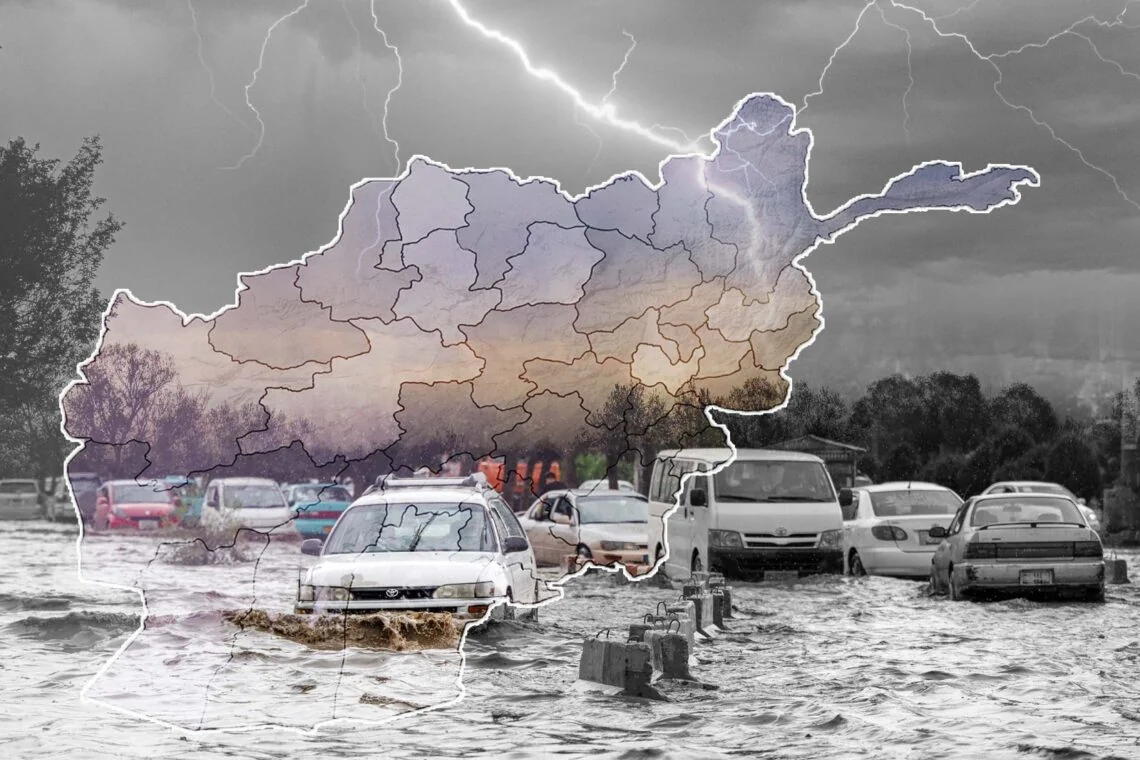
Cars wade through floodwater beneath a lightning-filled sky in an image overlaid with a map of Afghanistan. (Photo credit: AFP + Pexels)

AFP + Pexels

Language is a powerful tool that can turn the content of the human intellectual world into words. Human conversation, in keeping with the prevailing knowledge of each society, also gives thoughts concrete form in an honorable and honest way. Every child, every student, every woman and man, and every human being, at some point faces the question of whether to speak or not to speak. But the question of speaking or staying silent, beyond its psychological dimensions for the individual, is directly tied to the political system governing a country. Present-day Afghanistan not only lacks systemic stability, but the blade of censorship produces silence in every sphere, and the ruling structure, instead of moving toward equilibrium, continually reproduces the crises and fractures that already exist in society. Political life in Afghanistan unfolds far removed from any internationally accepted convention, fair trial procedures, active citizen participation, and the transparent criteria for the durability and continuity of a political and legal system as defined in the international arena. The blade of censorship and the suffocating atmosphere have targeted the throat of every progressive idea, and the socio-political crisis in Afghanistan deepens with each passing day.

The current situation in Afghanistan cannot easily be fitted into the prevailing theories of international relations, because we are dealing with a complex, closed, and anarchic system. If we define stability as “the durability and continuity of relations among the variables of a system,” then systems are either unstable and moving toward disequilibrium, or stable. Stable systems, in turn, either exist in a state of equilibrium or strive to achieve greater equilibrium. In Afghanistan, however, we are not facing “lasting systemic stability,” the kind of stability that could provide a foundation for progress, growth, and a decent life for citizens. The ruling despotism continually deepens “control and security stability” through instruments of repression. A broad wave of poverty and unemployment, the flight of elites and capital, severe censorship, ethnocentrism, gender apartheid, the destruction and neglect of the environment, and dozens of other crises all bear witness to this instability. Under such conditions, the silence that arises from blockage inflicts fundamental and deep damage on the imagination, analytical capacity, and dynamism of society.

Systems theory reminds us that a society or political structure is not a mechanical and lifeless construct, but a “living and dynamic organism” in which all components and variables contribute to one another’s stability. In a healthy system with organic stability, there is a phenomenon called “feedback mechanisms,” meaning mechanisms such as criticism, freedom of expression, civil institutions, and citizen participation, which allow the system to identify its own internal errors and readjust itself. Afghanistan today presents a clear picture of the complete inversion of this systemic logic. The ruling despotism has mistaken naked repression for “stability.” From a systemic perspective, total repression only creates a kind of “coercive and dead equilibrium,” a condition in which all of society’s safety valves are blocked, and the system has entirely lost the ability to correct its own behavior. Instead of producing equilibrium, this condition leads to the formation of a “negative and self-destructive feedback loop.” Poverty, the flight of human capital, and the complete elimination of half of the society’s organism, namely women, are not separate phenomena. Rather, they are variables that intensify one another and push the structure toward internal erosion. Therefore, a society in which language has been cut off as an instrument of assessment and critique resembles a system that has lost all of its sensory receptors. Such a system cannot withstand internal and external shocks, because its vital variables are not regenerating and growing, but are on a path of decay and disintegration from within.

A society armed with the instrument of language can decide its direction, whether to remain silent or to speak. A child can have the opportunity to think instead of receiving ideological instruction, and citizens can demand a decent life. As Aristotle speaks of the “rational animal,” depriving a human being of language is in effect emptying him of a part of his humanity. If we look at censorship through the lens of realist assumptions, we encounter the premise that human nature is filled with a desire for power. Therefore, the question arises: where does a voiceless human being release his inner potential and power of resistance? History testifies that this silence does not mean that citizens have been deprived of the power of thought, but rather that political life has been transferred beneath the skin of society. This accumulated energy releases itself through other channels: in underground study circles that keep the lamp of intellectual dynamism burning; in diaspora awareness-raising networks; in the formation of armed resistance against despotism; in the formation of a collective wisdom that, more with each passing day, challenges the foundations of harsh and rigid traditionalism; and in the fundamental rejection of the ruling ideology in the minds of the new generation. The speaking human being may fall silent temporarily, but the levers of thought within him do not stop working.

Perhaps society in Afghanistan, following its experience of this suffocation and repression by religious extremists, will reconsider the link between religion and despotic monarchy once and for all, lose its interest in political Islam, and, in a new leap, looking toward a bright tomorrow, envision a progressive and secular system.


You can read the Persian version of this analysis article here:
سانسور و انسداد اجتماعی؛ افغانستان در چارچوب نظریه سیستم‌ها

ShareTweetSendSendShare

Related Posts

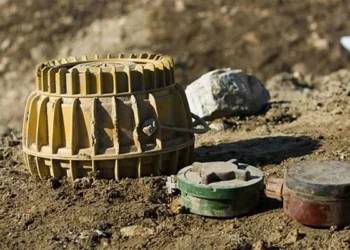
Unexploded ordnance scattered across parts of Afghanistan continues to threaten civilians, particularly children. (Photo credit: Social Media)
Afghanistan News

Taliban: More Than 900 Square Kilometers of Afghanistan Contaminated by Unexploded Ordnance

8 November 2026 [t_time:1794126200]
Women sort dried herbs on a table while one holds an infant, as many turn to herbal remedies amid limited access to healthcare. (Photo credit: AI)
Daily Reports

Limited Healthcare Access Pushes Women in Afghanistan Toward Herbal Remedies

8 November 2026 [t_time:1794120860]
A female teacher and a young girl stand in front of a blackboard in a classroom in Afghanistan. (Photo credit: UNICEF)
Afghanistan News

UN: More Than Half of Children in Afghanistan Deprived of Formal Education

8 November 2026 [t_time:1794117647]

Latest

Loading latest news...

Popular stories

  • A collage shows Donald Trump beside the Democratic Party logo, the US Capitol and a crowd holding “Freedom” signs ahead of the midterm elections. (Photo Credit: Social Media)

    Would a Democratic Victory Rein In Trump’s “Freedom of Action” on Iran?

    Share
    Share Tweet
  • Obama After Democratic Gains: Americans Want an End to Division

    Share
    Share Tweet
  • Trump Says He Is Ready to Be “Mr. Veto” if Democrats Win Congress

    Share
    Share Tweet
  • UN Report Reveals Shifts in Family Attitudes and Rise in Domestic Violence in Afghanistan

    Share
    Share Tweet
  • Trump: I Could Have Won the War in Afghanistan in Three Weeks

    Share
    Share Tweet

Podcast

Insights
Insights

Join Lynne O’Donnell for 8AM’s podcast series, Insights.
Lynne talks with generals, diplomats, soldiers, journalists, politicians, activists, people who have front row seats for conflicts around the world, and citizens with a story to tell, happy or sad. For this first series, Afghanistan is the focus. Lynne and her guests talk about the collapse of the republic in August, 2021, and the impact since — for the people of Afghanistan, for the security of the region, for the safety of the world. It’s important, interesting and insightful.

Insights/22: Controlling the Narrative with Mina Sharif
byinsights8am

Controlling the Narrative

Lynne O’Donnell talks with Mina Sharif, author, activist, women’s rights campaigner, educator and mentor. They discuss who controls the narrative and who speaks for Afghanistan’s people when the Taliban appear to have seized control not only of the country but of the message, too.

Have a listen

Insights/22: Controlling the Narrative with Mina Sharif
Episode play icon
Insights/22: Controlling the Narrative with Mina Sharif
Episode Description
Episode play icon
Insights/21: Media Meltdown with Zahra Joya
Episode Description
Episode play icon
Insights/20: Terror Inc with Scott Richards
Episode Description
Episode play icon
Insights/19: Busting Stereotypes with Bushra Gohar
Episode Description
Episode play icon
Insights/18: Media Matters with Waliullah Rahmani
Episode Description
Episode play icon
Insights/17: What Goes Around Comes Around with Sima Samar
Episode Description
Search Results placeholder
Hasht-e Subh

8AM Media, also known as Hasht-e-Subh Daily, stands as Afghanistan's premier independent and non-profit newspaper, resonating as a beacon of journalistic integrity since its establishment in June 2007 by esteemed Afghan journalists and human rights advocates. With a steadfast commitment to citizen journalism and civic education, Hasht-e-Subh Daily has earned its place as the most esteemed publication in the nation.

Publisher: Sanjar Sohail
Email: [email protected]
Executive Director: Parwiz Kawa
Email: [email protected]

Read More

Censorship and Social Closure: Understanding Afghanistan Through Systems Theory

Pakistan Pressures Taliban as Paktika’s Angoor Adda Border Market Is Cleared and Relocated

Taliban: More Than 900 Square Kilometers of Afghanistan Contaminated by Unexploded Ordnance

Kabul Water Crisis: Residents Say Wells Are Drying Up and Water Costs Are Rising

Seven Killed in Traffic Accident in Laghman Province

Editor’s Choice

Every Saturday morning, 8AM MEDIA English Services Department will guide you through the week’s biggest stories from Afghanistan and the international community.

Subscribe

© 2026 - ©Hasht-e Subh Daily

No Result
View All Result
8am.Media
پښتو ویب‌پاڼه
ویب‌سایت فارسی
اۉزبېکچه ویب‌سایت
  • Home
  • News
    • Afghanistan News
    • World News
  • Opinion
    • Editorial
    • Analysis
  • Reports
    • Daily Reports
    • Investigative Reports
  • Society
    • The story of people
  • Women’s Word
  • Columns
    • Three Years After Afghanistan’s Fall: The Taliban’s Resurgence
    • Towards Equality
    • The Resurgence of the Taliban: Two Years Since Afghanistan’s Fall
    • Hebatullah Report Special Edition
    • Resistance for Education Special Edition
    • Special Column on Taliban’s Education Curriculum
    • Nawroz
  • Interviews
  • Contact Us
    • About Us
    • 8AM MEDIA Annual Awards
    • Submit an Article to Hasht-e-Subh
  • 8am.media

© 2026 - ©Hasht-e Subh Daily