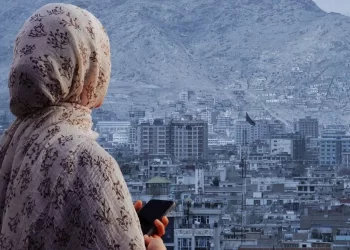
I grew up in a house with mud walls and a low ceiling. From the small window of my room, I would always look at the sky over Kabul, a sky that seemed to me like a vast canvas. In a city that sometimes smelled of fear and insecurity, I had learned to seek refuge in the world of books. To me, every book was a window opening into another world, a world where no wall could stop the human mind from taking flight.
This is the story of a girl who had ambitious dreams but was buried and forgotten. In one of the remote provinces, where harmful traditions sometimes overshadow basic human principles, Zahra was a girl whose dreams were confined by the mud walls of her home. In that society, both hidden and open violence had taken root not only in the streets and markets but also in major family decisions.
Zahra’s father, under pressure from harmful social customs and in an attempt to resolve a long-standing dispute, decided to marry her off to a man many years older than her. Zahra, who dreamed of continuing her education and gaining knowledge, resisted the forced decision. But in a society where structural violence had deprived girls of the right to choose, her voice was lost amid the demands of the men making the decisions. Her father viewed marriage through misguided interpretations of tradition, not as a union based on consent and human dignity, but as a means of protecting his own “honor.”
On the day of the marriage ceremony, Zahra, her eyes red from hidden tears, witnessed a transaction in which her human dignity was disregarded. What she experienced was nothing less than the loss of her sense of self and freedom.
The marriage not only distanced Zahra from her dreams but also pushed her into a cycle of loneliness and despair. In a society where family relationships are shaped by violence and coercion, Zahra, living silently in her new home and enduring violence from her husband, was no longer the cheerful and ambitious girl she once was.
Then, one morning, the devastating news came: “Zahra had taken her own life.” Hearing those words, I trembled all over. What injustice had she suffered? Why had that intelligent girl reached such a desperate point? Why had she been forced into such a fate?
During those days, my only source of comfort was the small library I had in a corner of our home. With her limited education, my mother taught me that knowledge was not simply about reading words, but about gaining a deeper understanding of life. She always told me that instead of becoming consumed by the bitter side of life, I should search for its deeper meaning.
Kabul was a city of contradictions for me. Alongside poverty and hardship, there were still people who, despite living in poverty, had generous hearts and helped others. From them, I learned that humanity is not measured by wealth, but by the greatness of one’s spirit. This was one of life’s greatest lessons, one I learned from ordinary people in the city’s streets and alleys.
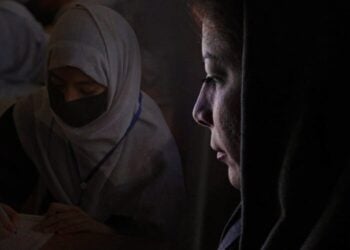
When the schools were closed, I did not lose hope. I told myself, “If the school is closed, my mind is still open.” I began writing. For me, writing was not a hobby, but a “silent uprising.” I wrote so I would not forget who I was or what I dreamed of. I wrote so that I could be the voice of all the girls who, in silence, were searching for a path toward the light.
During those difficult days, I thought about why human rights are sometimes disregarded in the country. I found the answer in “illiteracy” and “lack of awareness.” When a society moves away from knowledge, superstition and harmful traditions can take the place of truth. I decided to become part of that change. I did not want to be just a passive observer. I wanted to be someone who could use her pen to break down the walls of ignorance.
I thought about the value of informed marriage based on love and respect. A marriage in which two people come together as companions to build a dignified life, rather than as owner and owned. In Islam and its teachings centered on human dignity, mutual consent and respect for the dignity of both women and men are fundamental principles. I knew that if a society wanted to progress, it needed to return to these human principles.
Every morning when I woke up, I asked myself, “What will I learn today?” I began learning new skills. I wanted to become a woman who, when she entered society, would not only have something to say but would also know how to help address the problems facing her community.
Sometimes I was afraid of the insecurity in the city. But now, when I think about those days, I realize that freedom is not a gift; it is an achievement. Freedom is born in the moment when you decide that instead of giving in to sorrow, you will learn to give hope to others. I am no longer that frightened girl. I have become like the wind, finding its way through the rocks. I know that after every sunset, another sunrise will come.
Perhaps Kabul is a city of fear today, but I still believe in the dawn of liberation. Amid all this destruction, I stand and build. I have learned that even if the whole world stands against me, as long as I believe in myself, no wall can silence my voice. I am still moving forward, with fear and limitations, but with a heart that beats for freedom and awareness.