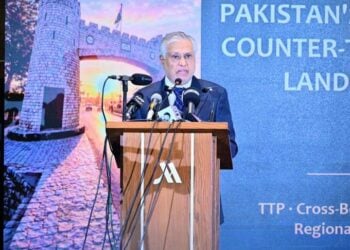
Marshal Abdul Rashid Dostum, leader of the National Islamic Movement Party and a senior member of the Supreme Council of National Resistance for the Salvation of Afghanistan, delivered a blistering Eid speech in Ankara, Türkiye. In his remarks, Dostum not only fiercely criticized the Taliban but also predicted their inevitable collapse: “The nation can rest assured, the Taliban will leave the same way they came. I’m not joking.” More provocatively, he reignited Taliban anger by referencing a haunting historical event: “They once spoke of Dasht-e-Leili. This time, let them not ask what happened to Dasht-e-Salang—or wonder what will become of Dasht-e-Badghis.” Mohammad Mohaqiq, another senior member of the Resistance Council, echoed a similar forecast for the Taliban’s demise: “The situation is moving in a positive direction. We assure you, this oppressive regime, born of international conspiracy, is living its final days.”
While Türkiye, like other regional powers, maintains relatively cordial ties with the Taliban, it has also pursued a distinctive and multifaceted approach, most notably by openly hosting opposition factions. In this regard, Türkiye stands alone as the only country where a large number of anti-Taliban figures have found refuge and operate freely. These actors frequently and publicly express their views on Afghanistan’s political landscape without needing to conform to the sensitivities of their host nation. Crucially, anti-Taliban platforms such as the Supreme Council of National Resistance for the Salvation of Afghanistan have been formally established in Ankara.
At the same time, Türkiye has managed to maintain favorable relations with the Taliban as well, evidenced by its hosting of closed-door forums in which Taliban-aligned lobbyists participate. A recent example is the Istanbul-based “Regional Group for Afghanistan,” which drew significant attention due to the inclusion of Afghan women accused by critics of harboring pro-Taliban sympathies. In light of this controversy, organizers sought to keep the proceedings away from media scrutiny. Nonetheless, agenda items circulated on social media revealed a clear emphasis on expanding engagement with the Taliban.
Moreover, Türkiye has extended support to more moderate initiatives, such as the “Antalya Process”—a notable example of its balanced diplomacy. This process, led primarily by human rights advocates and civil society organizations, seeks to create the groundwork for an inclusive national dialogue aimed at establishing a representative government in Afghanistan. Unlike other efforts, the Antalya Process neither lobbies for the Taliban nor promotes armed resistance. Instead, it follows a unique and independent path, which may explain why it has attracted relatively little criticism.
These developments indicate that Ankara occupies a unique position in its engagement with the Taliban. While it may not overtly support the group’s opponents, Türkiye has taken deliberate steps that would lead a neutral observer to conclude it is maintaining a calculated balance between the conflicting sides, avoiding the sacrifice of one for the benefit of the other. Preserving this equilibrium grants Ankara a strategic advantage in any future resolution of the Afghan conflict. Mohammad Mohaqiq also touched on a key point that reinforces this interpretation of Türkiye’s approach: he criticized the support some of Afghanistan’s neighbors and self-proclaimed democratic states have extended to the Taliban. In this emerging geopolitical alignment, Türkiye appears to stand apart.
Dostum’s recent remarks were also unprecedented in another way. In nearly four years since the Taliban’s return to power, no anti-Taliban political figure in Afghanistan’s surrounding countries—Türkiye being the exception—has spoken out against the group with such clarity and force before a public audience. Even from Tajikistan, Iran, and other neighboring nations, such direct condemnation has been notably absent.
Dostum’s message carries significance on two fronts. First, it was delivered during Eid, one of the most important Islamic occasions. Afghan politicians often use such moments to articulate core political positions, with the expectation that these messages will resonate and endure. Second, the presence of Abdullah Khanjani, a representative of the National Resistance Front, adds further weight, particularly given Dostum’s explicit and comprehensive endorsement of the Front. This public alignment suggests that the Supreme Council of National Resistance and the NRF are not ideologically or strategically at odds in their struggle against the Taliban—a potentially troubling signal for the regime. Still, it would be premature to assume that symbolic speeches and ceremonial gatherings alone can unlock a path out of Afghanistan’s crisis.
The Taliban will not remain silent. They are likely to communicate their discontent over Dostum’s remarks directly to Turkish authorities—a move that may ultimately prove futile. In truth, Türkiye is closely and actively monitoring developments in Afghanistan. Unlike other countries that have opted to remain passive observers or host exiled opposition groups behind closed doors, Ankara appears determined to play a more assertive role in shaping the future. To do so, however, it must continue walking the fine line it has chosen—a posture of balanced engagement. This explains why Türkiye has given Dostum a platform, despite the potentially controversial and costly nature of his rhetoric.
You can read the Persian version of this analysis here: