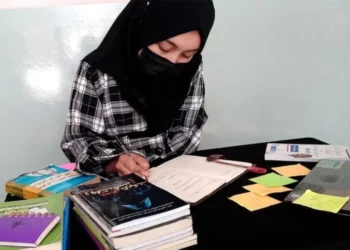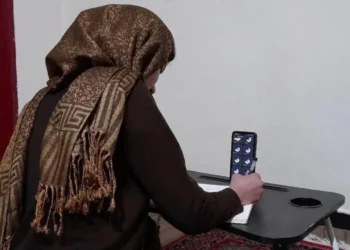
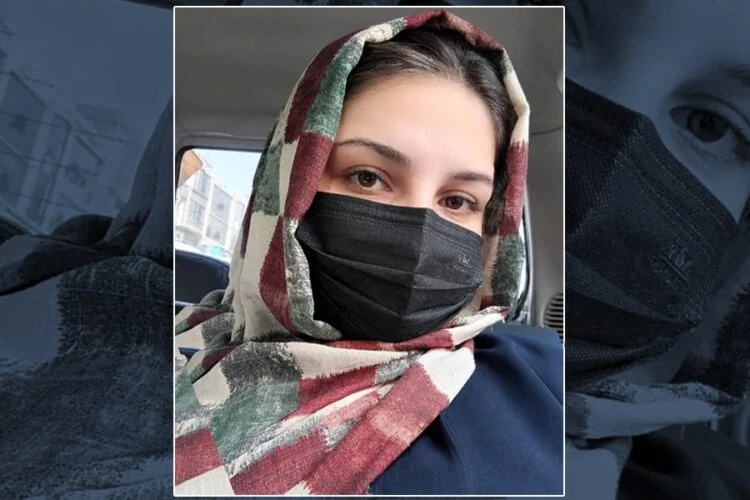
Note: Hafsa, a young Afghan woman, sees writing as a way to express experiences and emotions that, as she says, sometimes cannot be voiced aloud. A high school graduate, she speaks in this interview about her relationship with writing, memories of her school days, friendships, and her outlook on life. She also discusses living under current conditions, fearing the future, and trying to hold on to hope and keep going.
Hasht-e Subh: Dear Hafsa, first, please tell us what you would like to be known for. What do you consider the most important things that define you? If someone were to get to know you not through your title, job, or education, but through your interests, experiences, beliefs, and the things that matter to you, what image of yourself would you want them to have?
Hafsa: My name is Hafsa. I live in Kabul, and my family is originally from Maidan Wardak province. I have graduated from high school, and I currently write about women’s pain, girls’ silenced dreams, and lives that rarely get the chance to be heard. I believe that behind every woman lies a story that perhaps no one knows about—a story of suffering, hope, resistance, and dreams that remain alive despite all the restrictions.
I write because I do not want the pain of Afghan women to be forgotten in silence. I want to be the voice of those who have so much to say but lack the opportunity or means to express themselves. For me, writing is more than a passion; it is a way to tell the truth about life, record suffering, and keep hope alive.
If I were to introduce myself beyond my title, job, and education, I would perhaps say that I am a girl who encountered pain at an early age but could never completely abandon her dreams. I am an Afghan woman who grew up in a country where women have repeatedly been forced to suffer and resist more than they should have to. What defines me most may be that, despite all the difficulties and everything I have lost in life, I still want to create, write, and remain hopeful.
I live through words, care deeply about people and relationships, and feel many things intensely. I believe that sometimes a piece of writing can give voice to pain that has remained silent in someone’s heart for years.
I am still at the beginning of my writing journey, but my dream is that one day my words will cross the boundaries of silence and reach those who need to hear the voices of Afghan women. I do not want people to know me simply as a “writer.” I want them to see me as an Afghan woman who has witnessed pain but has not surrendered to it—someone who still believes in the power of words, in hope, and in the possibility of building a different tomorrow.
Hasht-e Subh: When did you begin to feel close to words, and what led you to writing?
Hafsa: I do not think I became a writer; little by little, I sought refuge in writing. When I realized that I could not say certain things aloud, I began writing them down.
Sometimes, people experience things in life that they cannot explain to anyone. It is not that they have nothing to say. In fact, they have so much to say, but no one is there to listen. For me, paper became that listener.
The more I experienced life, the more I realized that words can bring a person’s pain out from within. Perhaps living in Afghanistan strengthened this feeling in me, too. When so many voices go unheard, writing can become a way of saying, “I am still here.”
Hasht-e Subh: When you think about your school days, what memories stand out most?
Hafsa: When I think about school, I remember people and dreams more than lessons. Back then, perhaps we thought the future was simple. We thought we would grow up, study, work, and build the lives we wanted. But when I look at the lives of Afghan girls today, I see that many of those simple dreams are no longer simple.
A girl who simply wants to go to school, attend university, become a teacher, a doctor, or a writer, or just live an ordinary life now faces enormous obstacles to achieving these basic goals. The continued denial of secondary education to girls remains one of the greatest barriers to Afghanistan’s development.
Perhaps that is why my school memories have taken on a different meaning today. Back then, we did not realize how precious those moments were.
Hasht-e Subh: Tell us about your experience with writing. What does writing mean to you, and what draws you to it?
Hafsa: Writing means breathing to me. When I cannot say something, I write. When I feel sad, I write. When something makes me happy, I write. And when I feel that the world cannot hear my voice, I write again.
Writing is not just a way to express my personal feelings. Sometimes I think that if I write about my own pain, another girl in Afghanistan might read my words and realize that she is not alone. Perhaps another woman will say, “This is exactly what I feel, but I could not find the words to express it.” For me, that is enough.
Hasht-e Subh: I would like to hear about your collection of writings, A Girl of Light, a Woman of Pain, in your own words. What inspired you to write it? Could this collection be considered a form of autobiography?
Hafsa: This collection began when I could no longer keep certain memories only in my mind. A Girl of Light, a Woman of Pain tells the story of my life: the story of a girl who grew up with her own hopes and dreams and encountered experiences along the way that changed her.
Yes, these writings are deeply rooted in my real life and can be considered a form of autobiography. But to me, this collection is not only about “me.”
I have shared parts of my own life in this collection, but behind that “I,” I see many other women and girls: a girl who has dreams but remains at home; a woman who has abilities but no opportunities; a mother who worries about her child’s future; and a woman who may smile every day while no one knows what is happening inside her. That is why this collection is not merely a personal memoir for me. It is part of the story of an entire generation.
Hasht-e Subh: In the introduction to A Girl of Light, a Woman of Pain, you wrote that the collection was intended to preserve memories. Why remembrance? Why is this important to you?
Hafsa: Because I am afraid of being forgotten—not just of being forgotten myself, but of people’s pain, dreams, and lives being forgotten.
Sometimes history forgets ordinary people. Famous names remain, but the life of an ordinary girl, a mother’s tears, a student’s dream, and the nights when a woman falls asleep with a thousand thoughts on her mind may never be recorded anywhere.
I wanted to write to show that these lives existed, that this pain happened, and that these girls had dreams. We are more than statistics and news reports. Every one of us has a story.
Hasht-e Subh: In your writings, you mention your friends, Tamana and Samira, and the complicated nature of your relationships with them. How important is friendship to you, and how do you view friendships today?
Hafsa: The relationships I write about in this collection are part of my real-life experiences. Friendship has always been important to me, but over time I have learned that not every relationship is meant to last a lifetime.
Some people enter our lives, become part of them, teach us something, and then go their separate ways. Today, if I were to talk about friendship, I would say that I am not looking for a large number of people. I am looking for people around whom I can be my true self.
I think Afghan girls need these kinds of relationships more than ever: spaces where they can speak without fear, laugh, cry, and simply be themselves. As the world outside becomes increasingly restrictive, loneliness is growing deeper in the lives of many girls. Recent United Nations reports also point to severe restrictions on women’s presence in public spaces and increasing pressure on their daily lives.
Hasht-e Subh: What are you doing these days, and what keeps you going in life?
Hafsa: These days, I am mostly trying to rebuild myself, both inside and out. I write, reflect, learn, and work toward my goals and dreams.
Perhaps life in Afghanistan has taught us that we cannot always change our external circumstances, but we can refuse to let those circumstances change everything within us. I still have dreams. I still want my writing to be read, to become a writer, and to learn many new things. Perhaps that word “still” means a great deal to me.
Sometimes people grow tired of life, but something inside them says, “It is not over yet.” For me, that something is hope—my family, my dreams, my writing, and a future I have not yet seen. Sometimes a person survives on the strength of a single dream. I have dreams I have not yet achieved, and I do not want to give up before reaching them.
Hasht-e Subh: If I asked you to talk about “struggle,” what would it mean to you? When so many Afghan girls face restrictions, uncertainty, and an unclear future, what does struggle mean to you? What are you struggling against these days?
Hafsa: To me, struggle does not only mean shouting in the streets. Sometimes struggle means continuing to learn when people tell you that you cannot. It means continuing to write when others do not want to hear your voice. It means looking for a window when the doors are closed, and refusing to let restrictions convince you that you have no future.
Today in Afghanistan, when a girl is deprived of education, work, social participation, and many of life’s ordinary choices, keeping her dreams alive can itself be a form of struggle. The United Nations continues to describe the situation of women’s and girls’ rights in Afghanistan as one of the world’s most severe women’s rights crises.
These days, I am struggling against hopelessness, fear of the future, and restrictions. I am struggling against the voice inside that sometimes tells me, “There is no point anymore.” Each time, I try to tell myself, “No, it is not over yet.”
Hasht-e Subh: Finally, is there anything else you would like to say?
Hafsa: If I could say just one thing, I would say that Afghan women are not simply people who deserve sympathy. We are human beings with abilities, talents, dreams, and the right to choose.
I do not want the world to see Afghan women only when they are crying. I also want it to see us writing, creating, thinking, dreaming, and rising again. I am not saying that we do not suffer. We do, deeply. But I do not want pain to be the final word in our lives.
That is why I wrote, why I still have dreams, and why I continue to speak. If someone asks me one day, “Why do you still write despite everything?” I might simply say, “Because I do not want silence to be the last thing that remains of an Afghan woman.”
I was “A Girl of Light” and became “A Woman of Pain,” but I still believe that, in the deepest part of this pain, there is a light that has not gone out.