
The Taliban’s new law, titled the “Law on Propagation of Virtue and Prevention of Vice,” clearly demonstrates that this document is not merely a legal framework but rather a systematic effort to replace modern policing with a religious surveillance system. For the people of Afghanistan, particularly women, this shift translates into collective imprisonment and intensified monitoring.
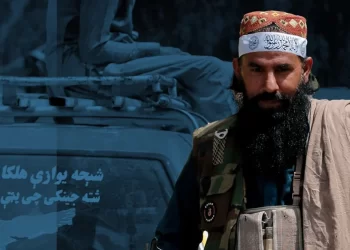
Beyond its inhumane and undemocratic nature, this law reflects underlying intra-group rivalries and fundamental shifts in policing approaches. According to the provisions of this law, the newly established Muhtasib/Hisbah[2] units (religious inspectors or in some cases, also referred to as religious police But I am using Hisbah for this force of the Taliban) are granted extensive powers, allowing them to intervene in every aspect of people’s lives. Their jurisdiction extends from clothing and personal grooming to commercial transactions, agriculture, trade, media, transportation, and even private matters such as hygiene and marital relations.
This transition highlights the Taliban’s intent to dismantle the modern policing system built over the past two decades in Afghanistan and replace it with an unchecked religious authority operating without legal oversight.
Objectives and Powers
Article 2 of this law outlines two primary objectives for Hisbah officers: regulating matters related to promoting virtue and preventing vice and defining the duties and powers of Hisbah personnel. Clauses 4 and 6 of Article 3 also provide broad and vague definitions of virtue and vice, encompassing everything that Sharia prohibits or mandates.
These definitions, grounded in existing religious narratives, especially the Taliban’s interpretations are highly subjective and lack measurable criteria. As a result, Hisbah officers enjoy unrestricted authority over all aspects of public and private life. In essence, functions that, under modern definitions, would fall under law enforcement and public order maintenance have been transferred to an extralegal religious entity that operates solely based on religious edicts, without any institutional oversight.
According to Clause 2 of Article 3 of this law, Hisbah officers are directly appointed by Mullah Haibatullah or, in his absence, by a person authorized by him. In effect, this institution remains accountable only to the Taliban’s religious leadership, operating beyond any recognized legal framework.
Jurisdiction and Authority of Hisbah Officers
The law grants Hisbah personnel who function as a religious enforcement unit under the direct command of the Taliban leader extensive powers, including:
- Regulation of road and air traffic (Article 20)
- Oversight of family matters and marital relations
- Control over personal grooming and appearance for both men and women (Article 14 and Clauses 18 and 19 of Article 22)
- Enforcement of dress codes and mandatory hijab for women (Article 13)
- Supervision of media and publications (Article 17)
- Regulation of agriculture, horticulture, and livestock (Article 18)
- Monitoring of markets and commercial centres (Article 18)
- Conducting arrests, body searches, and searches of private homes and belongings
- Investigating individuals and placing them under surveillance (Chapter 3)
- Issuing and executing punishments (entirety of Chapter 3)
- Overseeing recreational activities (Article 19)
- Regulating public bathhouses (Article 21)
- Prohibiting celebrations and public festivities (Clause 21, Article 22)
- Crime detection and execution of penalties
These extensive powers were previously distributed among various state institutions, including the police, prosecution, and judiciary. However, under the new system, they have been entirely consolidated within a religious body, creating a structure that wields unchecked authority. Moreover, Article 29 assigns oversight of the Ministry for the Propagation of Virtue and Prevention of Vice to itself, making it both the enforcer and the regulator an embodiment of absolute power without accountability.
Structural and Organizational Considerations
Although the law does not specify the exact organizational structure of the Hisbah ministry, Article 25 alludes to its authority over disciplinary measures and structural expansion. The Hisbah ministry is expected to operate extensively across urban security districts, district centres, and provincial administrations.
An analysis of these powers reveals that, alongside the 230,000 personnel reportedly operating under the Taliban’s Ministry of Interior (according to Sirajuddin Haqqani, the acting interior minister. 25 July 2024-Kabul), the vast expansion of the Ministry for the Propagation of Virtue and Prevention of Vice suggests motives beyond religious enforcement. The formation of such a large and powerful force may indicate internal Taliban rivalries and concerns about power consolidation within the Haqqani faction. This could explain why Mullah Haibatullah has sought to establish a parallel force with even greater authority, serving as both an enforcer of religious doctrine and a counterbalance to the growing influence of the Haqqani network.
The Ministry for the Propagation of Virtue and Prevention of Vice’s broad powers not only usurp the traditional functions of policing but also allow direct interference in every layer of Afghan society. Given the vague and open-ended definitions of its mandate, the Muhtasib/ Hisbah force can arbitrarily target individuals and groups under the pretext of enforcing religious virtue, positioning itself as an extrajudicial entity that supersedes conventional law enforcement agencies. Under the Taliban’s Sharia-centric legal framework, crime is not defined by written law but by adherence to Sharia-based moral standards, making Muhtasib/ Hisbah officers the ultimate arbiters of justice.
Analysts predict that this force will function as Mullah Haibatullah’s shadow apparatus, wielding influence across all levels of the Taliban regime. It is likely to create friction within the Taliban, particularly against the Haqqani faction, fuelling deeper internal divisions. While the Taliban’s rule is broadly regarded as an oppressive force against the Afghan people, any development that weakens its internal cohesion could ultimately work in favor of the country’s population and accelerate the disintegration of its authoritarian grip.
What Are the Consequences of This Taliban Action?
This approach by the Taliban will have serious consequences across various aspects of personal and social life for Afghan citizens, as well as significant and destructive impacts on modern policing in Afghanistan. Below, we analyze these effects:
A. Institutional and Professional Aspects
The Afghanistan police, despite having a history of over a century with different organizational structures and significant challenges, had gradually moved towards modernization and a new approach aligned with human rights values and professional standards over the past two decades. Valuable efforts were made in establishing structures and organizations, training and education, and ultimately creating a more professional police force (although there were serious criticisms in certain areas) compared to its historical foundation in Afghanistan. For the first time, the authority of the police was explicitly outlined in the constitution and clearly defined in other subsidiary laws. The curriculum for the Afghanistan National Police was designed based on modern human values and international standards, and a significant number of police officers at various levels received training accordingly.
The Taliban’s resurgence, as it severely impacted other state institutions, also caused greater harm to law enforcement forces and the police. The police force was diverted from its core duties and transformed into an instrument of repression, enforcing orders that the Taliban claim are issued based on Sharia. The new Taliban “Commanding the Good” law will make the approach of the ruling forces and the police toward the people highly ideological and extremist, destroying all the trust built in the police institution, making it extremely difficult to revive the police force and regain public trust after the fall of the Taliban.
Furthermore, the structure and organization of the Afghanistan police, which had been rebuilt and modernized over the past two decades, have undergone fundamental changes under Taliban rule. Police forces, once seen as protectors of public security and law enforcers, have now become tools of the Taliban regime, whose main goal is to suppress the people and maintain their power. These changes have not only weakened the effectiveness of the police but have also eroded public trust in the institution. As a result, Afghanistan will face serious challenges in security, justice, and the rule of law, making any future rebuilding and reform of the police force extremely difficult.
However, the Taliban’s return to power has severely damaged government institutions, with law enforcement especially the police suffering the most. The police force has been diverted from its primary role and transformed into a repressive entity enforcing Taliban-issued decrees under the guise of Sharia. The new Hisbah law will make law enforcement and policing in Afghanistan deeply ideological and extremist, erasing any public trust in the police institution. This will make future efforts to rebuild the police force and restore public confidence extremely challenging after the Taliban.
B. Social Aspects
Socially, as mentioned in previous sections of the article, it will have very serious negative effects on the lives and public relations of citizens, as well as their behaviors. Citizens will lose all their freedoms and will live in constant fear. Afghanistan citizens, especially women, will be forced to imprison themselves at home and refrain from any public activity or presence in open spaces, out of fear of being tried by the Taliban and subjected to wrongful treatment for reasons such as not following the dress code according to the group’s orders, not complying with Taliban rules regarding social relations, and so on.
This situation not only limits the individual rights of citizens but also severely affects the quality of their social and psychological lives. The fear of unfair punishments and violent treatment creates an atmosphere of mistrust and anxiety in society, which will negatively impact human relationships, families, and even economic processes. In such conditions, citizens will be unable to carry out their daily and social activities, as being in public places and participating in social decision-making will become a risk. As a result, Afghanistan society will enter a negative cycle of poverty, distrust, and social restrictions, which will delay its development and progress.
Moreover, this law, due to its unlimited nature and lack of proper supervision over the enforcement of the duties of the enforcers, provides an opportunity for Taliban officials to abuse their power, placing citizens in the worst conditions and facilitating illegal extortion.
Conclusion
Under this new law, the Taliban aims to expand its power and control over Afghan society by establishing a strictly religious approach, replacing modern policing structures with a religious institution, and creating a Hisbah system with broad authority. These changes not only signify the suppression of individual and social freedoms but also mark a fundamental shift in governance, where ideological oversight replaces legal and institutional frameworks.
While this law and its implications pose serious threats to the Afghan people, raising awareness about its true nature and its devastating impact such as the erosion of dignified living conditions and the radicalization of society can help mobilize public opinion in Afghanistan, the region, and the world. A coordinated effort to undermine the Taliban’s legitimacy and structural foundations could accelerate the dismantling of this oppressive regime, paving the way for its eventual collapse.
[1] Besmillah Taban is the former General Director of Afghanistan’s Crime Investigation Department (CID). He is currently pursuing a Ph.D. in Security Studies at JU, with a focus on security issues related to Afghanistan, Iran, Pakistan, and Central Asian countries.
He can be reached on X (formerly Twitter) at @BesmillahTaban
https://orcid.org/0009-0004-2438-1060
https://independent.academia.edu/BesmillahTaban
https://www.researchgate.net/profile/Besmillah-Taban
[2] A term referring to community morals; by extension, to the maintenance of public law and order and supervising market transactions. The functions of the Muhtasib (person responsible for Hisbah) cover duties regarding prayers, mosque maintenance, community matters, and market dealings. With the advent of Western colonialism, Hisbah came under the purview of secular departments in many Muslim societies. https://www.oxfordreference.com/display/10.1093/oi/authority.20110803095938397
In Islam, the doctrine of Hisbah dictates a duty for Muslims to promote moral virtue and intervene when another believer is not acting accordingly.