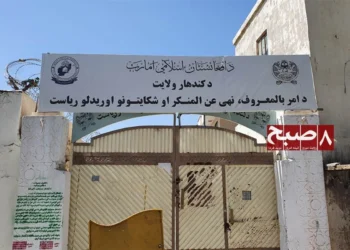
Two days ago, the Taliban Ministry of Justice unveiled a new law, The Law on Propagation of Virtue and Prevention of Vice, which includes a preamble, four chapters, and 35 articles. This announcement has shocked the world and dampened the enthusiasm of those promoting normalization of relations with this group both domestically and internationally. For those who are aware of the Taliban’s nature and the depth of their ideology, this revelation is neither surprising nor unexpected. What some proponents of the Taliban’s ideology (by “Taliban ideology,” I refer not only to the overt face of the Taliban but also to a broader, radical interpretation of Islam combined with ethnic superiority that can be found among various individuals with different public faces and backgrounds) were trying to present as a refined and modern definition of the Taliban is merely a pathetic attempt to perpetuate this ideology.
In the past two days, there have been numerous written and verbal reactions from opponents of the Taliban ideology and international Media countries and organisations, addressing various aspects and dimensions of the new law. In this brief analysis, I will explore the security implications of this law for Afghanistan’s society and humanity at large.
Before discussing the security implications of this law, let’s briefly review the nature and legislative approach of the Taliban. Normally, laws should be based on legal and legitimate foundations. They should adhere to a series of accepted principles and norms, such as the constitution and prevailing customs in society, and Islamic governments, should be based on Sharia. The Taliban’s decrees, commands, and laws lack all these conditions. The Taliban regime has no constitution, and they disregard the conservative customary rules of Afghan communities, imposing a completely flawed interpretation of Islam on the people. Moreover, this law and other Taliban laws lack democratic legitimacy and transparency in their formulation, with no public participation in the process. As the Afghanistan people face increasing poverty and hardship, these laws are in no way aligned with the real needs of society. A key feature of laws is to protect the rights and freedoms of citizens. However, from start to finish, this law aims to impose severe restrictions and effectively confine society to a state of general imprisonment. Laws should ultimately guarantee and support social and legal security and contribute to the public welfare, which is absent in this law and other Taliban regulations.
What Are the Security Implications of This Law?
Essentially, one of the main purposes of laws is to ensure public welfare, security, and order. Societies, to achieve these goals, enter into a social contract and accept certain conditions, sacrificing some individual freedoms for the protection of the community, and cooperating in implementing the laws. The imposition of any law by a regime that fundamentally lacks national and international legitimacy not only fails to gain internal acceptance but is also viewed internationally as a disreputable document. With this law, the Taliban aims to solidify their absolute rule and deepen the suffering of the Afghanistan people, especially women.
The security implications of this law can be examined in two dimensions:
1) Individual Security Implications
a) Threats to Individual Freedoms
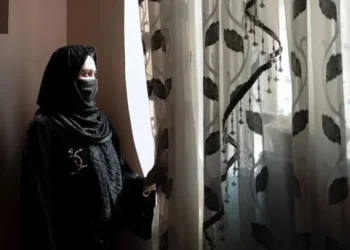
This law imposes severe and stringent restrictions on the personal lives of Afghanistan citizens, especially women. Women are the primary focus of this law. According to the Taliban’s ideology, women are seen as the main problem in the world, particularly in Afghanistan, and their reform is believed to lead society towards happiness. The strict boundaries defined for women in this law will force them to live in constant fear and anxiety, potentially leading to serious mental health issues such as depression, anxiety, and even suicidal tendencies.
Article 13 of this law details the rules regarding women’s hijab,(Taliban-type hijab) which creates insecurity for women. The first paragraph of this article mandates complete coverage of a woman’s body. The third paragraph considers a woman’s voice as part of her ‘awrah’ (the parts of a woman’s body that should be covered) and decrees that it must be covered. As stated, this article and the law as a whole are designed to restrict individual freedoms, particularly those of women.
b) Creation of Psychological and Social Insecurity
The enforcement of radical religious laws, including this Taliban law, imposes significant psychological pressures on individuals. People, especially those deemed outsiders by the Taliban, live in constant stress and psychological insecurity due to the fear of severe punishments. This situation can lead to reduced self-esteem, a diminished sense of personal security, and increased domestic and social violence.
Although significant portions of this law focus on women’s issues, its impact extends to a wide range of public life. The law enforcement bodies, known as Muhtasib (an individual appointed by the Taliban leader to enforce this law), have unrestricted powers over all aspects of citizens’ private and social lives, as well as their social activities. Article 18 grants these individuals authority to intervene in business practices, including those of traders and farmers, under the guise of religious propriety and enforcement of good conduct. Article 17 also gives them authority to intervene in media and information dissemination.
Article 19 gives the Muhtasib the power to monitor the recreational and leisure activities of citizens and intervene to “save” them from what is deemed as moral failings. Additionally, the law imposes severe restrictions on women’s travel and penalizes drivers who transport women without proper hijab or a male guardian as defined by this law.
c) Erosion of Privacy
Radical religious laws typically involve strict surveillance and control over individual behaviors. This surveillance can lead to the erosion of personal privacy, making individuals feel constantly monitored and deprived of personal space. This law repeatedly emphasizes issues related to individual privacy. Article 21 grants the Muhtasib the authority to monitor private places such as baths and compel people to adhere to the Taliban’s regulations. Article 22, paragraph 4, allows the Muhtasib to interfere in the sexual relations between husbands and wives to ensure they are conducted “correctly” according to Taliban standards. Monitoring of personal phones, computers, and other electronic devices is a common practice under Taliban rule, even without this law.
2) Social Security Implications
a) Undermining Social Cohesion
Although the Taliban have never shown interest in preserving or strengthening social cohesion, their mission seems to be the destruction of social relationships among Afghan citizens. This law will increasingly undermine social cohesion in Afghanistan. Its implementation could lead to deep divisions within society, as it is based on specific Taliban interpretations of religion that conflict with other groups’ beliefs and lifestyles. Such conflicts could result in profound religious, ethnic, and social rifts, destroying social cohesion. Even after their eventual downfall (which is anticipated to occur soon), the Taliban’s actions will leave serious damage to society that will take time and effort to repair.
b) Promotion of Violence and Extremism
This law will push society further towards extremism and violence. Its implementation is likely to foster a culture of violence and extremism. The law and other Taliban regulations, with their emphasis on severe and inhumane punishments, will normalize violence and interference in individuals’ private lives under the pretext of enjoining good and forbidding wrong. As a result, extremist individuals and groups, along with the Taliban’s Muhtasib, may feel more justified in pursuing their violent goals. Article 7 of the law allows any individual to enjoin good and forbid wrong, but this obligation is specifically assigned to the Muhtasib, essentially granting a license for public chaos under the guise of moral enforcement.
c) Reduction in Social Interactions and Public Trust
This law, continuing the Taliban’s pattern of behavior, will severely reduce social interactions. Individuals will avoid social interactions due to the severe and ruthless enforcement of this law by the Taliban. This situation can lead to a decrease in public trust and increased distrust among community members. This distrust can weaken social capital and reduce social cooperation, which in turn negatively impacts public security.
3) Public Implications
Although Article 4 of this law anticipates its application across all offices, public places, and individuals residing within Afghanistan, Article 23 limits the responsibilities of the Muhtasib concerning dhimmis ذمی (refers to non-Muslims who live under Islamic rule and are granted protection and certain rights in exchange for paying a special tax known as “jizyah.” This status is typically accorded to people of the Book (Jews, Christians, and Zoroastrians) and implies a formal agreement between them and the Islamic state.) Musta’mins مستامنین (One who seeks security” One who, being a foreigner, and not a Muslim, enters Muslim territory, and claims safe conduct and immunity from hostilities.) to merely prohibiting the public commission of immoral acts. However, Article 3, paragraph 6, defines immoral acts as any saying or action deemed unacceptable by Sharia (Islamic law – Hanafi). Thus, this law applies with equal severity to foreigners residing permanently or temporarily in Afghanistan. The law appears to classify diplomats, official delegations, and tourists from non-Muslim countries under the category of Musta’mins or dhimmis, but it states that the same rules apply to diplomats and official delegations from Muslim countries as to Muslim residents of Afghanistan.
Additionally, Article 18, paragraph 7, prohibits medical practices such as kidney and liver transplants, which are accepted in modern medicine. This prohibition could lead to further harm and insecurity for those in need of such treatments.
Summary
The new Law on Propagation of Virtue and Prevention of Vice, introduced two days ago by the Taliban Ministry of Justice, has drawn significant global attention and widespread criticism. This law, comprising a preamble, four chapters, and 35 articles, imposes severe restrictions on individual lives, particularly targeting women. In the context of Afghanistan’s current dire state, marked by extreme poverty and hardship, the Taliban, as always, show no regard for the real needs of society, focusing instead on strengthening their absolute rule and intensifying the suffering of the people, especially women.
The law specifically threatens individual freedoms, requiring women to adhere to strict dress codes, including full body coverage, and imposing other severe restrictions. These measures could lead to serious mental health issues, such as depression and anxiety. Additionally, the law allows for widespread interference in individuals’ privacy and imposes extensive surveillance on personal and social behaviors. These intrusions, particularly in the realms of personal conduct, social interactions, and modern technology use, have sparked serious concerns.
On a societal level, this law may undermine social cohesion and exacerbate religious, ethnic, and social divisions. Its implementation, promoting violence and extremism, is likely to foster a culture of violence while reducing social interactions. Fear of harsh and brutal enforcement will lead individuals to avoid social engagements, which in turn can diminish public trust and weaken social capital.
Internationally, this law not only lacks national and international legitimacy but is also viewed as a disreputable document globally. With this law, the Taliban seek to solidify their control and deepen the suffering of the people, particularly women. It is expected that the international community will shift from passive observation to taking concrete steps to address the injustices inflicted by the Taliban and cooperate with the Afghan people to alleviate this oppressive regime. Ultimately, instead of promoting public welfare, this law is likely to further escalate social and humanitarian crises in Afghanistan.
One question remains: given that the law forbids citizens from befriending non-believers, will the Taliban also reject the millions in weekly international aid? Or is this law solely designed to oppress the people and define the lines between belief and unbelief?
You can read the Persian version of this article here:
قانون وحشتآفرین طالبان؛ بحرانهای جدید در امنیت و ثبات افغانستان | روزنامه ۸صبح