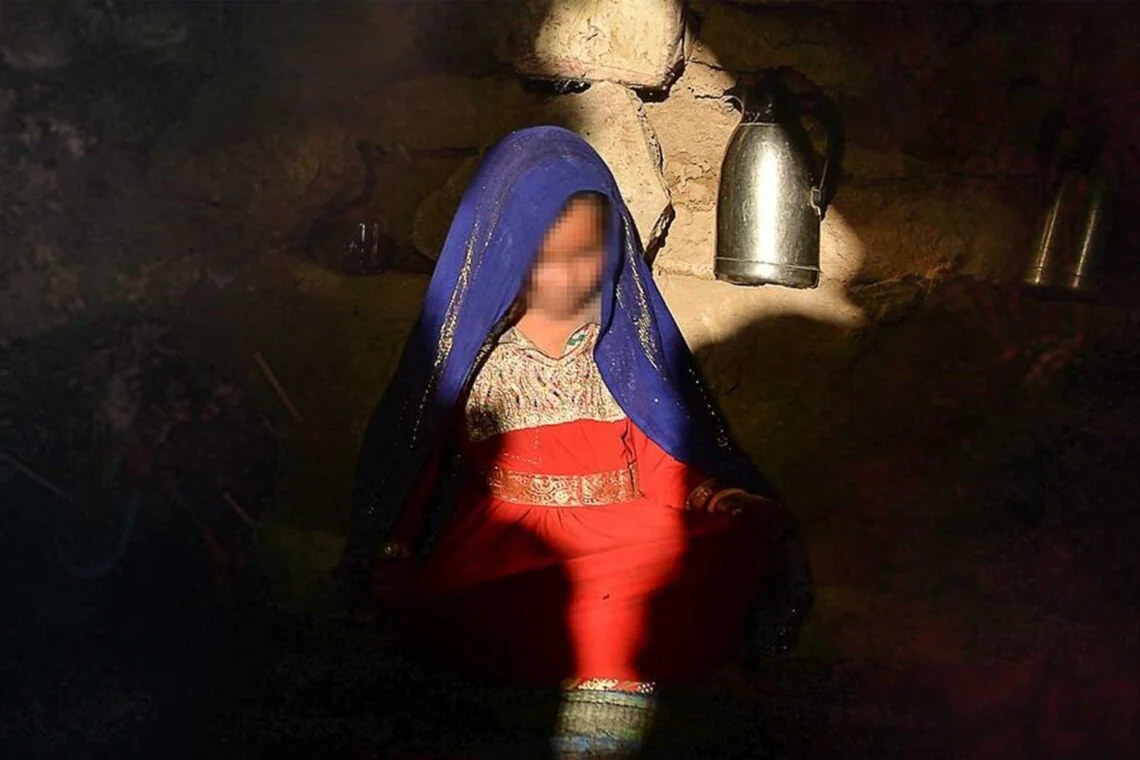
Several residents of Ghor province have expressed concern over a rise in forced and underage marriages in the province. They say that, because of poverty and unemployment, some families marry off their young daughters against the girls’ will so they can use the bride price money to meet urgent living needs. According to these residents, some girls are unable to maintain contact with their fathers’ families after such marriages. They describe these practices as “selling girls” and stress that poverty, local customs, and a lack of necessary support have made girls more vulnerable to forced marriage. In their view, marriage without a girl’s consent, for whatever reason, should not become an accepted practice in society.
Ali Mohammad (pseudonym), a resident of Ghor province, expressed concern over the spread of forced and underage marriages of girls in the province. He says poverty and families’ lack of awareness sustain this situation.
Ali Mohammad said: “Eighty percent of the people of Ghor live below the poverty line, but it is not right to say that someone has sold his daughter. Still, there are many cases in which families marry off their daughters in exchange for a bride price. Many people, because of poverty and destitution, force their daughters into marriage without their consent and at a young age.”
Another resident of Ghor province, who did not want his name to appear in the report, says that marrying girls at a young age has become a custom in some areas of the province, and that families sometimes decide on their daughters’ marriages without their consent. He adds that some families receive a huge bride price for marrying off their daughters, which he says reaches 700,000 Afghanis in some cases. According to this resident of Ghor, in such cases families pay attention neither to their daughters’ age and consent nor to the age of the man who will marry them. He stresses that forced marriage, whether because of poverty or for any other reason, should not become an accepted custom in society.
This resident of Ghor province says: “In our area, it is customary to send girls to their husbands’ homes at a very young age. We have a proverb that says: the girl we hit with a hat and who did not fall, we must give to a husband. They marry off underage girls and take a bride price, even up to 700,000 Afghanis. Especially if the girl is beautiful, it does not matter to the family how old the man is, whether he is old or young. If a wealthy family comes forward, even if the man is on the verge of death, they give the girl to him. This is a kind of selling of girls, and it should not become widespread, whether it is because of poverty or for any other reason. Here, a father considers himself the owner of his daughter, and if anyone objects, he says, ‘my heart and my daughter, she is not your daughter.’ No institution protects girls.”
Salem (pseudonym), another resident of Ghor province, says forced marriage has become normal behavior in some areas of the province. According to him, in some cases girls, especially those who are beautiful, are bought and sold like goods.
He calls on the visual media to raise awareness about the consequences of forced marriage, underage marriage, and having many children, so that people become aware of the consequences of these practices and their continuation is prevented.
Salem says: “In my village, there are many people who marry off their young daughters to elderly men because of the poverty and unemployment prevailing in Ghor province. The main reason young men do not marry is poverty and hunger. I have even researched this issue and found that one of the main factors behind this situation is poverty, because I conducted research on it at university.”
These concerns are being raised at a time when the United Nations Assistance Mission in Afghanistan (UNAMA) had previously reported that the Taliban had detained and imprisoned a girl under the age of 18 for refusing a forced marriage.
In a report on “harmful traditional practices in Afghanistan,” UNAMA said forced marriage includes cases such as giving girls away to resolve disputes, underage marriage, and pressuring widows to marry one of their deceased husband’s relatives. According to the organization, in such cases the marriage takes place without the free consent of the woman or girl.
Data from the United Nations Entity for Gender Equality and the Empowerment of Women (UN Women) show that 28.7 percent of women aged 20 to 24 in Afghanistan were married before reaching the age of 18. Also, 34.7 percent of women aged 15 to 49 said they had experienced physical or sexual violence from their husband or partner.
The United Nations Children’s Fund (UNICEF) also considers child marriage one of the major challenges to girls’ rights and says the phenomenon can negatively affect girls’ education, economic independence, and health.
You can read the Persian version of this report here:
فقر و رسمهای محلی در غور؛ ازدواجهای اجباری رو به افزایش است