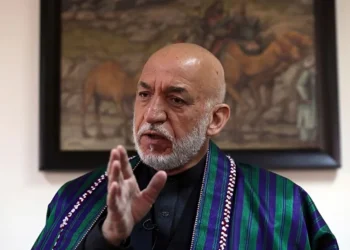
Hamid Karzai, the former president of Afghanistan and one of the prominent and controversial figures in the country’s politics, played a key role during one of the most critical periods in modern Afghan history. Despite significant efforts to establish political order and maintain national unity during his presidency, his stance and behavior towards the Taliban and various political factions have made him a figure of many contradictions, still subject to varying criticisms and analyses.
One of Karzai’s most notable accomplishments was the peaceful transfer of power to the next elected president in 2014. This transfer gained special significance in Afghanistan’s political history, a country that had witnessed decades of war and chaos and was recorded as a symbol of respect for democratic processes, elections, and the rule of law. Many observers viewed this act as a step toward institutionalizing the culture of peaceful power transitions in a society that rarely experiences such calm changes.
However, Karzai’s positions, both during and after his presidency, especially regarding the Taliban, were unacceptable to many democratic forces in Afghanistan. He frequently referred to the Taliban as “brothers” and “Afghans” and sought to involve them in peace negotiations and reconciliation. This optimistic approach towards the Taliban was met with widespread reactions and criticism; some argued that such policies indirectly strengthened the Taliban and granted the group legitimacy, ultimately weakening governmental and democratic structures.
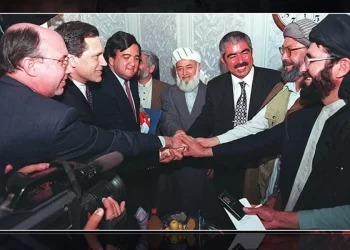
When direct negotiations between the Taliban and the United States began in Doha, Karzai, with a certain naivety, hoped that these talks would lead to the end of foreign military presence and the formation of a participatory government including the Taliban. By attending international meetings and collaborating with the Taliban, especially in the Moscow talks, he contributed significantly to legitimizing the group. Karzai may have aimed for the war in Afghanistan to end and for the Taliban to enter a democratic process, but it became clear that he lacked a sufficient understanding of the Taliban’s structural complexities and ideology. Indeed, the accusation still stands that Karzai, by normalizing the Taliban, sought to pave the way for his return to power through another interim administration. History remembers that Karzai, during one of these meetings in Moscow, prayed behind a criminal Taliban cleric. According to clear religious texts, praying behind a person suspected of crime and sin is religiously prohibited.
With such simplistic actions, unbecoming of an elected president, Karzai showed that he did not appreciate the value and importance of his historical position and, like many other Afghan politicians, had become entangled in the day-to-day. The reality is that in other countries, when a president or prime minister steps down, they say farewell to active politics forever, devoting the rest of their lives to writing, teaching, or exploring new opportunities as advisors or employees in other fields. The political tradition in Afghanistan, at least since the country’s creation, is such that politicians are born into politics and go to the grave with it. Karzai was no exception, and his actions after his presidency in 2014 all indicate that he still seeks to remain a politician and, perhaps, once again taste high-level power.
For the first time, all of Karzai’s hopes for returning to power were shattered with Ashraf Ghani’s flight from the country on August 15, 2021, as the Taliban quickly entered the Arg (Presidential Palace) and took control of Afghanistan without feeling the need to compromise with former political leaders.
After the Taliban seized Kabul, Karzai decided to stay in the city, hoping that through his relationships with the Taliban leadership, especially Mullah Baradar, he could play a role in the Taliban’s power structure. Contrary to his expectations, however, the Taliban not only refused to grant him any concessions but also imposed severe restrictions on his communications, placing him under complete control.
Karzai seems to still hope to influence the Taliban leadership and pave the way for convening a Loya Jirga, through which he could establish a participatory government and place himself at the helm. However, critics argue that Karzai either has no desire to understand the Taliban truly or analytically refuses to comprehend the group’s ideological, extremist, and oppressive structure.
Recently, a photo of Karzai meeting with Dr. Abdullah Abdullah was published, with his seven-year-old daughter present. Some interpreted this as a symbolic protest against the Taliban’s extreme policies towards women. The Taliban have deprived women of all public spheres, and the presence of Karzai’s daughter in this meeting was seen by many as a symbol of silent resistance against the Taliban. However, critics point out that Karzai was president for 14 years, and if he truly believed in women’s rights, he would not have kept his wife hidden from public view during that time. Zainab Karzai was never seen beside him throughout those years. In the photo of Karzai sitting with his daughter at the head of the meeting, if it were meant as a protest against the Taliban’s policies, it would have been more impactful if both his wife and daughter had appeared together by his side.
Although some praised the publication of his daughter’s photo, critics argue that such symbolic gestures cannot erase the dark stains on Karzai’s record of legitimizing and normalizing the Taliban.
It appears the only way Karzai can demonstrate his genuine commitment to democratic principles and human rights is by supporting the democratic resistance of the people of Afghanistan and freeing himself from the illusion of Taliban pacifism. These groups are striving to prevent the Taliban from gaining international recognition and to show the world that Afghanistan needs a democratic and people-centered order, not an extremist and oppressive regime like the Taliban. If Karzai decides to join these groups, he might be able to rebuild some of the lost trust and play a positive role in Afghanistan’s path back to democracy. It is worth noting, however, that like others, Karzai has both positive and negative aspects to his legacy, and any criticism directed at him should not overshadow his positive contributions.
You can read the Persian version of this analysis here:
حامد کرزی؛ سیاستمداری در جستوجوی نفوذ و اعتبار، میان تناقضها و امیدهای واهی | روزنامه ۸صبح