Many heart patients and their families are complaining about the high cost of treatment in Afghanistan. They say expensive medicines, the high cost of tests and surgeries, and a shortage of specialist doctors have made the treatment of heart patients difficult. According to them, after the closure of Pakistan’s trade routes, the prices of some heart medicines have risen, and some of the needed medicines are not available in the market. They add that, because of financial hardship, some patients have reduced their medication or delayed their treatment. They also say that, because of rising treatment costs and the existing problems, they have borrowed money or sold their belongings to pay for treatment.
In interviews with the Hasht-e Subh Daily, these patients and their families cite the shortage of specialist cardiologists and the lack of well-equipped centers for diagnosing and treating the disease in a number of provinces as other problems. They add that, to receive specialized services, they have to travel to the limited number of medical centers in Kabul or other provinces, which costs them more money and time.
Hasan, a resident of Kabul who himself has a heart condition, expressed concern about the high cost of treating heart diseases and the scarcity of some needed medicines. He says the rising cost of treatment and the difficulty of finding medicine have caused him hardship.
Hasan says: “For a patient living with a heart condition, access to treatment is very important. Many patients go to the hospital only when their condition has become critical, but when they face the high costs of examinations, medicine, and surgery, they cannot afford them. Some families borrow money or sell their belongings to save a patient’s life, and some patients delay their treatment because they have no money.”
Shekab, a resident of Ghor province, says his brother has a heart condition and that their family has stopped his treatment because of the lack of a well-equipped medical center and their financial hardship. He adds that in Ghor, the facilities needed to diagnose and treat heart diseases, especially congenital heart defects (a hole in the heart), are limited.
Shekab says: “If a child has a hole in the heart, the family cannot afford the cost of treatment, and there are no well-equipped medical facilities in Ghor either. If help is provided for the treatment of these patients, it will be a great support for families who have no financial means.”
Gul Mohammad, another resident of Ghor, says heart patients in the province have no choice but to go to Kabul or Herat to receive specialized services. He adds that the lack of medical facilities in Ghor increases not only the cost of treatment but also the travel and accommodation costs of patients and their families.
Gul Mohammad says: “We do not have a reliable hospital in Ghor where heart diseases are treated. If we have a heart patient, we have to go to Kabul or Herat for treatment, but the rough roads and travel costs put great financial pressure on families. Access to specialized medical services is also very limited in the districts.”
Atiq, a resident of Kunduz, says the cost of heart surgery is very high for families without sufficient income. He adds that one of his relatives needed heart surgery and a stent, but the family could not afford the cost of treatment.
Atiq says: “A while ago, we had a patient in one of Kunduz’s private hospitals who needed heart surgery, but he did not have the money to pay for it. The cost of his surgery came to nearly 200,000 afghanis, and he needed a stent in his heart for treatment. I also know another patient who had undergone heart surgery but could not pay the costs.”
Zainab, another resident of Kabul whose father has a heart condition, says the closure of the trade route with Pakistan and the halt in medicine imports from that country have raised the prices of some heart medicines and made it difficult to obtain her father’s medication. She adds that her father used to buy one of his medicines for 70 afghanis, but now pays about 250 afghanis for half of the same quantity.
Zainab says: “Overall, the price of medicines has gone up very high. My father used to buy one of his medicines for 70 afghanis, but now he pays 250 afghanis for half of the same quantity. Fewer Pakistani medicines are being imported, and some medicines that enter through unofficial routes are also being confiscated. In many cases, heart medicine cannot be found, and my father has to go to other places to look for it. Whenever he finds the medicine, he buys more than he needs because he is afraid it will not be available again.”
Saber, another resident of Kabul, says some heart patients need multi-stage treatment, but the cost of each stage is high for families. He adds that his mother, who has a 60 percent blockage in a heart artery, needed several stages of treatment, but because of the high cost, his family has not been able to complete all of them.
Saber says: “My mother had a 60 percent artery blockage, and we had an angiography done for her. The doctor said she needed to go through two rounds of treatment, but because we did not have the financial means, she is currently taking medicine, and we spend about 4,500 afghanis a month on it. One of our neighbors also had several heart attacks. We borrowed money for his treatment and completed one round of treatment, but the cost of heart surgery is very high, and in some cases it reaches 200,000 to 250,000 afghanis.”
Meanwhile, a number of cardiologists consider the high cost of treatment to be one of the patients’ problems and urge them not to stop or delay taking their medicines on their own because of economic difficulties. They add that stopping medication or taking it irregularly can worsen a patient’s condition and increase the risk of complications.
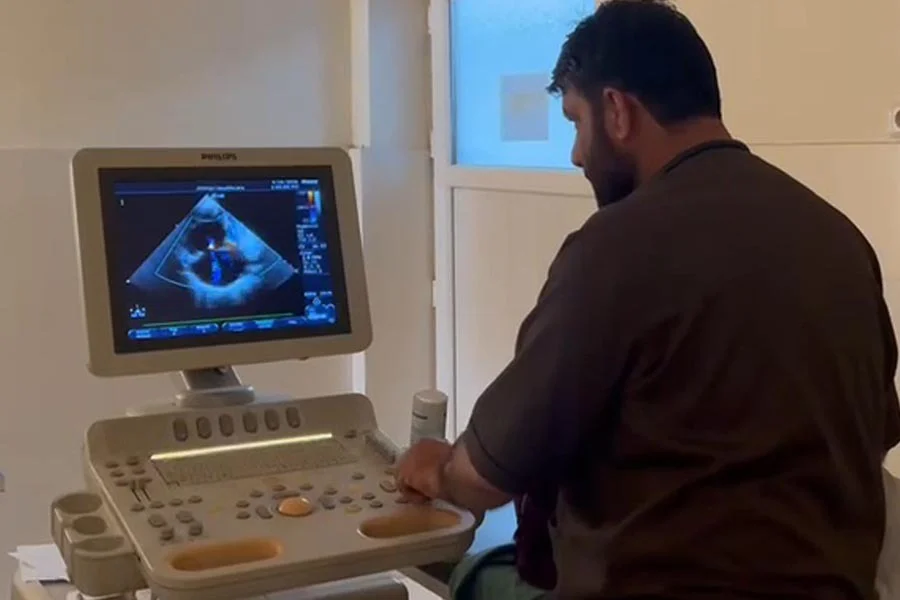
Aemal Mowahed, a cardiologist, says the treatment of heart diseases is divided into two parts, medication and surgery, and that the cost of medication is usually lower than that of surgery. He adds that some complex heart surgeries are not performed in Afghanistan because of a shortage of specialists and advanced equipment, and that patients are sent abroad for treatment.
Mowahed says: “The treatment of heart diseases is divided into two parts, medication and surgery. Medication usually costs less, but it must be continued for a long time, whereas the cost of heart surgery is very high, and many people cannot afford it. In Afghanistan, some complex heart surgeries are not performed because of the lack of specialists and advanced equipment, and we are forced to send these patients abroad for treatment.”
Mowahed also considers irregular use and arbitrary discontinuation of medicine to be serious problems in the treatment of heart patients. He says that stopping medication can worsen the disease and, in some cases, have serious consequences for the patient.
Hamed Wardak, another cardiologist, says a lack of awareness about heart diseases, economic poverty, and the absence of well-equipped medical centers are among the factors behind patients’ late visits to doctors. He adds that chest pain, an irregular heartbeat, early fatigue during activity, and swelling of the legs are among the symptoms that should prompt patients to visit a health center as soon as possible.
Wardak says: “Patients should not ignore chest pain, palpitations, an irregular heartbeat, and early fatigue. If they notice these symptoms, they should go to a health center as soon as possible. Many patients delay seeing a doctor because of economic poverty or a lack of sufficient awareness, while delays in diagnosis and treatment can worsen the disease. On the other hand, stopping medication or taking it irregularly can also disrupt the course of treatment and increase the risk of serious complications.”
The patients’ complaints about the high cost of treating heart diseases and the shortage of specialist doctors in the country come at a time when international organizations have previously also expressed concern about the shortage of specialist doctors and the state of Afghanistan’s health system.
Meanwhile, the World Health Organization (WHO) says cardiovascular diseases are among the leading causes of death worldwide. According to the WHO’s figures, nearly 19.8 million people around the world died of cardiovascular diseases in 2022. The WHO stresses that increasing physical activity, quitting tobacco, reducing alcohol consumption, and controlling risk factors can lower the risk of cardiovascular diseases.
However, the exact number of cases of this disease in Afghanistan is not known.
You can read the Persian version of this report here:
هزینه بلند درمان؛ بیماران قلبی از گرانی دوا و کمبود خدمات تخصصی شکایت دارند